According to a communique issued on the afternoon of 25/3, at the second conference of the 14th term, the Central Committee approved the Politburo's proposal on the organizational structure of the State apparatus and the personnel nomination plan for key leadership positions of State agencies for the 2026-2031 term.
The Central Committee assigned the Politburo to officially nominate personnel based on the results of consultations and votes, completing procedures for submission to the National Assembly for election or approval as stipulated.
The system of key Party and State leaders comprises five positions: General Secretary, President, Prime Minister, National Assembly Chairman, and Permanent Member of the Secretariat. Of these, the General Secretary and Permanent Member of the Secretariat were elected at the 14th Party Congress. The remaining three positions will be consolidated at the first session of the 16th National Assembly, expected to take place in early april.
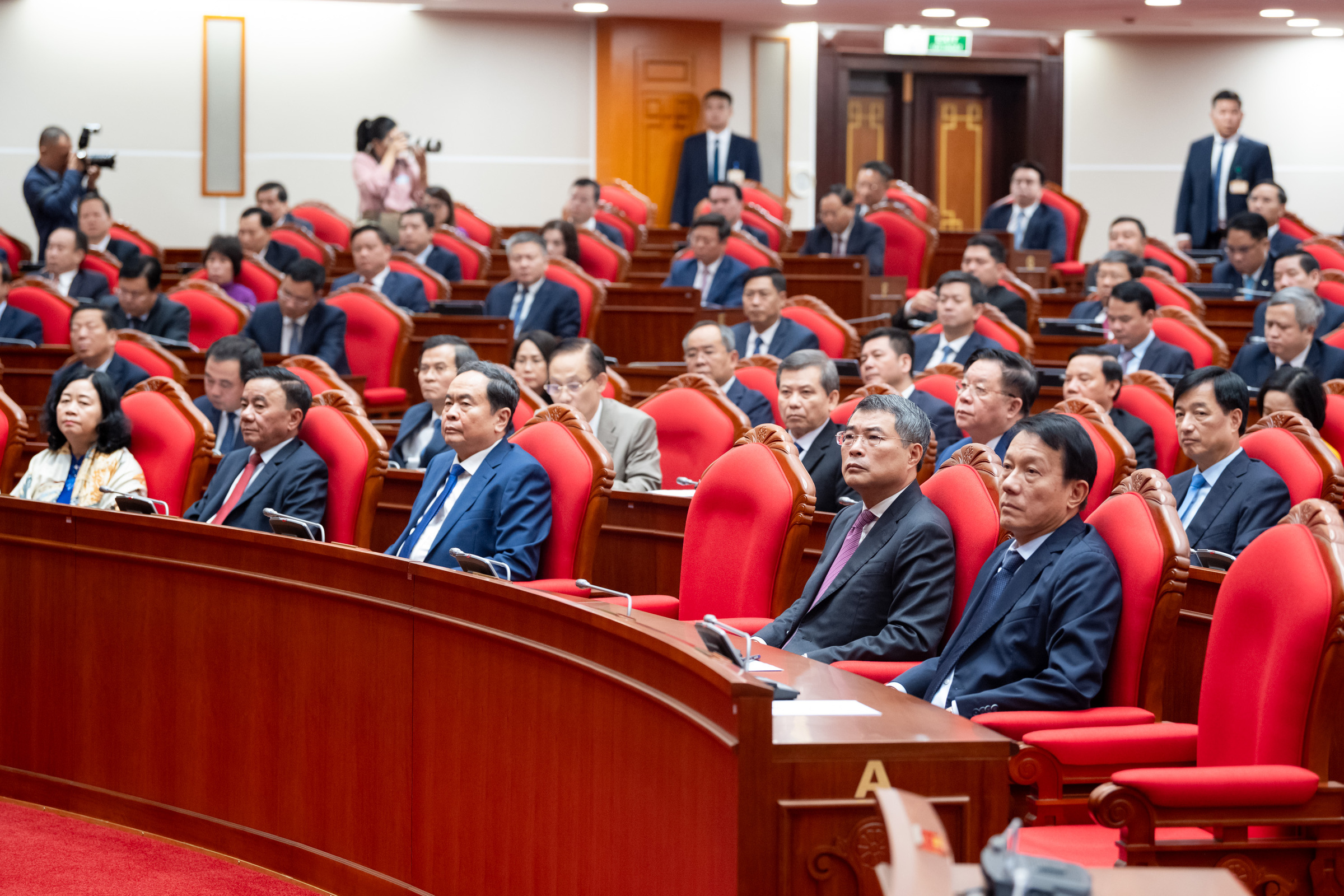 |
Delegates attend the closing session of the second Central Committee conference of the 14th term, on the afternoon of 25/3. *Photo: Pham Thang* |
At the conference, the Central Committee also approved the Working Regulations for the 14th term of the Party Central Committee, Politburo, and Secretariat. These regulations clearly delineate the responsibilities and powers of the Party Central Committee, Politburo, Secretariat, key leaders, and the Permanent Member of the Secretariat. They also define the central role, responsibilities, and powers of the General Secretary, Permanent Member of the Secretariat, Politburo members, Secretariat members, and Party Central Committee members. Individual accountability is emphasized, ensuring that work is resolved within the correct authority and meets practical requirements.
The Working Program of the 14th Central Committee includes important, core issues that the Central Committee needs to discuss and make decisions on to materialize the Resolution and Action Program implementing the 14th Party Congress Resolution. This particularly focuses on executing 6 key tasks and three strategic breakthroughs to meet the requirements for rapid, sustainable national development during the 2026-2030 period, striving to achieve a "double-digit" growth target starting this year, creating momentum and impetus for subsequent years.
The Working Program highlights several issues concerning: national strategic autonomy, enhancing national productivity, adapting to population aging, green transition, building an orderly, disciplined, safe, healthy, civilized, cultured, and developed society, climate change adaptation, strategic breakthroughs, key tasks, and other important issues.
The Central Committee also approved several other documents: Regulations on the Implementation of the Party Charter; Regulations on the Party's Inspection, Supervision, and Discipline Work; Working Regulations of the 14th Central Inspection Committee; Regulations on Political and Ideological Work within the Party; a Resolution on Renewing and Enhancing the Effectiveness of Party Inspection, Supervision, and Discipline Work, replacing the 2007 Resolution; and a Resolution on Continuing to Strengthen the Party's Leadership over the Prevention and Combat of Corruption, Waste, and Negativity in the New Period.
Vu Tuan