On the afternoon of 28/3, the Vietnam Buddhist Sangha of Nghe An province, in collaboration with local authorities, organized the groundbreaking ceremony for Da Pagoda (Au Lac Co Tu) in Hoa Tien residential area, Vinh Loc ward (formerly part of Vinh city). A key feature of this project is a memorial house dedicated to over 500 Vietnamese revolutionary journalists who sacrificed their lives for independence and freedom.
The ceremony was attended by central and Nghe An provincial leaders, representatives from various ministries, sectors, press agencies, and the Executive Boards of the Vietnam Buddhist Sangha from many provinces nationwide. Speaking at the event, Le Quoc Minh, Deputy Head of the Central Propaganda and Education Commission, Editor-in-Chief of Nhan Dan Newspaper, and President of the Vietnam Journalists' Association, emphasized that restoring Au Lac Pagoda is more than just a Buddhist architectural endeavor. It is about reviving a spiritual cultural heritage, preserving and promoting the values of previous generations. He noted the project will serve as a significant historical site for future generations of journalists to pay tribute and continue the legacy of their predecessors.
The planned memorial house, spanning 176 m2 within the pagoda's master plan, features a unique design. It incorporates a yin-yang arrangement connecting to the ceiling and water elements, with a pen nib symbolizing the spirit of journalism. Additionally, a "journalist's corner - research" space will recreate a traditional workspace, complete with a newspaper printing table-themed research station. This interactive area allows visitors to explore event timelines, key figures, and the professional journeys of these journalists.
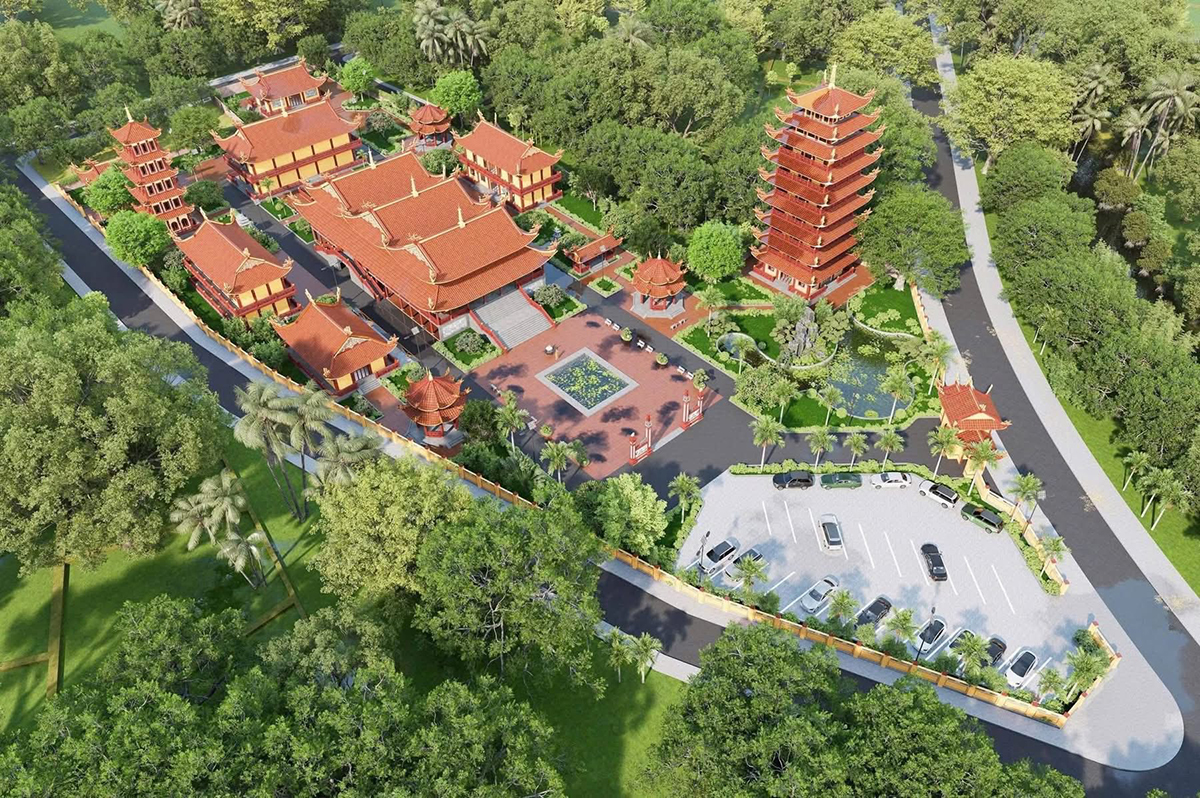 |
Architectural design for Da Pagoda. Photo: Quoc Huy |
Architectural design for Da Pagoda. Photo: Quoc Huy
The extensive restoration of Da Pagoda will encompass 26 items, with a total estimated cost exceeding 60 billion dong. Funding for this ambitious project comes from contributions by local residents, Buddhists, and benefactors.
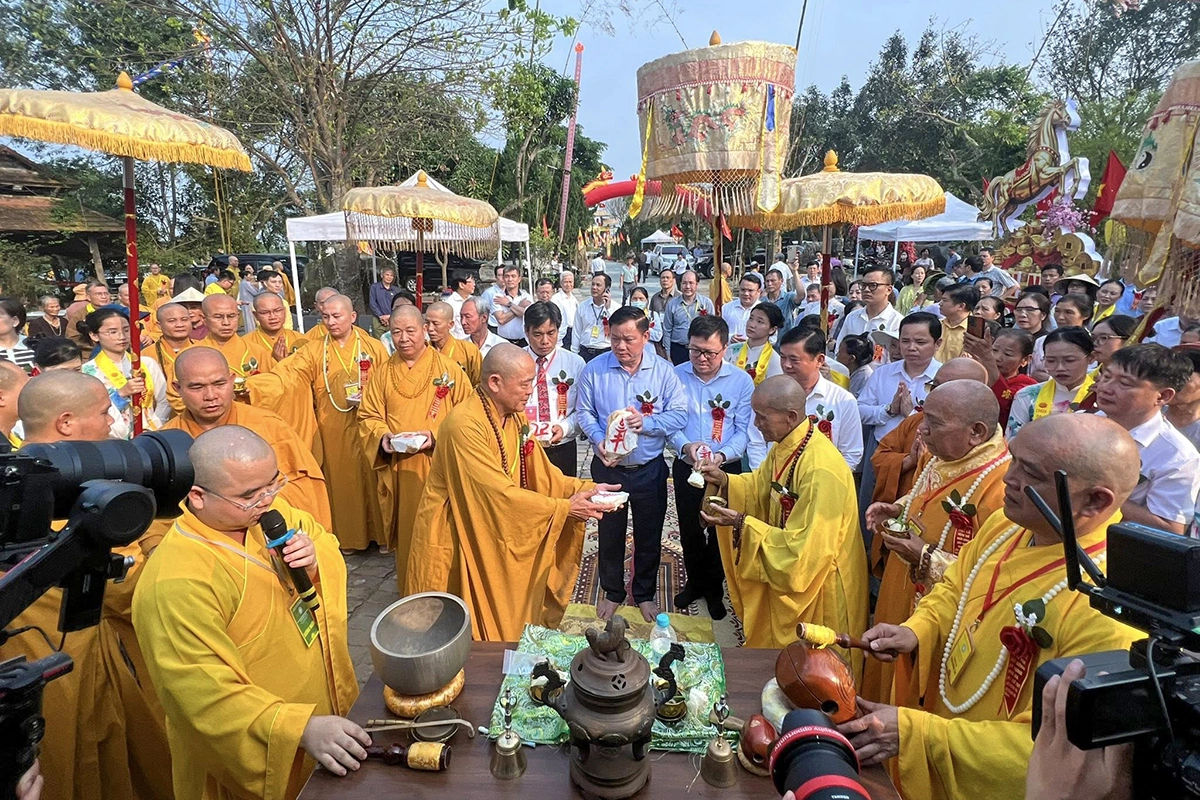 |
Delegates performing the first brick-laying ritual for Da Pagoda after the groundbreaking ceremony. Photo: Quoc Huy |
Delegates performing the first brick-laying ritual for Da Pagoda after the groundbreaking ceremony. Photo: Quoc Huy
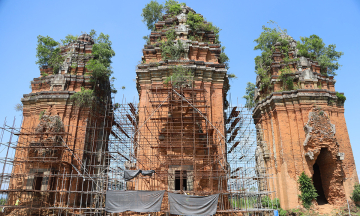
Da Pagoda has a rich history, dating back to its construction in the late 17th century and a major restoration in 1889, situated beneath a large banyan tree. For generations, the pagoda served as a vital center for religious activities. During the Nghe Tinh Soviet uprising of 1930-1931, the pagoda's drums notably rallied the struggle. Artifacts from this period are currently preserved at the Nghe An - Nghe Tinh Soviet Museum.
Over time and through periods of conflict, the pagoda gradually deteriorated, leaving only traces amidst the trees. Recognizing its historical and cultural significance, local authorities approved a plan for its restoration and embellishment in 2017.
The establishment of this memorial space for Vietnamese revolutionary journalists is the culmination of collective efforts from many generations of journalists, colleagues, and benefactors. A significant contribution came from Nguyen Van Hien, former Deputy Editor-in-Chief of Nghe An Newspaper. He dedicated over 15 years to collecting, connecting, and preserving information about the fallen journalists, and also pledged with the pagoda to establish a place of worship for their heroic spirits.
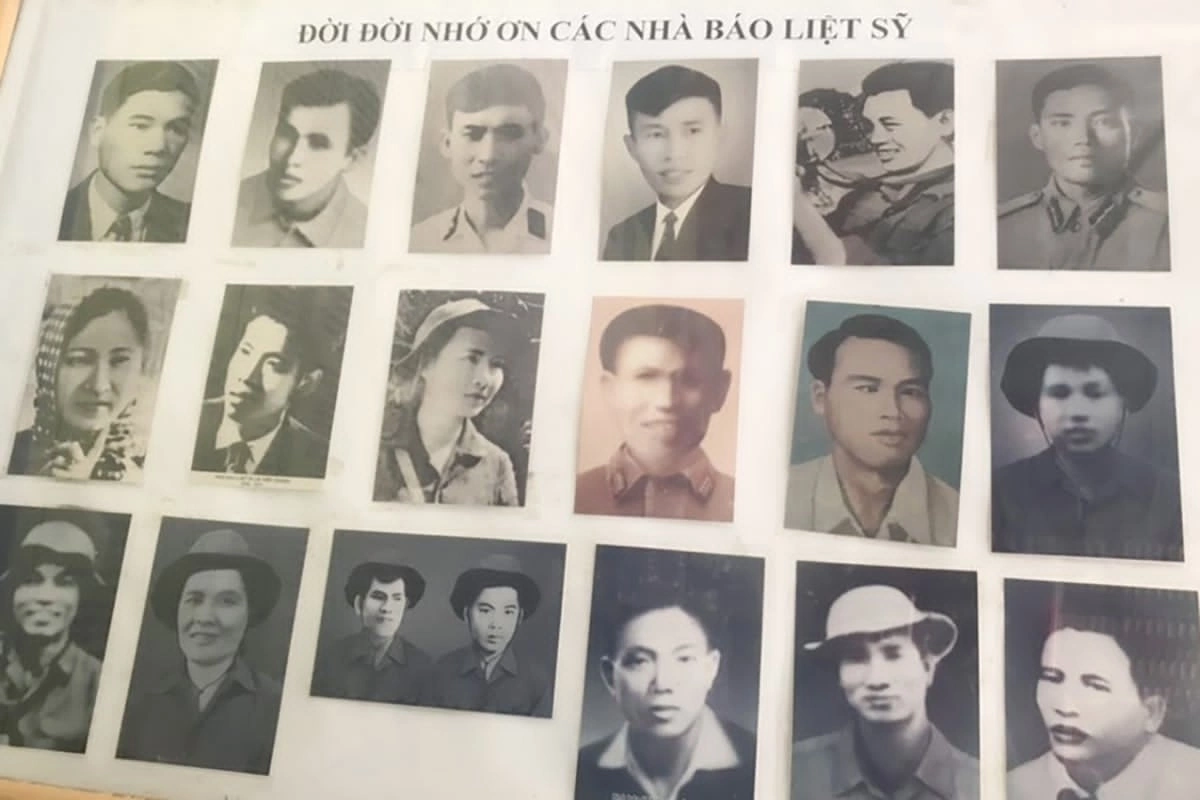 |
Images of fallen journalists at Da Pagoda. Photo: Hung Le |
Images of fallen journalists at Da Pagoda. Photo: Hung LeDuc Hung