According to a report submitted to the Da Nang City People's Committee, by the end of 2/2026, the city expects to have approximately 394,470 graves requiring relocation. Over 67,000 of these graves are part of a plan to be implemented starting from 8/2025, with an additional 327,000 graves identified following a new survey of the area stretching from National Highway 1 to the coast.
The survey results indicate that the eastern part of the city, extending from the expressway to the coast, currently contains approximately 256 cemeteries with over 1.4 million graves, covering an area of about 1,420 hectares. Most of these cemeteries are scattered within residential areas and zones designated for industrial and service development.
The Department of Construction assesses that the presence of a large number of graves interspersed within residential areas does not meet environmental isolation standards. This poses potential risks of groundwater contamination and impacts public health. The extensive land occupied by cemeteries also hinders urban space management and investment attraction.
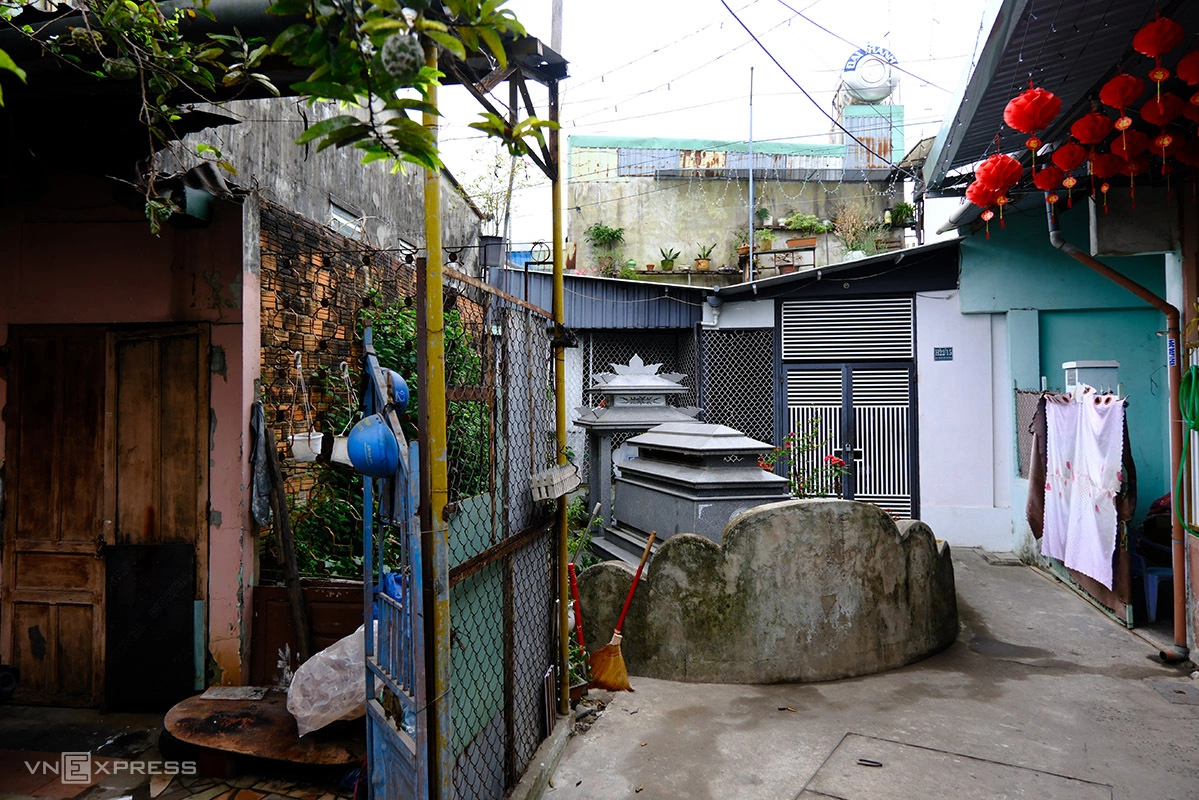 |
A grave in a residential area in Hoa Khanh, Da Nang City. Photo: Nguyen Dong |
The relocation of graves is considered a crucial step to create clear land for developing a green, smart, and modern coastal urban chain. This initiative will also facilitate the implementation of key infrastructure projects, including the North-South high-speed railway.
To address the reburial demand, authorities propose planning 5 new centralized cemeteries in Dai Loc (97 ha), Xuan Phu - Que Son (110 ha), Chien Dan - Phu Ninh (125 ha), Tam Anh (55 ha), and Nui Thanh (50 ha). These areas are assessed to have expansion potential, meeting burial needs until 2045.
According to the roadmap, local authorities will progressively close small, scattered cemeteries and relocate graves, prioritizing areas from east to west. The plan is to be completed by Q2/2026 and largely finalized by 2030. The administration also mandates enhanced management to prevent new burials that violate planning regulations.
Nguyen Dong