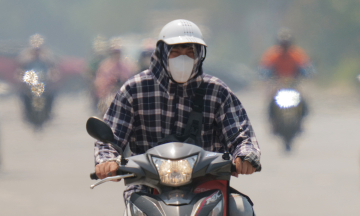
Today marks the peak of the early-season heatwave in the Northern region. Temperatures in the Northwestern region could reach 38 degrees Celsius, while Hanoi and the Northern Delta may see 36 degrees Celsius, one to three degrees higher than yesterday, depending on the area.
The National Center for Hydro-Meteorological Forecasting announced that from tonight until tomorrow, the Northern region could be affected by a weak cold air mass, leading to a drop in temperatures. Hanoi, for example, is expected to see highs of 28-30 degrees Celsius.
The clash between the weak cold air and the existing hot air mass is likely to cause strong thunderstorms in the mountainous areas of the Northern and North Central regions, accompanied by risks of whirlwinds, lightning, hail, and strong wind gusts.
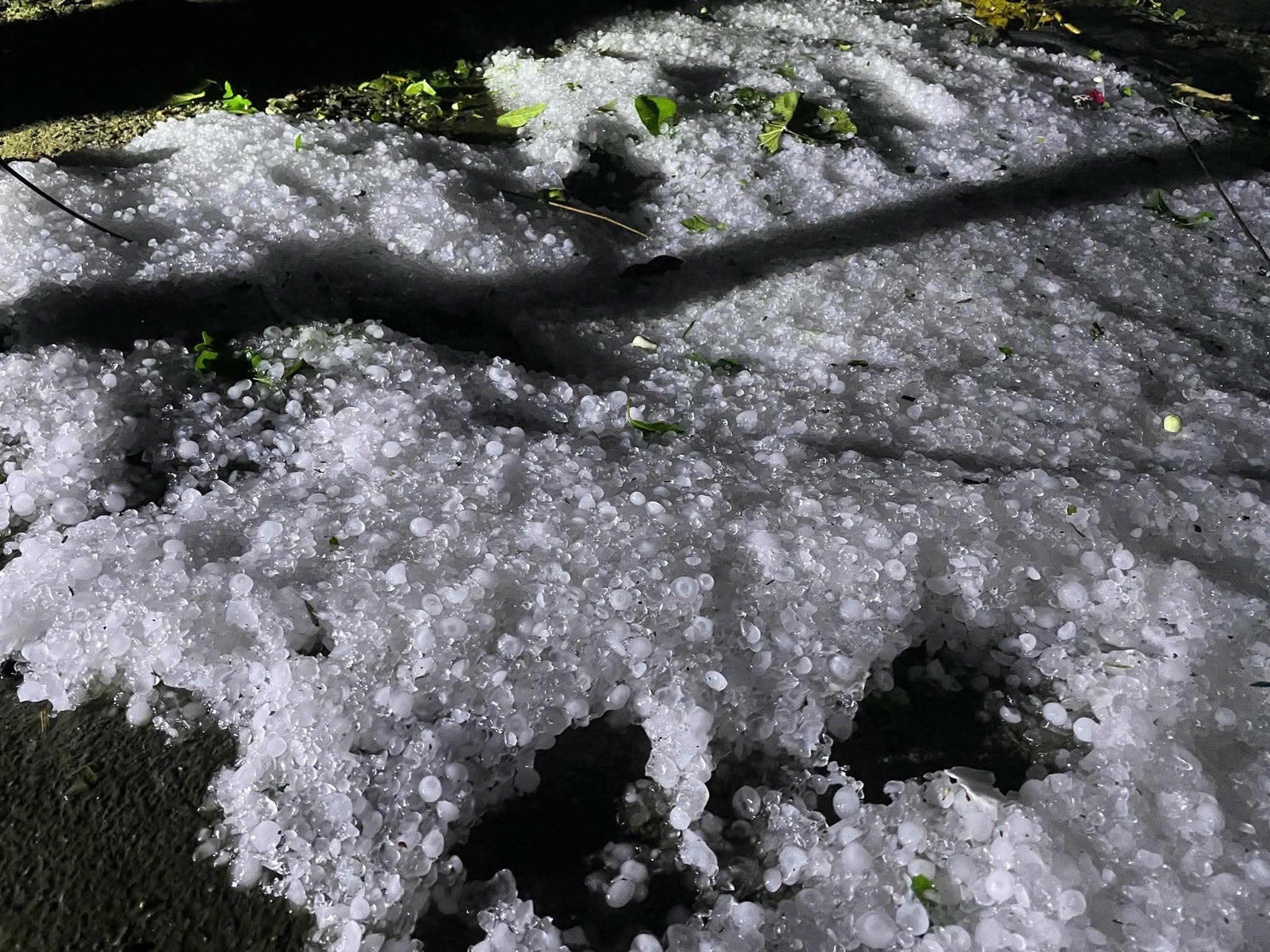 |
Hail in Tuyen Quang in late March 2026. Photo: Tuyen Quang |
As thunderstorms can currently only be forecast 30 minutes to three hours in advance with 70-90% accuracy, the meteorological agency advises residents to closely monitor weather reports. People should limit outdoor activities during thunderstorms and proactively reinforce their homes and protect property and vehicles to minimize damage.
When thunderstorms and whirlwinds occur, residents should stay in sturdy homes, close all doors and windows, and keep away from windows and objects easily swept away by wind. Avoid seeking shelter under large trees, power poles, or in open areas. Limit the use of electrical appliances and disconnect power when not necessary to prevent incidents caused by lightning.
In the event of hail, residents should quickly find sturdy shelter, prioritizing personal safety. Avoid standing under weak corrugated iron roofs or temporary structures. If outdoors, find a low-lying position, stay away from metal objects, and other dangerous areas.
This morning, the National Steering Committee for Civil Defense issued a directive urging provinces and cities to closely monitor weather developments, provide timely information, and guide residents in proactive prevention. Additionally, they are to review housing safety and prepare response plans to avoid being caught off guard should an incident occur.
Previously, on 29-30/3, the Northern region experienced two widespread periods of showers and thunderstorms. These events resulted in six deaths due to lightning strikes and capsized boats, nine injuries, 13 collapsed homes, over 6,500 homes with roofs blown off, and hundreds of affected public works. Approximately 35 hectares of rice, nearly 182 hectares of crops and fruit trees, and over 68 hectares of forest were broken or felled. Furthermore, 1,280 poultry died.
Gia Chinh