 |
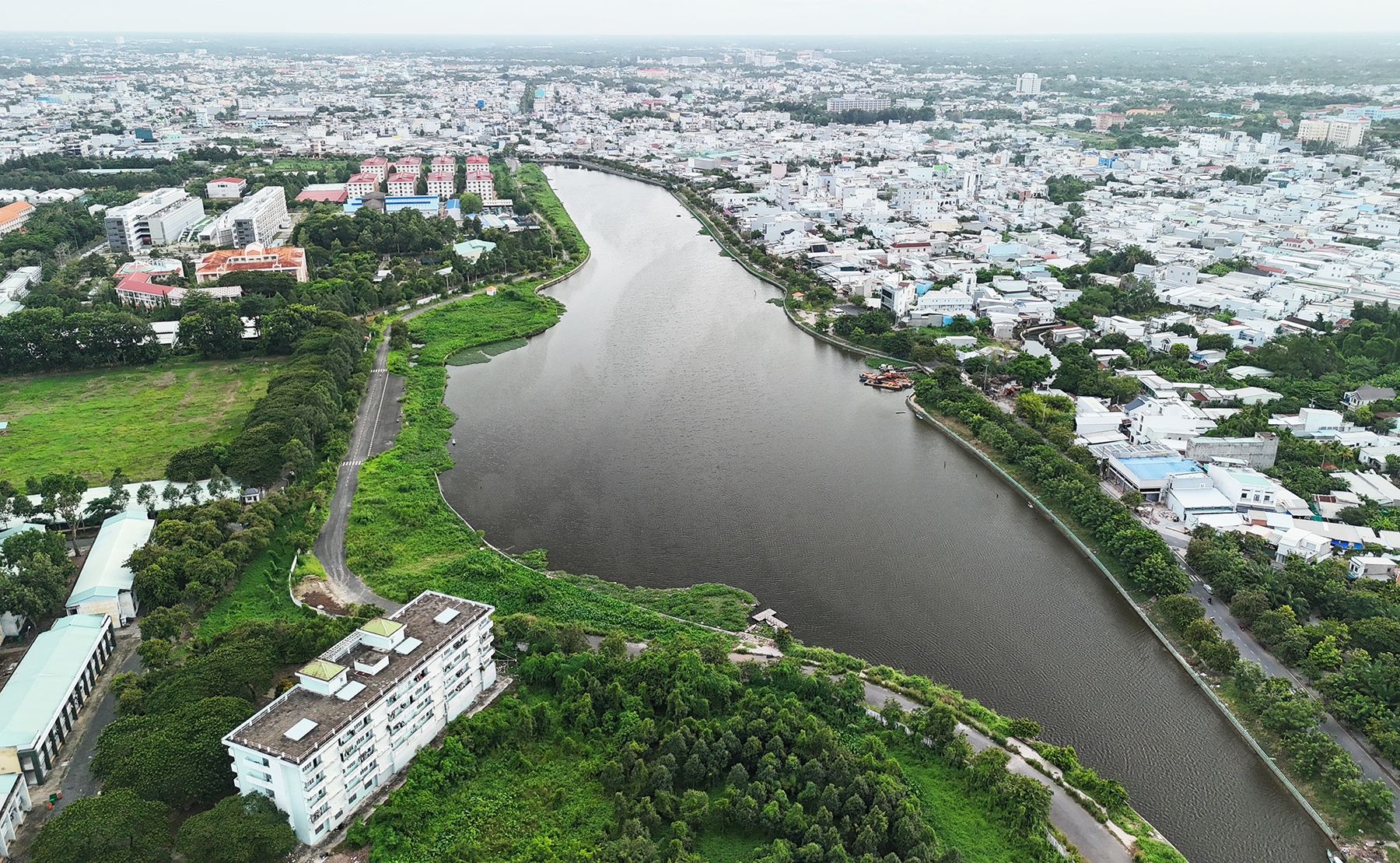
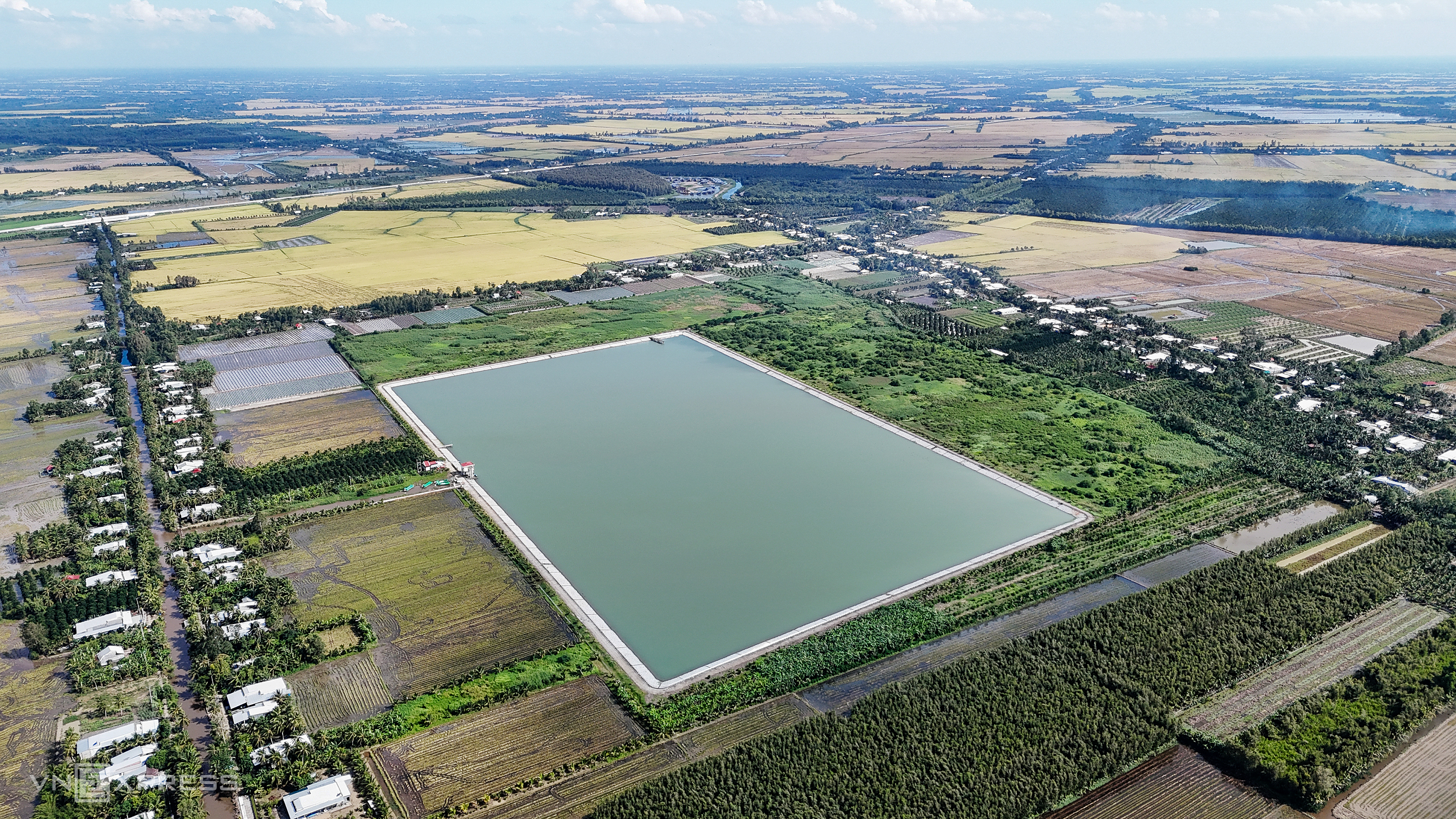
Construction of the reservoir began in 2020 and was completed in 2024. Located in a year-round freshwater zone within Vinh Tuong commune, Vi Thuy district, Hau Giang province (now Vinh Tuong commune, Can Tho City), the project cost over 180 billion VND, funded by both central and local budgets.
The entire facility spans 50 hectares, with the reservoir surface covering approximately 21 hectares and holding nearly one million cubic meters of water. This project was intended to proactively address climate change, securing potable water for over 260,000 residents in Vi Thanh City and surrounding areas, while also fostering ecotourism.
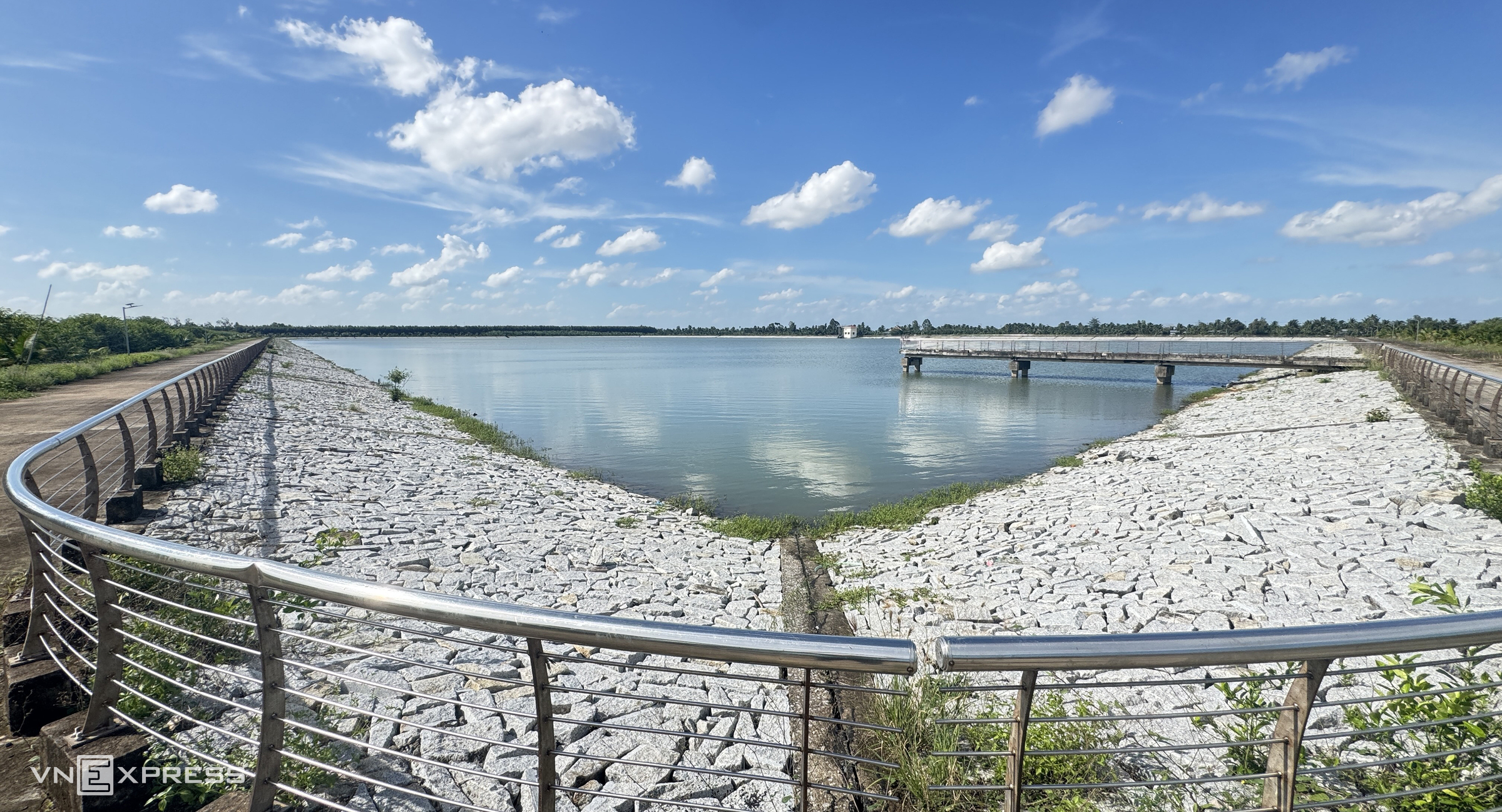 |
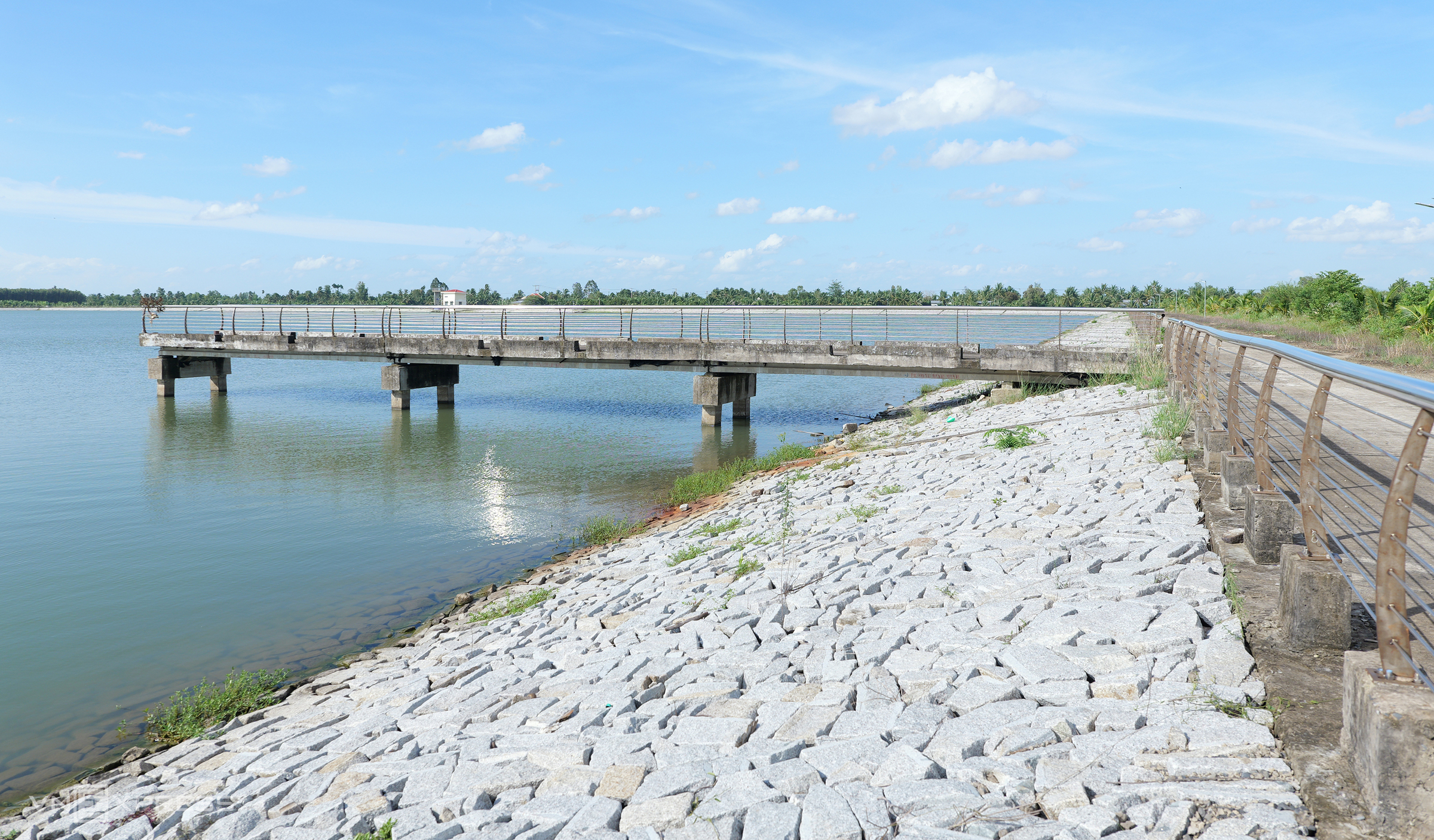
A panoramic view of the reservoir. The reservoir is 5 meters deep and is protected by a 10-meter-wide dike system, reaching an elevation of 2,5 meters, with a 6-meter-wide road atop the dike spanning 2 kilometers around its perimeter. The inner walls of the reservoir are lined with protective stone layers to prevent erosion.
Some sections of the safety railing system surrounding the reservoir are damaged, and the stone revetment on the reservoir wall is peeling.
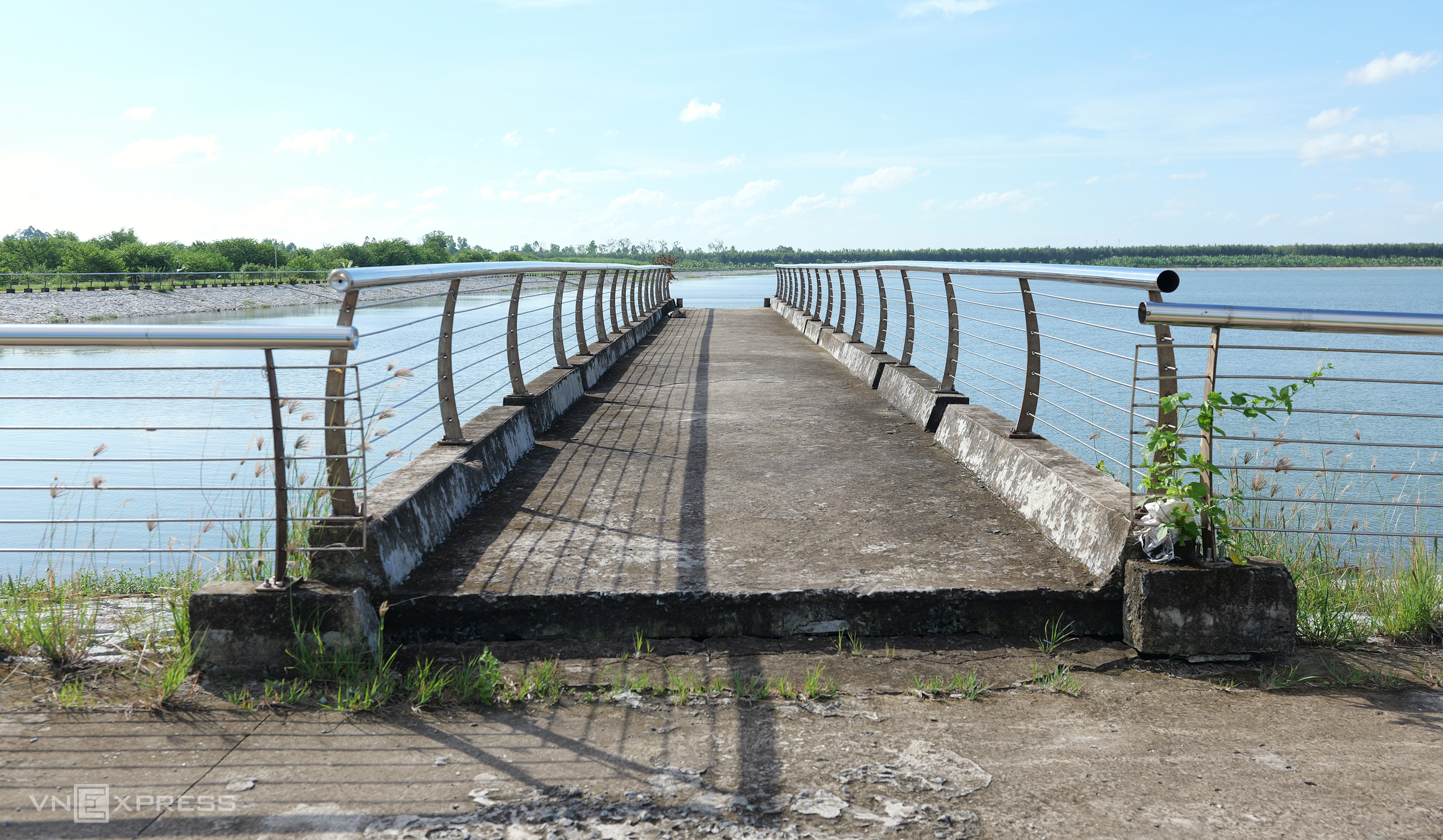 |
The pier at the reservoir, spanning over 2 meters wide and approximately 15 meters long, is designed to facilitate professional activities for the water management sector and accommodate tourists.
 |
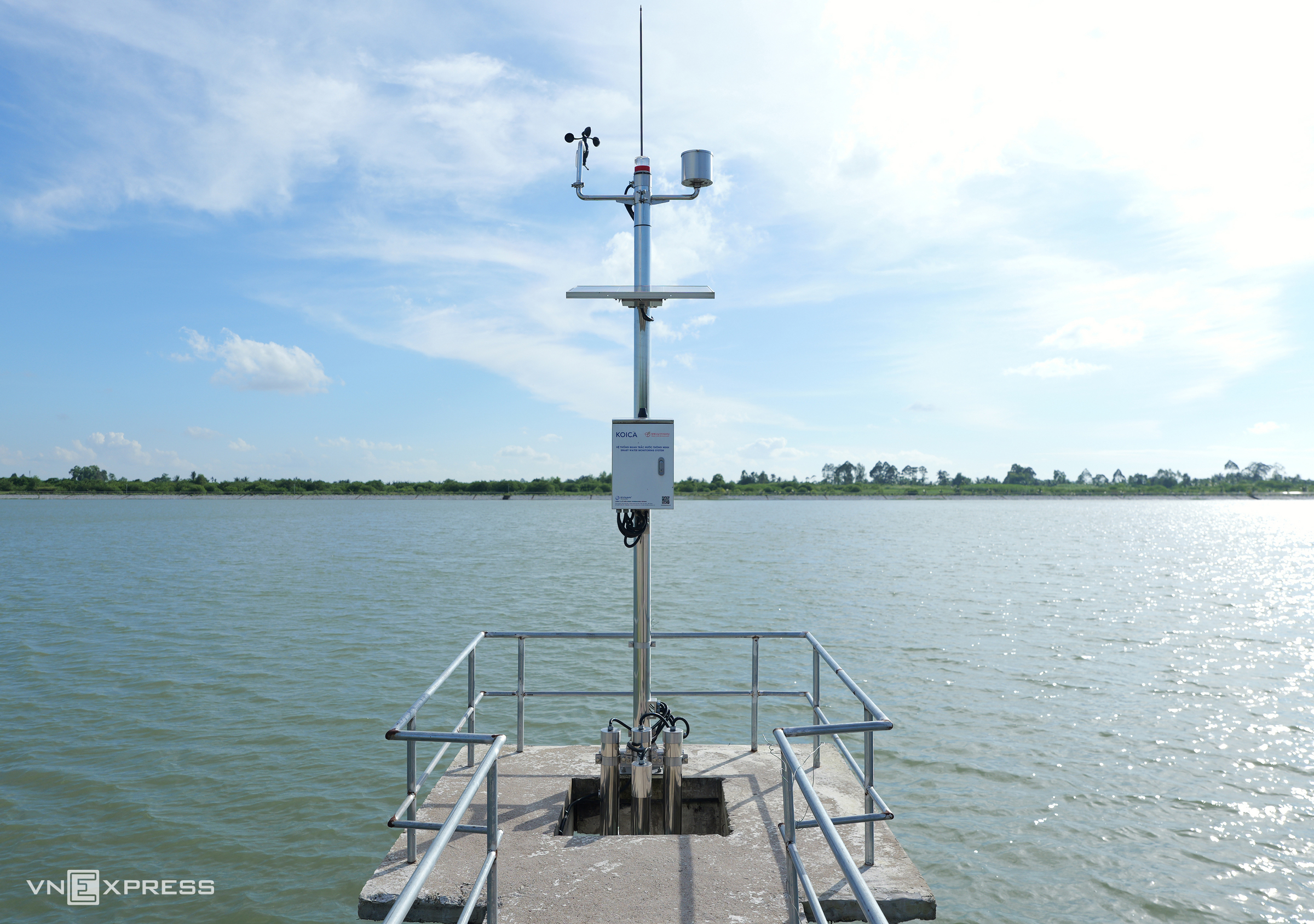
A smart water monitoring system installed at the reservoir continuously tracks water quality and levels 24/7. This technology provides early warnings of pollution, conserving human resources and safeguarding the water source for both domestic use and agricultural production.
 |
The project's objective is to create a static water reserve, primarily treating suspended solids and turbidity, thereby significantly reducing costs for clean water treatment plants. However, the pump station system and raw water pipelines connecting to regional treatment facilities have not yet been constructed, preventing the reservoir from operating and posing a risk of wasted investment. Nong Tran Minh Duong, a project management and protection official, noted that the reservoir is equipped with a pump station. This station includes a one-meter diameter pipe and two electric pumps, each capable of moving 5,000 cubic meters of water per hour, used for both filling and emptying the reservoir as required.
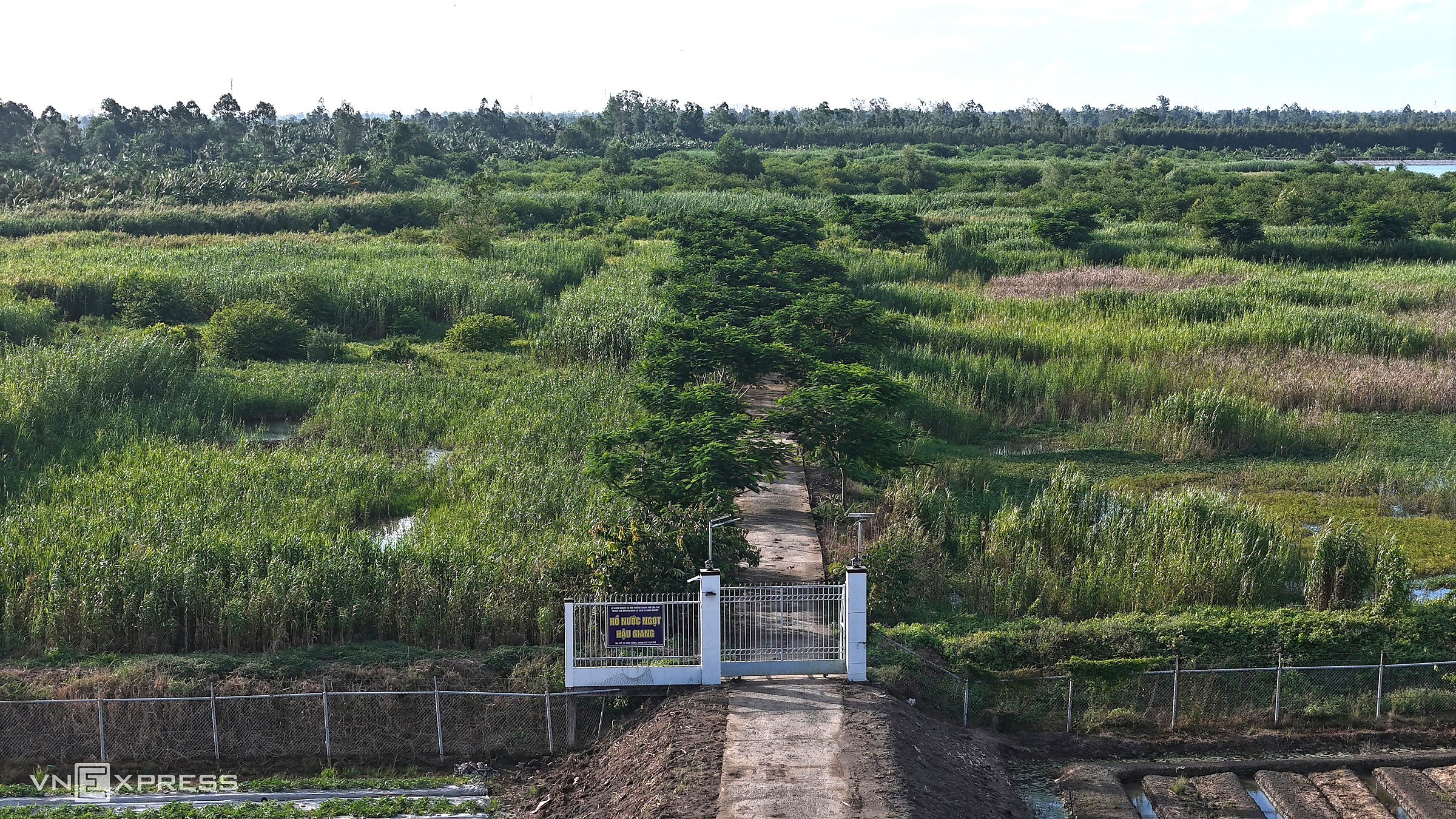
Beyond the reservoir's 20-hectare surface, the majority of the 50-hectare site remains undeveloped after many years, overgrown with weeds, reeds, and wild grass.
Recently, the Can Tho City Agricultural Extension and Services Center proposed an additional investment of 588 billion VND for the 2026-2030 period. This funding aims to complete the project, activate the reservoir for public use, foster tourism, and facilitate clean energy production.
Of this amount, 90 billion VND is allocated for pump stations, culverts, raw water supply lines, and infrastructure linking to tourism and agricultural production. The remaining 498 billion VND, sourced from socialized capital, will fund the construction of a 20 MW solar power plant, intended for connection to the national grid.
 |
The reservoir is located approximately 45 kilometers south of Can Tho City center. *Graphics: Tam Thao*
An Binh