The center records incident alerts and immediately coordinates responses with on-site fire prevention and fighting personnel. Additionally, the GSafePro application allows supervisors to proactively monitor device status and respond quickly from any location.
According to operational data, over 61,000 facilities have connected fire alarm transmission devices to the 114 Command Information Center system.
In July, the system recorded 36,482 fire alarms; 5,804 were verified as actual fires, while 30,678 were identified as false alarms. During the same period, the Customer Service Center also noted numerous disconnection alerts, coordinating with facilities to investigate and resolve these issues.
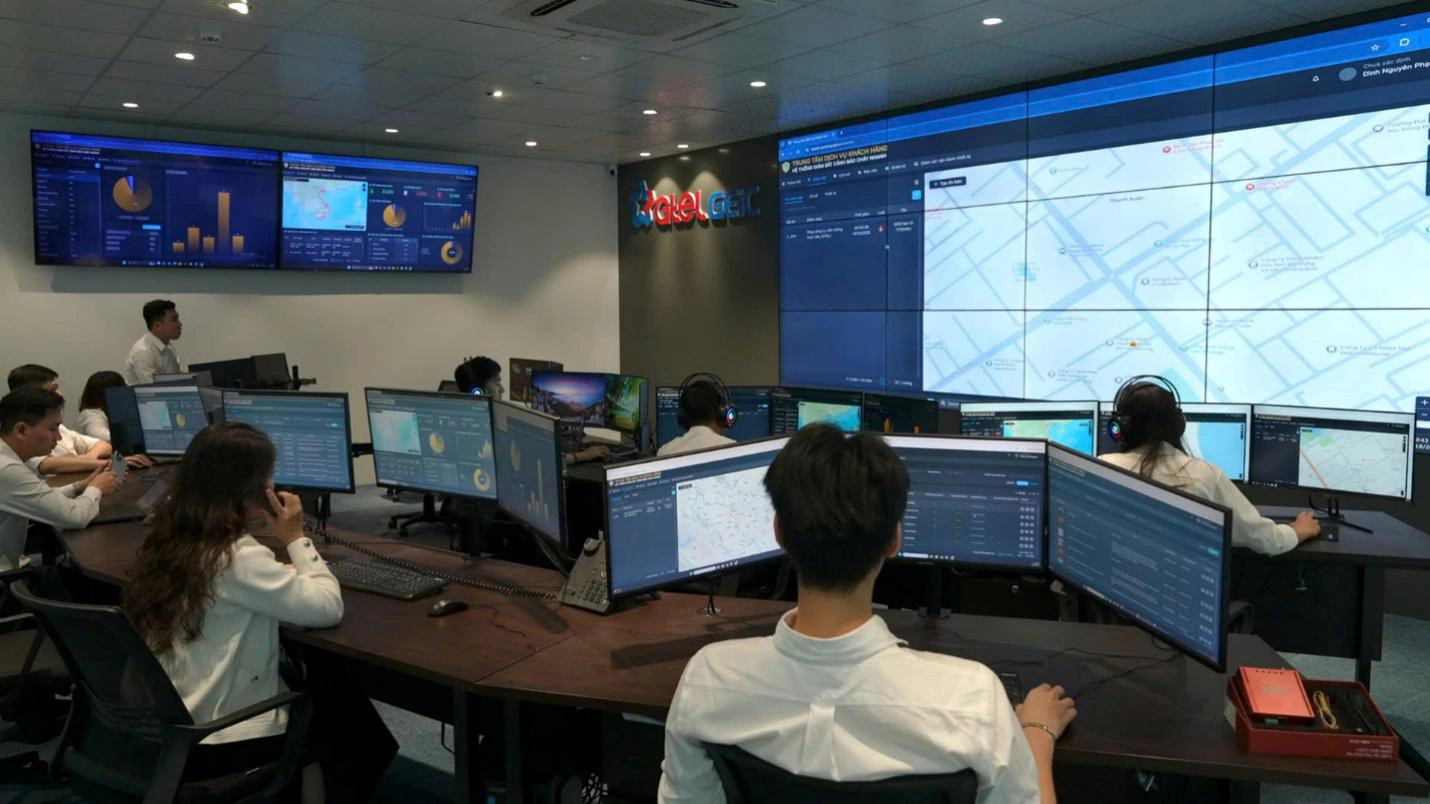 |
The GTel Geic Customer Service Center monitors 24/7. *Photo: GTel Corporation* |
Nguyen Hong Cuong, Head of Operations at the Customer Service Center, stated that the center uses a digital map to monitor connection status and alerts for each facility code. Data is updated and saved on the system, allowing on-duty staff to track the processing progress and coordinate with facilities when necessary.
Each alert and status change is timestamped, creating a detailed operational history for every facility. Centralized data ensures consistent monitoring of facility statuses, eliminating the need for individual site inspections. Thus, the center's activities extend beyond receiving fire alerts to include transmission line monitoring, data updates, and coordinating responses to device disconnections.
 |
Nguyen Hong Cuong – Head of Operations, Customer Service Center. *Photo: GTel Corporation* |
Monitoring fire alarms via mobile application
When a device issues a fire alert, the head of the facility or the designated fire prevention and fighting supervisor receives an automated call and a notification via the GSafePro application. At this point, the supervisor can quickly check or contact on-site personnel to verify the information.
After assessing the situation, the supervisor responds on the application with one of three statuses: "fire confirmed", "no fire", or "pending verification".
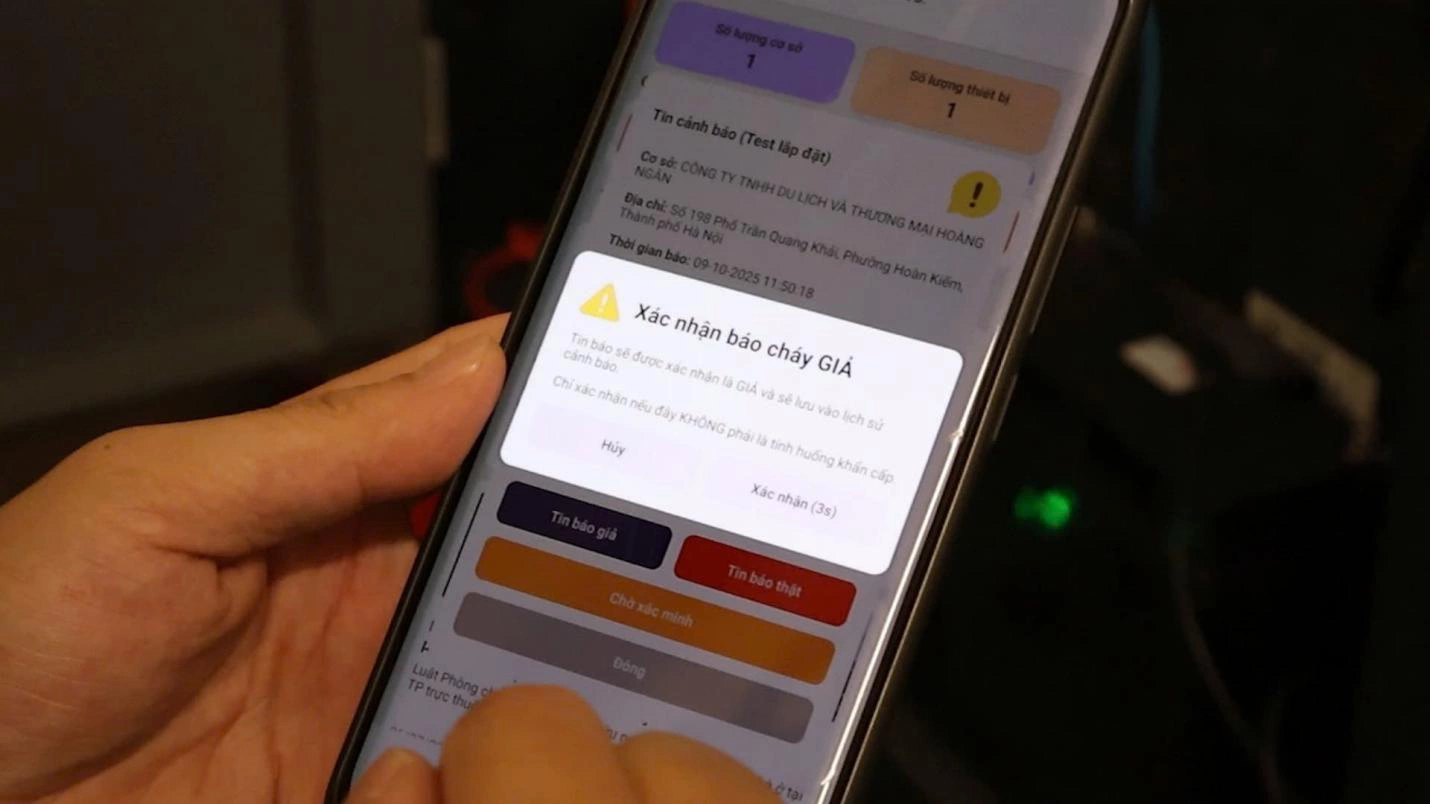 |
A facility verifies a fire alarm on the GSafePro app. *Photo: GTel Corporation* |
If a fire is confirmed, the alert and facility data are updated on the 114 Command Information Center system to assist authorities in their response. If no fire is confirmed, the feedback information is saved on the system for subsequent review and verification.
The "pending verification" status is used when a facility has received an alert but requires additional time for investigation. During this time, the GTel Geic Customer Service Center continues to contact other registered contacts to assist with verification.
The GSafePro application also helps leaders monitor facilities and devices under their management, even when they are not physically present at the site. The history of alert reception and responses is saved on the system, aiding facilities in reviewing processing procedures and the responsibilities of assigned personnel.
According to a GTel representative, to maintain monitoring and data transmission, facilities must designate a contact person capable of receiving information and coordinating checks at all times, including outside of working hours. The assignment should align with each unit's operational characteristics, especially for facilities with multiple areas or locations.
Should there be changes in personnel or contact numbers, facilities must update this information so the system can direct alerts to the correct supervisor. For disconnection alerts, the facility coordinates with the Customer Service Center to investigate the cause and restore operation.
 |
Facilities must maintain fire alarm transmission connectivity. *Photo: GTel Corporation* |
According to GTel Geic Company, operational efficiency depends on effective coordination between the monitoring unit and the user facility. The center maintains 24/7 system monitoring, while facilities are responsible for updating contact information, checking, and responding to alerts promptly.
Connecting fire alarm transmission devices to the 114 Command Information Center system is establishing a centralized information reception and processing network. The network's effectiveness relies on three factors: accurate facility data, maintained device connectivity, and timely verified alerts.
When facility data is fully updated, devices maintain connectivity, and information is verified promptly, the fire alarm transmission system will shorten alert reception times, support authorities in incident handling, and enhance operational efficiency.
Hoai Phuong