Around 1 AM on 1/4, a convective cloud mass developed, bringing rain to numerous wards and communes including Yen Hoa, Vinh Hung, Gia Lam, Tu Liem, Thanh Tri, Yen Nghia, Hat Mon, An Khanh, Quoc Oai, Hung Dao, Phu Cat, Chuong My, Phu Nghia, Xuan Mai, Quang Bi, Tran Phu, Hoa Phu, Binh Minh, Tam Hung, Dan Hoa, Thuong Tin, Hong Van, Thuong Phuc, Chuong Duong, Phu Xuyen, Ung Hoa, My Duc, and Huong Son.
The cloud mass then moved, causing rain in some inner-city wards of Hanoi. Hai Yen from Dan Phuong stated that small hailstones accompanied by wind occurred at 2 AM, lasting for about 5 minutes before turning into heavy rain. Small hailstones were also recorded in Thanh Xuan ward.
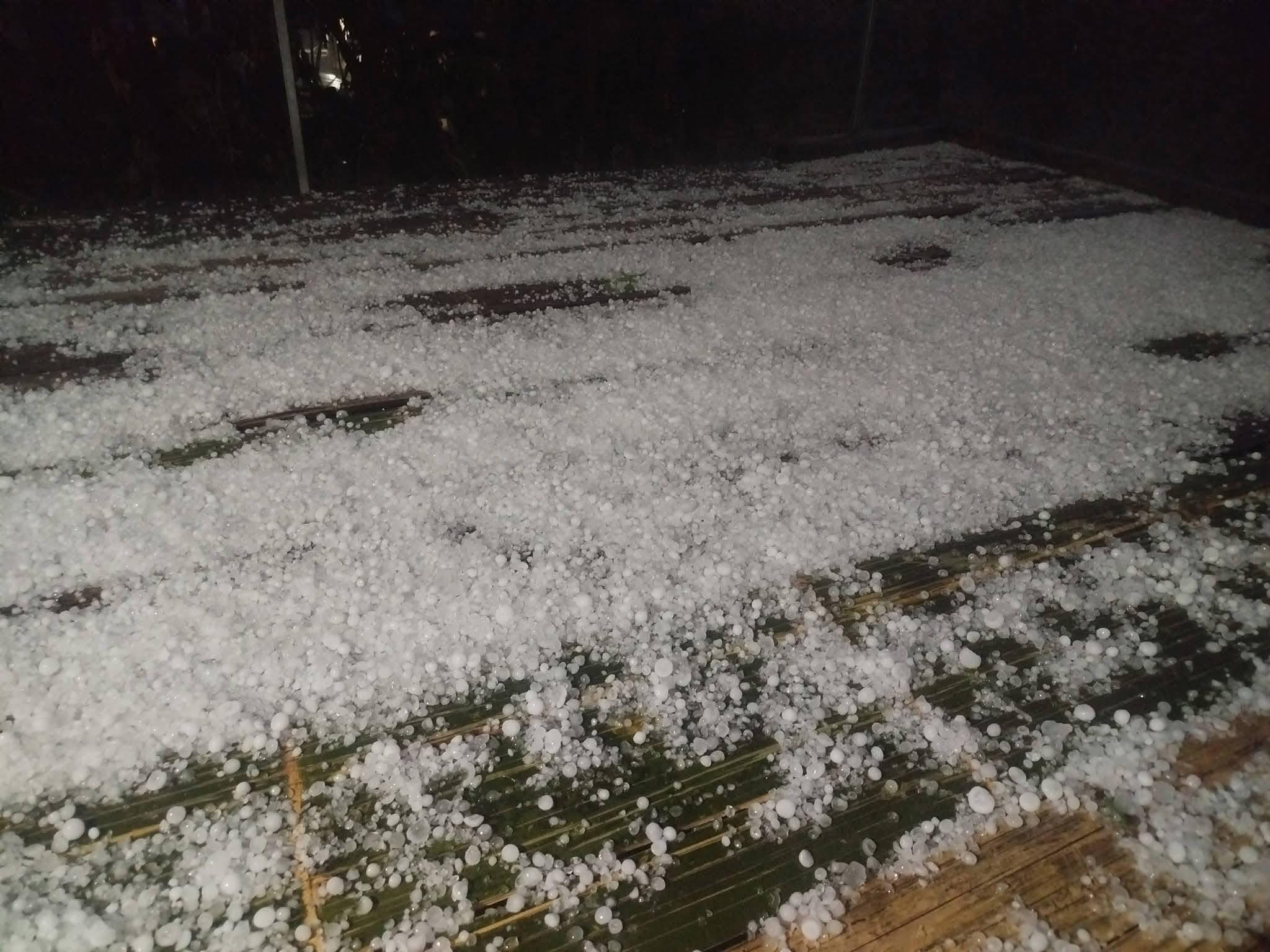 |
Dense hailstones in Nam Khanh commune, Cao Bang. Photo: Cao Bang
Cao Bang recorded the most severe hailstorms, with multiple occurrences from yesterday afternoon until night. From 4 PM, hailstones with a diameter of 1-3 cm fell on Ha Quang commune for about 15 minutes. By evening, the hail zone moved to Minh Khai and Nam Quang communes.
The dense hailstones, combined with thunderstorms, damaged or blew away many roofs of homes in Cao Bang. Authorities are currently assessing the damage.
The National Center for Hydro-Meteorological Forecasting issued a continued warning at 4:40 AM, stating that a convective cloud mass is continuing to develop over Yen Hoa, Vinh Hung, Gia Lam, Tu Liem, Thanh Tri, Yen Nghia, Hat Mon, An Khanh, Quoc Oai, Hung Dao, Phu Cat, Chuong My, Phu Nghia, Xuan Mai, Quang Bi, Tran Phu, Hoa Phu, Binh Minh, Tam Hung, Dan Hoa, Thuong Tin, Hong Van, Thuong Phuc, Chuong Duong, Phu Xuyen, Ung Hoa, My Duc, and Huong Son wards and communes.
Over the next 30 minutes to three hours, this cloud mass will bring rain to the aforementioned wards and communes, then expand to inner-city Hanoi. During the thunderstorms, there is a possibility of whirlwinds, lightning, hailstones, and strong gusts of wind.
Northern Vietnam is transitioning from spring to summer, a period when the weather often features extreme phenomena like thunderstorms, hailstones, and lightning. The cause of hailstones is the significant temperature difference between residual cold air masses and rapidly rising daytime temperatures, which destabilizes the atmosphere and creates conditions for strong thunderstorm cloud development. Within a short period, wind gusts can intensify, accompanied by hailstones and whirlwinds, leading to roof damage, fallen trees, and disruptions to daily life and production.
Meteorological agencies advise residents to closely monitor weather developments, limit outdoor activities during thunderstorms, and secure homes and vehicles to minimize risks.
Gia Chinh