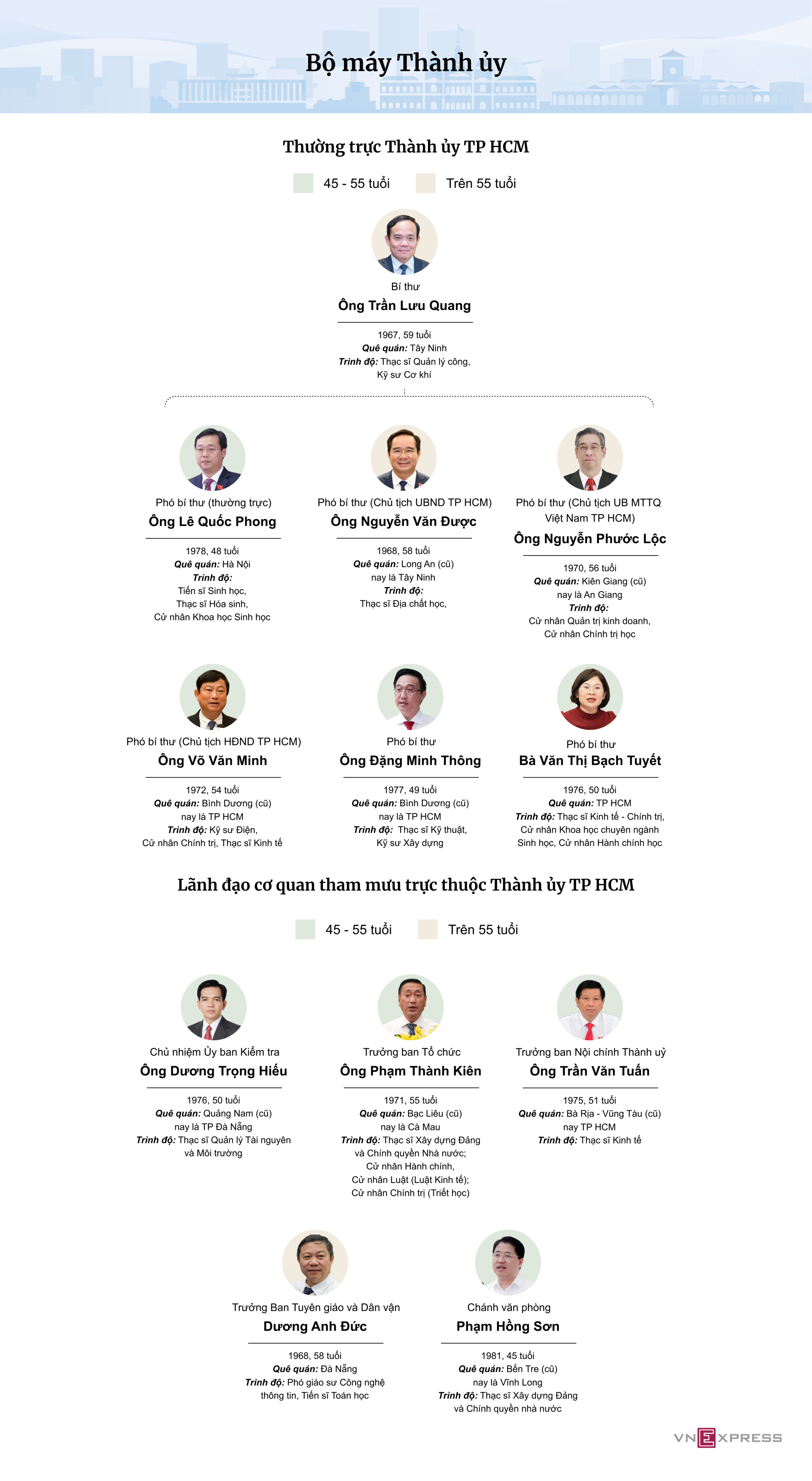
Compared to the period after the first Ho Chi Minh City Party Congress for the 2025-2030 term, held last October, leaders of three out of five advisory bodies of the City Party Committee have changed, reflecting the policy of "selecting the right person for the job."
Currently, among the 12 key leaders of the City Party Committee Standing Board and advisory bodies, one is female: Deputy Secretary of the City Party Committee Van Thi Bach Tuyet (50 years old), accounting for 8%, a decrease from two people after the Congress. The average age is about 53-54; the youngest is Pham Hong Son (45 years old), Chief of the City Party Committee Office; the oldest is Secretary Tran Luu Quang (59 years old). Five individuals are over 55 years old. The team's professional qualifications are diverse, including academic titles and degrees such as: associate professor, doctor, with backgrounds in fields like science, technology, and public administration.
 |
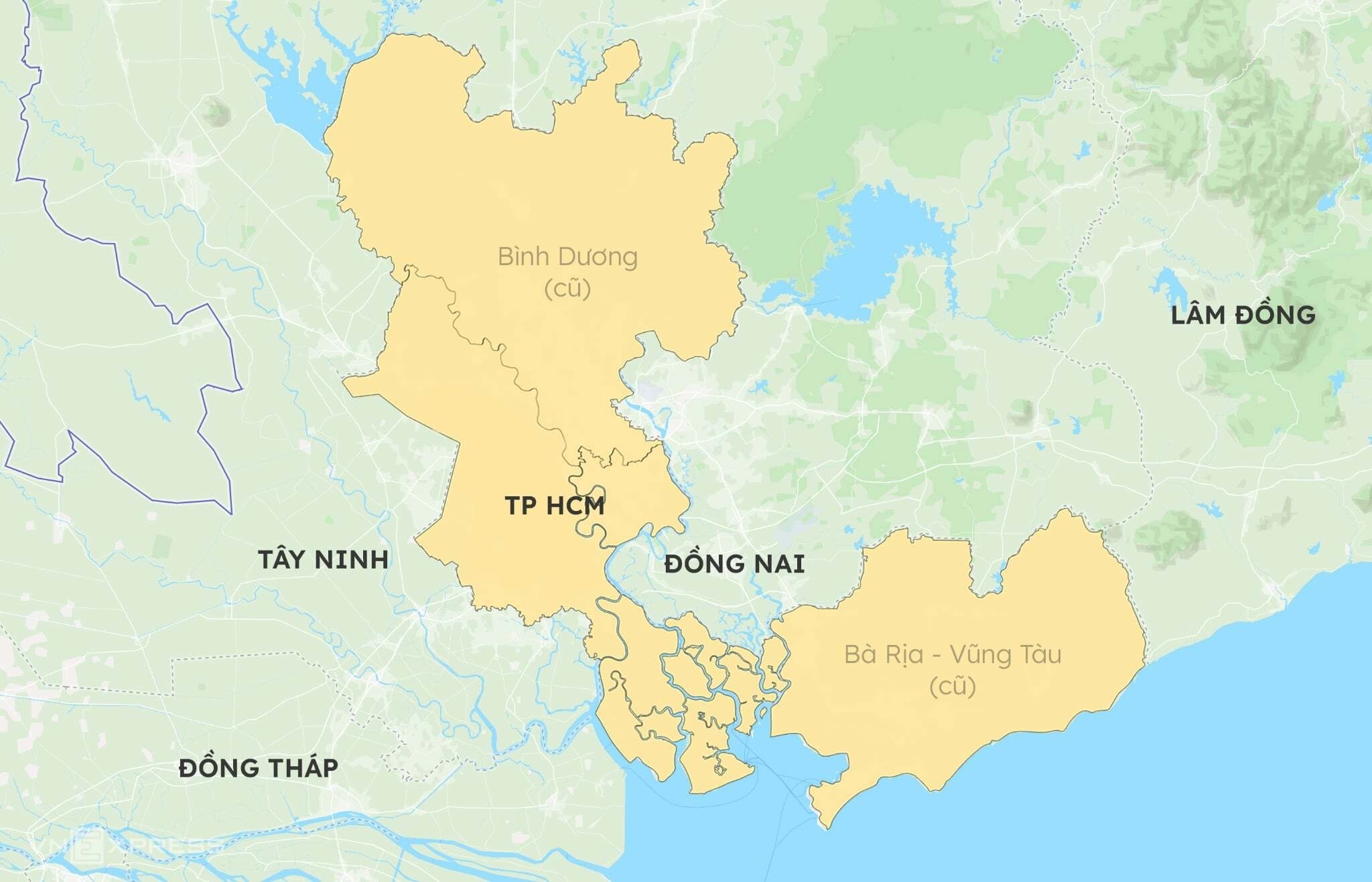
Ho Chi Minh City after merger has an area of 6,770 square kilometers with approximately 14 million residents, including 168 wards, communes, and the Con Dao special zone. *Graphic: Hoang Khanh* |
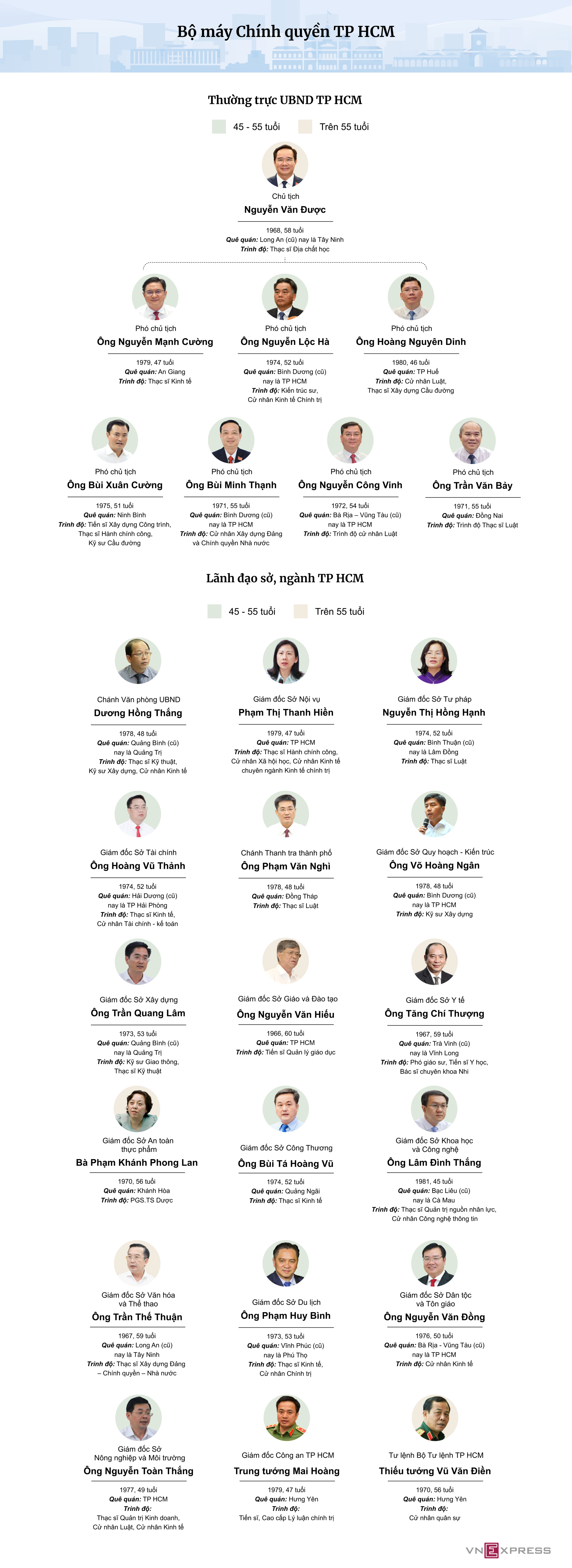
At the first session on the morning of 30/3, the 11th Ho Chi Minh City People's Council elected leadership positions and 17 members of the City People's Committee, completing the government apparatus for the 2026-2031 term.
The City People's Committee Standing Board currently has eight members, with no females, led by Chairman Nguyen Van Duoc, along with seven vice chairpersons, a reduction of one compared to the end of the previous term as Tran Thi Dieu Thuy was not re-elected. Leadership ages range from 46 to 58. The youngest is Vice Chairman Hoang Nguyen Dinh (46 years old), and the oldest is Chairman Nguyen Van Duoc (58 years old). Six out of eight individuals are between 50-55 years old, indicating a focus on middle-aged officials.
At the departmental level, 18 leaders have an average age of about 51-52. The youngest is Lam Dinh Thang, Director of the Department of Science and Technology (45 years old), and the oldest is Nguyen Van Hieu, Director of the Department of Education and Training (60 years old). The 45-50 age group accounts for about one-third; 51-55 years old constitutes the majority; those over 55 are mainly in education, health, and culture, with many holding high academic titles and degrees. Among all 18 departmental leaders, three are female, accounting for 16-17%, unchanged from the end of the previous term, but men still dominate. Professionally, the leadership team primarily has backgrounds in infrastructure and technical fields such as construction, transport, and architecture, aligning with the priority of addressing urban issues like traffic, planning, and public investment.
 |
Challenges for the new term
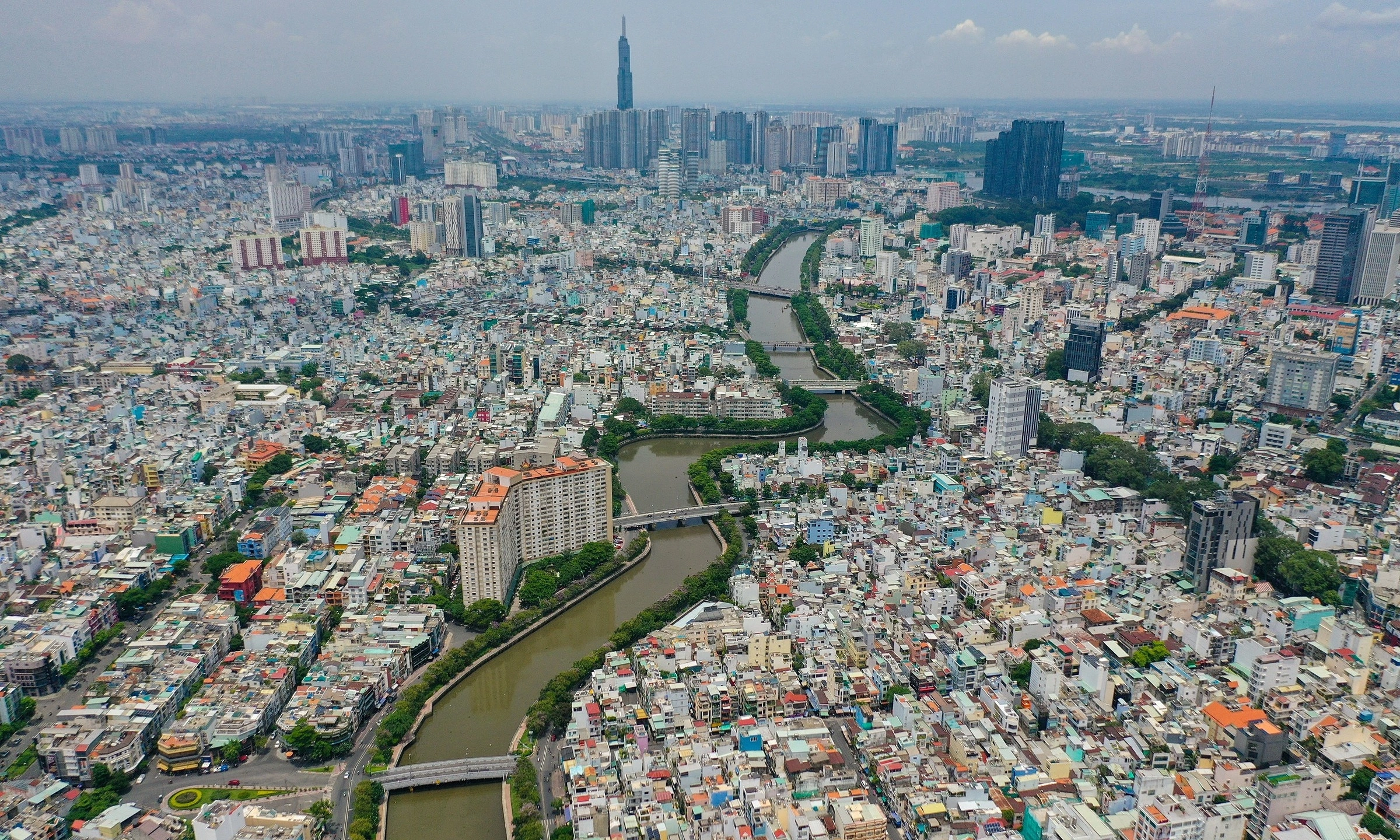
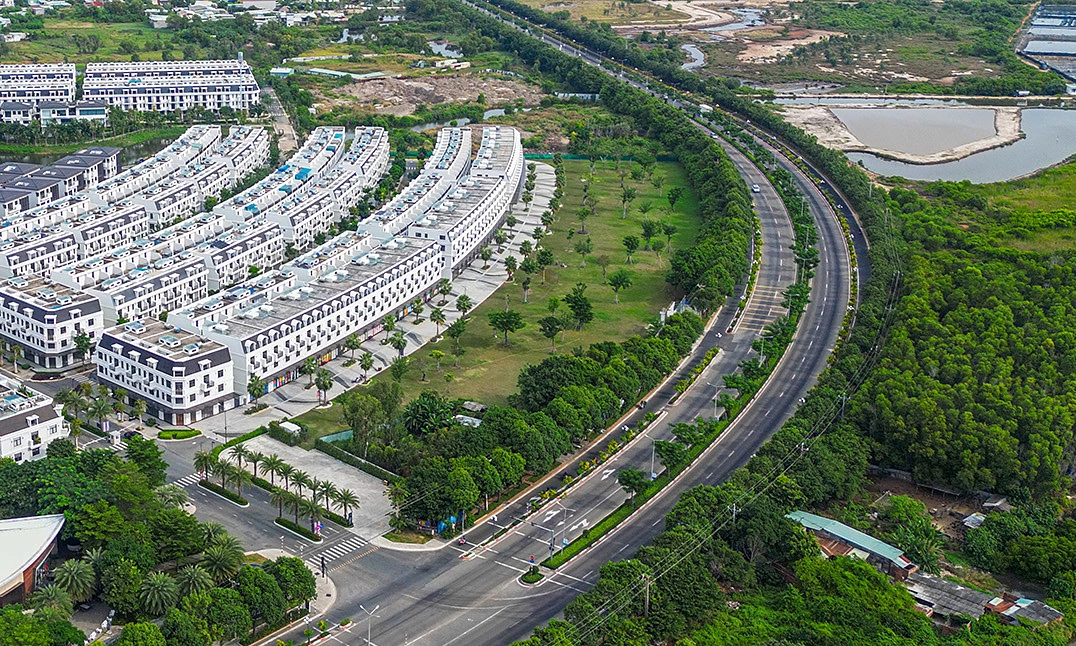
With an area of over 6,700 square kilometers and approximately 14 million residents, Ho Chi Minh City is among the world's 20 largest megacities. It contributes about one-fourth of the national GDP, one-third of the budget, and one-fifth of the country's import-export turnover. Its Gross Regional Domestic Product (GRDP) has exceeded 100 billion USD.
In 2025, Ho Chi Minh City's GRDP reached approximately 3,03 trillion dong, an increase of over 8%, accounting for 23,5% of the national GDP; per capita GRDP was estimated at 8,755 USD, 1,7 times higher than the national average. Industry, construction, and services accounted for nearly 90% of the economic structure; total budget revenue exceeded 800 trillion dong. Entering 2026, the city aims for 10-11% growth. However, according to experts, the nation's largest urban area faces many challenges: global economic fluctuations, rising production and energy costs, and supply chain disruptions. The pressure to develop a digital economy, aiming to account for 30% of GRDP, demands technological infrastructure and high-quality human resources, while public investment disbursement is substantial with many key infrastructure projects. Implementing specific mechanisms under Resolutions 98 and 260 also requires swift, flexible action to create breakthroughs and overcome administrative barriers.
 |
Speaking upon his re-election as Chairman of the Ho Chi Minh City People's Committee, Nguyen Van Duoc stated that this is a "significant responsibility for a special metropolis, the country's economic locomotive." This term requires the city to accelerate and transform its growth model towards digital, green, and innovative development.
The head of the government pledged to tighten discipline, build a constructive administrative apparatus; promote double-digit growth; improve the investment environment; and accelerate infrastructure development, address issues of traffic, flooding, environment, and work towards a drug-free goal before 2030. City leaders affirmed they will not shy away from difficulties, will not shirk responsibility, will enhance coordination with agencies and the business community, and will place citizens at the center of service.
Le Tuyet - Khanh Hoang