Around 5 PM, Hanoi's central sky grew cloudy with strengthening winds, and some areas experienced light rain. According to the National Center for Hydro-Meteorological Forecasting (NCHMF), satellite images, weather radar, and lightning detection data indicate convective clouds developing over Vinh Tuy, Vinh Hung, Linh Nam, Long Bien, Gia Lam, Bat Trang, and Ung Hoa, moving southwest-northeast.
In the northern mountainous provinces, heavy rain started in the early afternoon. Between 2 PM and 4 PM, Tuyen Quang recorded 77 mm of rainfall in Xuan Lap, 60,8 mm in Nam Dan, and 51,4 mm in Quang Ngan.
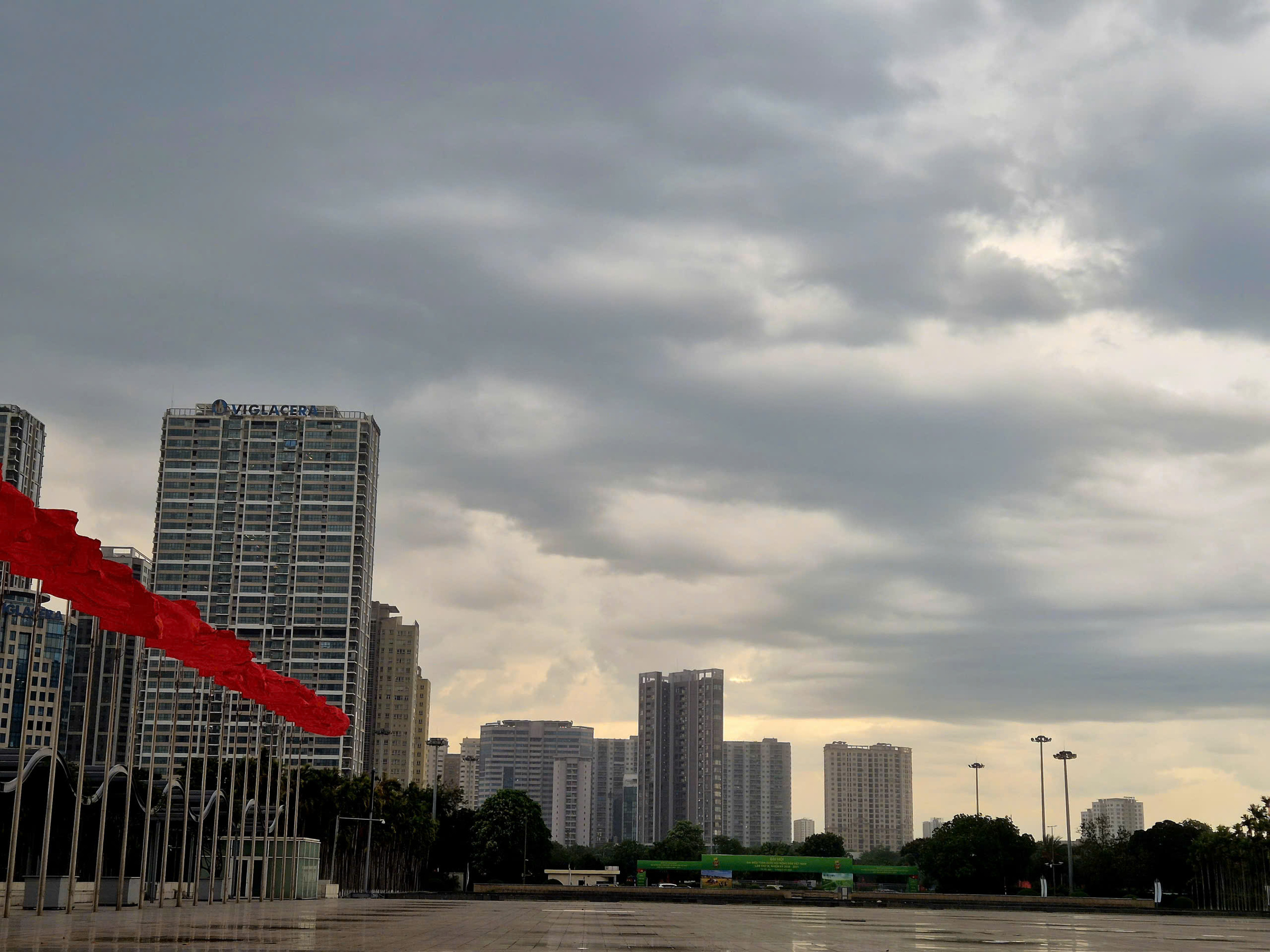 |
Thunderstorm in Hanoi at 5 PM on 8/6. Photo: Gia Chinh. |
From 3 PM to 5 PM, Lao Cai, Thai Nguyen, and Quang Ninh also experienced moderate to very heavy rain. Some notable rainfall amounts included 76,4 mm in Tan Linh (Lao Cai), 74 mm in Khanh Hoa (Lao Cai), 65,4 mm in Duong Phong (Thai Nguyen), and 55,2 mm in Quang Ha (Quang Ninh).
The meteorological agency reported that many areas in Tuyen Quang, Lao Cai, Thai Nguyen, and Quang Ninh have soil moisture exceeding 85% or have reached saturation. Over the next three to six hours, these localities expect an additional 20 to 50 mm of rain, with some places receiving over 80 mm, which will heighten the risk of flash floods on small rivers and streams, and landslides on steep slopes.
Many localities face a high risk, including Bac Quang, Bang Hanh, Na Hang, Nam Dan, Quang Binh, and Lam Binh in Tuyen Quang, along with several areas in Lao Cai, Thai Nguyen, and Quang Ninh.
The cold front is currently impacting Cao Bang and Lang Son, causing temperatures to drop rapidly, according to Pham Phuong Chi, a forecaster from the NCHMF's Weather Forecasting Department. In Truong Khanh, Cao Bang, the temperature fell by about 10 degrees C, from 33 degrees to approximately 23 degrees C.
On the evening and night of 8/6, the cold front will continue to affect other areas in northern and north-central Vietnam, triggering a widespread period of heavy rain.
Forecasts indicate that the heaviest rainfall will concentrate in the Northwest region, northern Phu Tho, and Tuyen Quang, with common amounts of 80-160 mm, and some areas exceeding 250 mm. Other northern localities generally expect 20-50 mm, with isolated spots receiving over 100 mm. Thanh Hoa and Nghe An are projected to receive 50-100 mm, with some areas potentially exceeding 150 mm.
This period of heavy rain will last from the evening of 8/6 until the end of 9/6, gradually decreasing from 10/6. Under the influence of the cold front, northern temperatures will drop significantly, with the lowest temperatures on the night of 8/6 and 9/6 generally ranging from 21 to 25 degrees C.
After many days of heat, the arrival of the cold front combined with high atmospheric humidity creates favorable conditions for extreme weather events such as strong thunderstorms, whirlwinds, lightning, hail, and strong gusts, Ms. Chi stated.
"Short-duration heavy rain can cause flooding in urban areas, industrial zones, and low-lying regions. Residents must be particularly aware of the risk of flash floods and landslides in mountainous areas, and should limit travel during strong thunderstorms," Ms. Chi advised.
In addition to heavy rain, the meteorological agency also warned that from the evening of 8/6 to 10/6, small rivers and the upper reaches of major rivers in northern Vietnam could experience a flood surge of two to four meters. Peak water levels on some small rivers might reach alarm levels 1-2.
In response to these developments, on the afternoon of 8/6, the National Steering Committee for Civil Defense urged northern localities to closely monitor the flood situation. They were asked to promptly warn residents in areas at risk of inundation, flash floods, and landslides, deploy traffic control at deeply flooded points, submerged crossings, and fast-flowing areas, and prepare rescue vehicles and personnel as needed.
This is the first cold front to appear in June in 12 years, a rare phenomenon as northern Vietnam has entered its summer season. The cold front not only brought a sharp drop in temperatures but also helped end the prolonged heatwave that had affected the northern region for many days.
Gia Chinh