 |
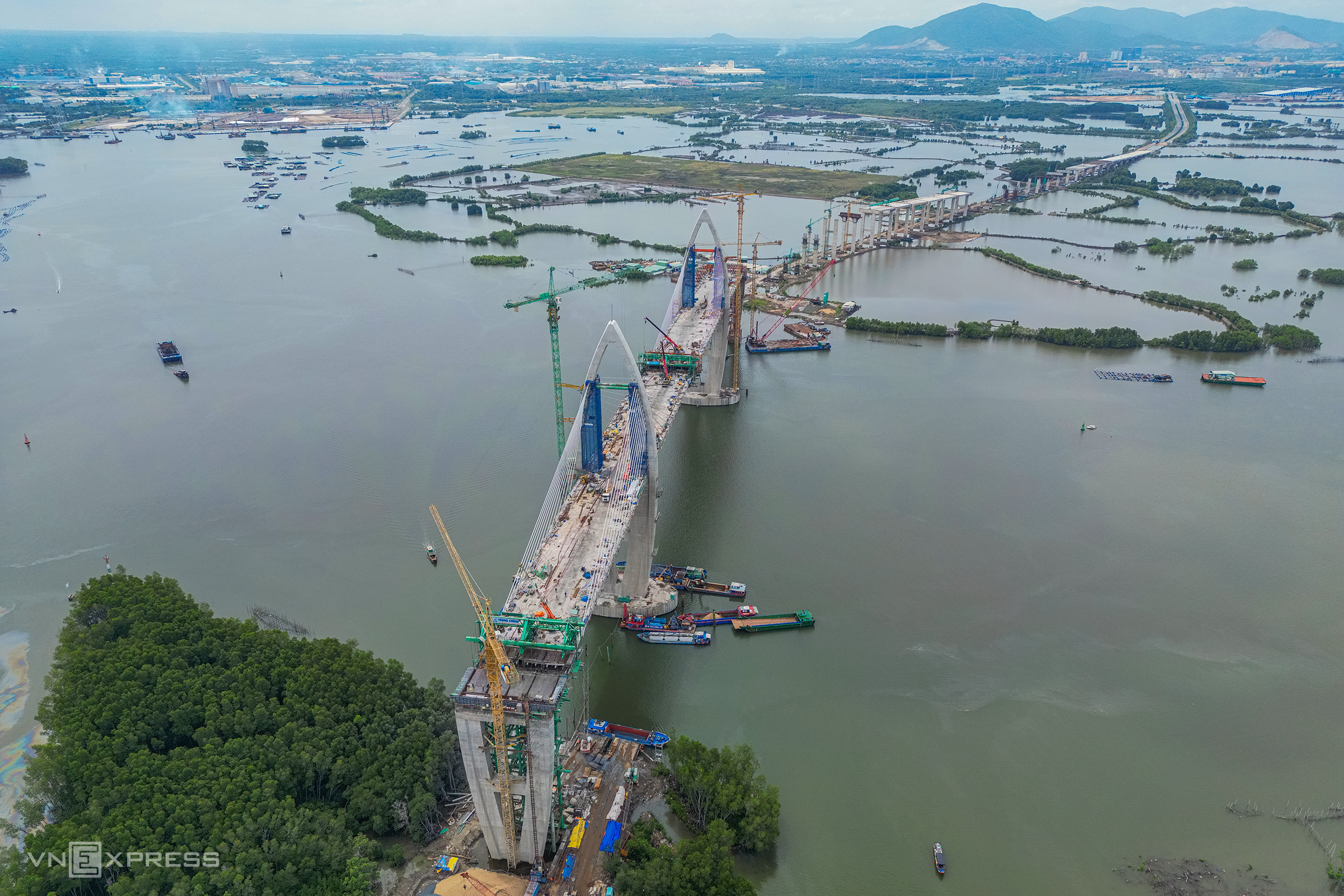
Phuoc An Bridge began construction in 6/2023, spans over 4,3 km, and has a total investment of nearly 4,900 billion dong. Currently, all 30 main girder blocks are complete, with construction volume reaching over 90%.
Two towers approximately 119 m high, curving in the shape of a "flame" or "rice grain", are the bridge's architectural highlights. Due to the high structure, curved surface, and skewed bevel, the contractor had to improve the cantilever formwork system to adapt to the changing shape of the towers during construction.
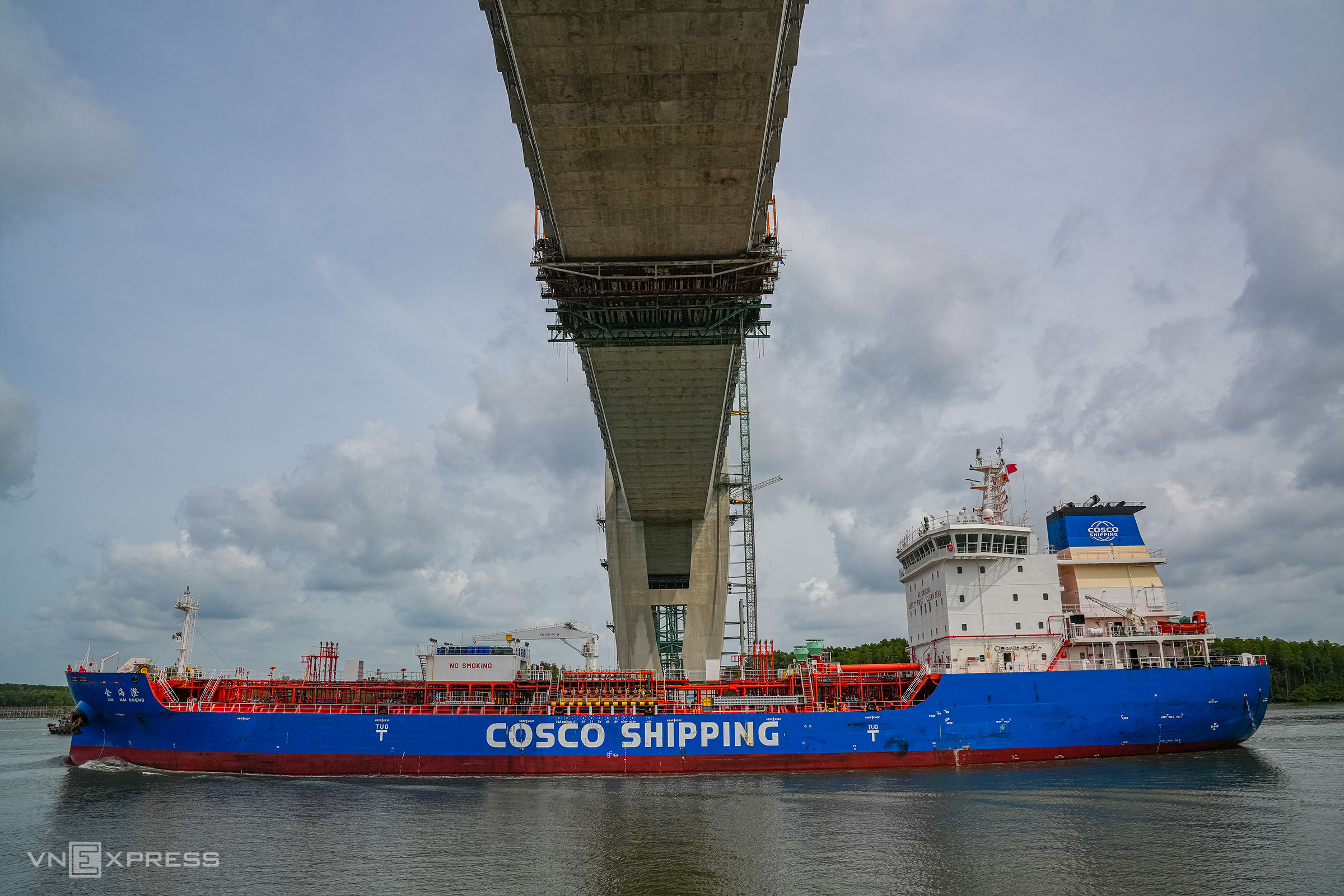 |
A large cargo ship from Cosco Shipping passes through the bridge construction area. The structure features a main span of 250 m and a navigational clearance of 55 m, ensuring vessels up to 30,000 tons can traverse the Thi Vai River.
According to the plan, the contractor will join the side span near pier T38 by the end of June. The side span near pier T39 is expected to be completed approximately one month later, before the main span in the middle of the river is joined.
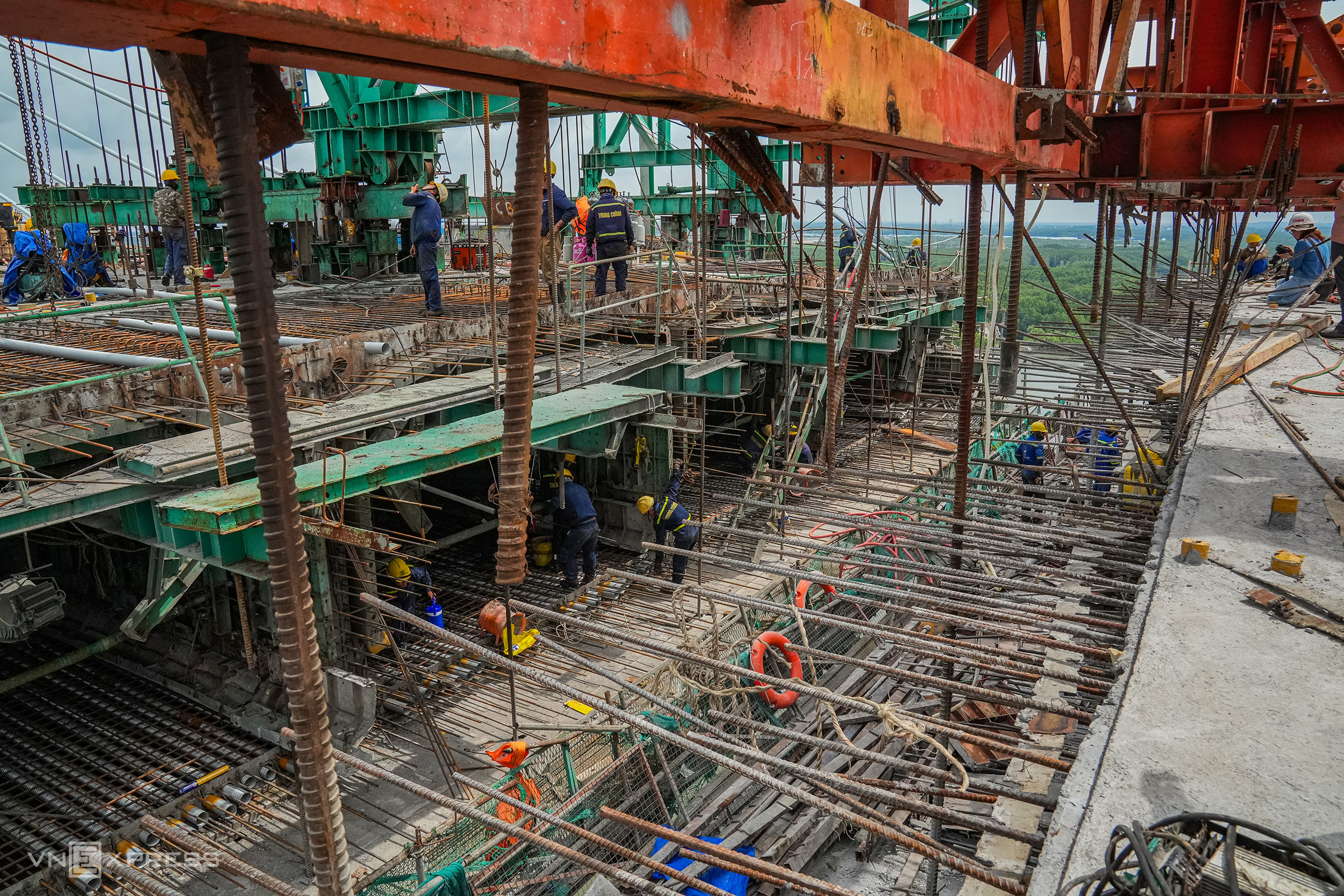 |
At the construction site, the contractor employs a balanced cantilever method using an overhead launching gantry, with the load-bearing structure positioned above the gantry system. Approximately 300 engineers and workers are continuously working, allowing the project to be approximately six months ahead of schedule.
 |
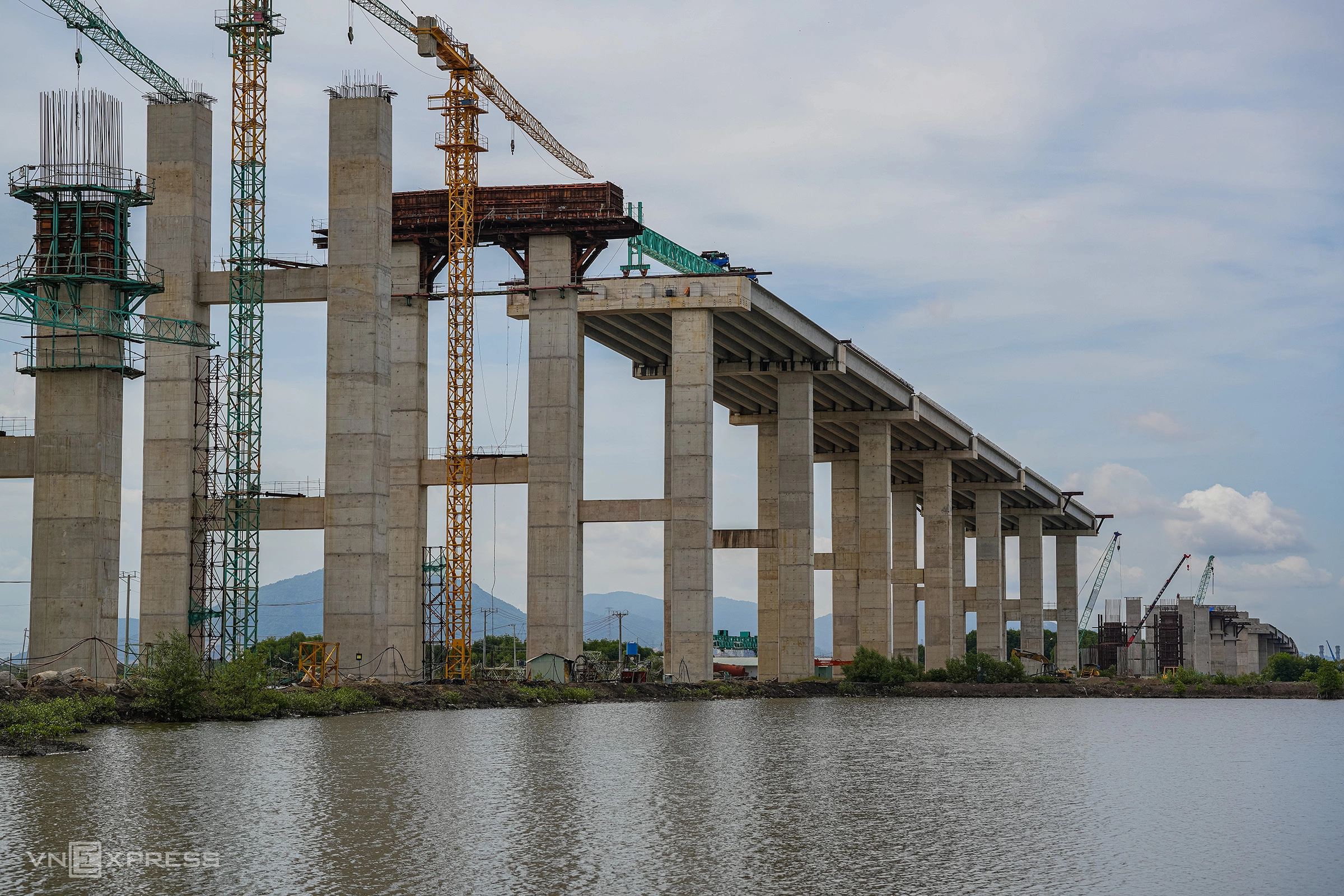 |
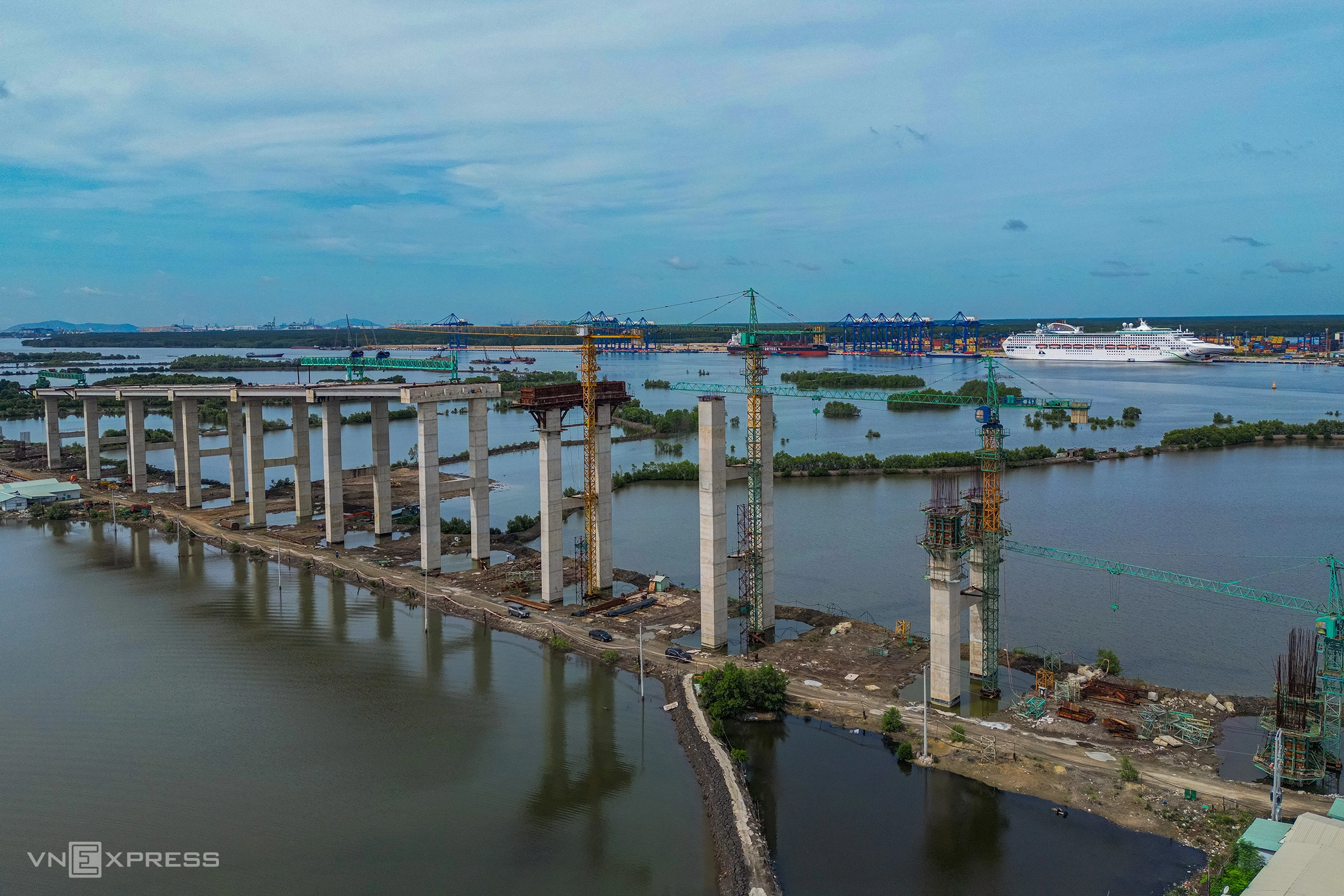
For package 38, the approach bridge section on the Phu My ward side has completed its piers, with girder spans and deck slabs also installed.
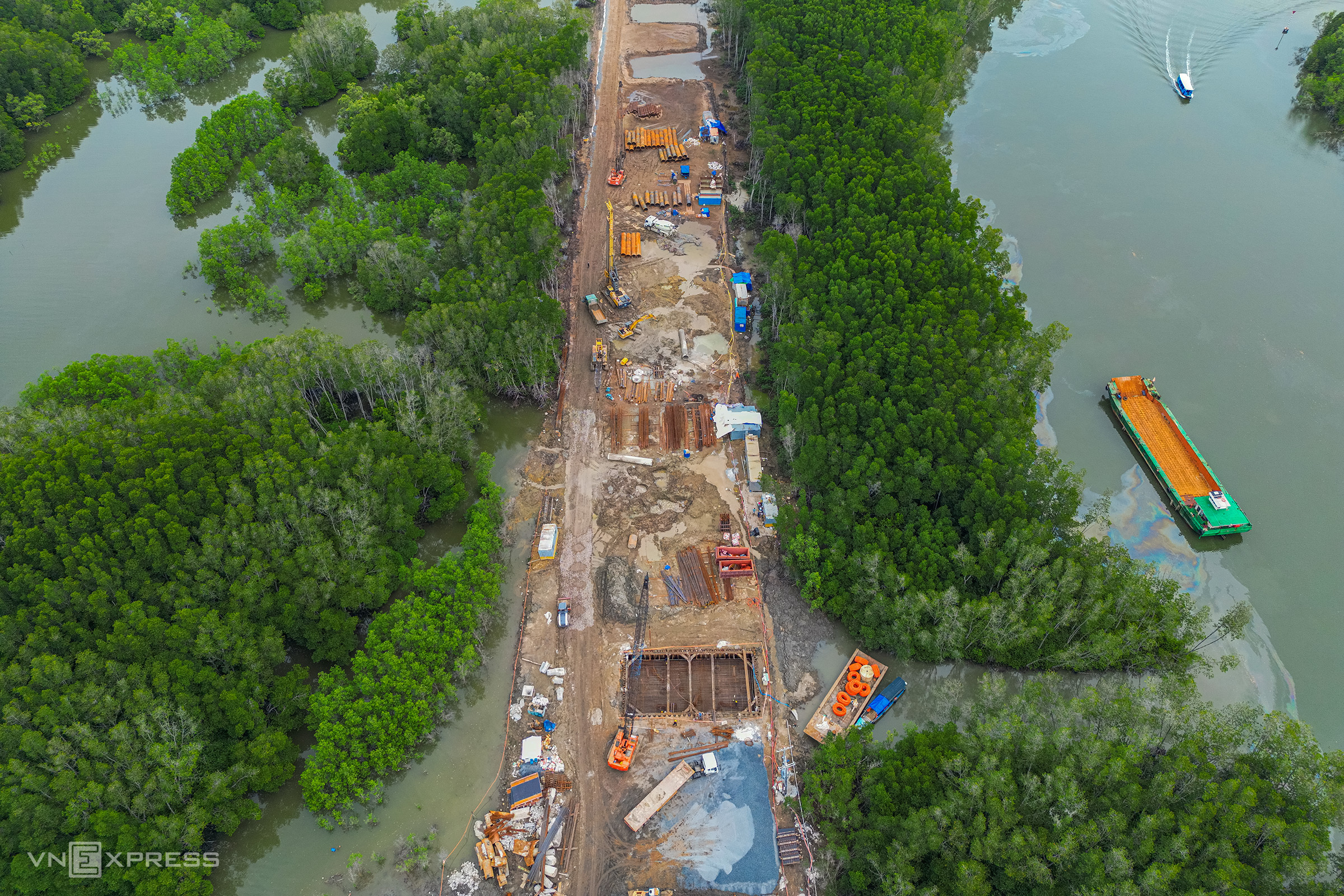 |
On the Dong Nai bank, the approach bridge section is progressing slower due to land clearance issues. Contractors are currently performing mass bored piling.
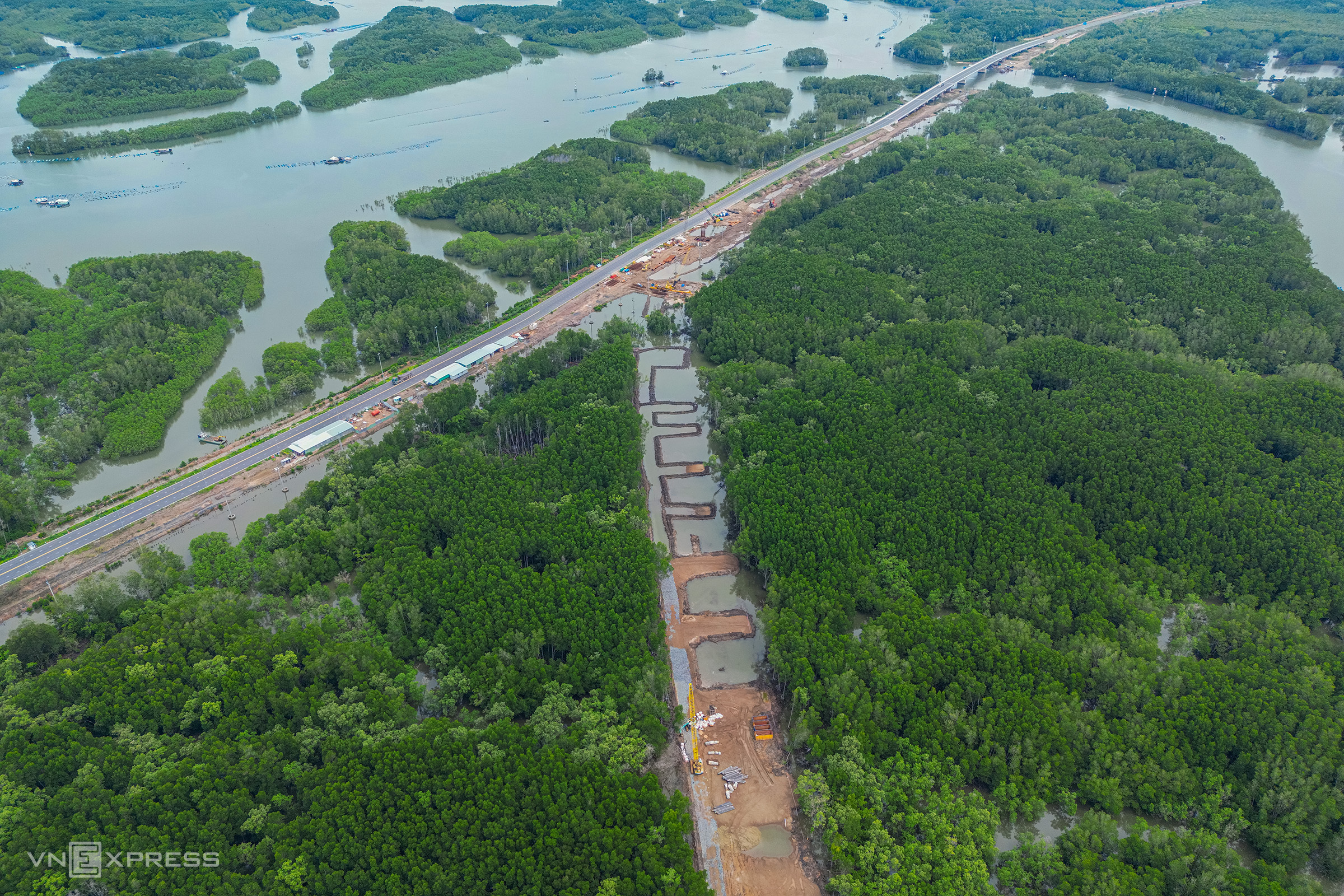 |
From above, the bridge approach on the Dong Nai side winds through mangrove forests along the Thi Vai River. This area, part of package 41, currently has the slowest progress in the project. Phuoc An Bridge is expected to be completed in 5/2027, creating a direct connection between the Cai Mep - Thi Vai port complex and the Ben Luc - Long Thanh Expressway. This will allow vehicles traveling to the western region to bypass downtown Ho Chi Minh City, while also easing congestion on National Highway 51.
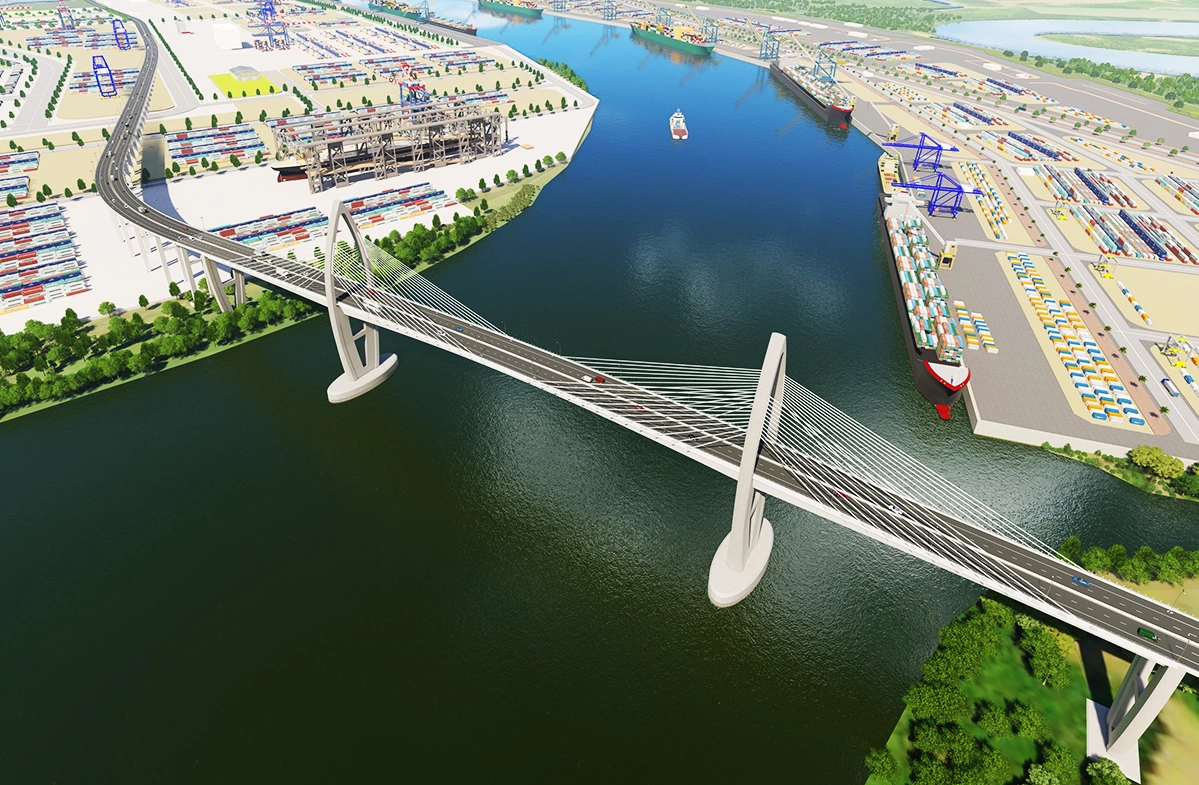 |
Perspective view of Phuoc An Bridge. Photo: Cai Mep - Thi Vai Port Area Traffic Project Management Board
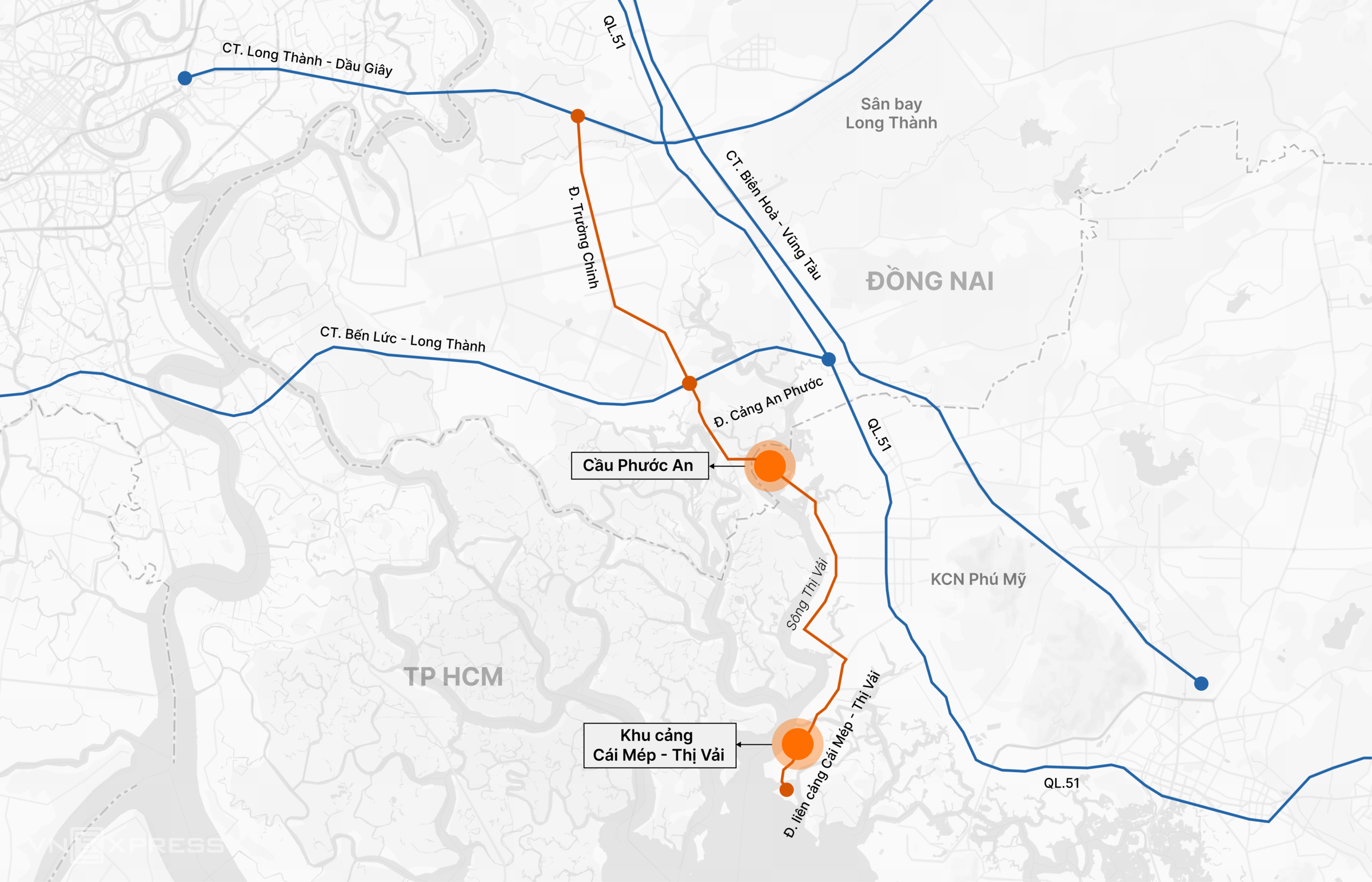 |
Phuoc An Bridge alignment. Graphic: Tam Thao
Truong Ha