The standing board of the Hanoi Party Committee issued this directive on 9/9, following media and public outcry during the initial days of the 2026-2027 academic year. Reports highlighted deficiencies in the organization of school lunches at several institutions, including concerns about meal quality and quantity not aligning with allocated funds, and delays in meal transportation and delivery.
Furthermore, oversight by local authorities and schools has been criticized as merely superficial, and the implementation of technology, such as the HanoiCheck application, has not achieved its full intended practical effect.
The standing board of the city Party Committee has mandated immediate investigation and verification of the cases reported by the media in Bo De ward, Trung Gia commune, and Thanh Oai commune. It requires prompt remedial actions and timely communication to reassure students and parents, along with strict disciplinary measures against any involved groups or individuals found in violation.
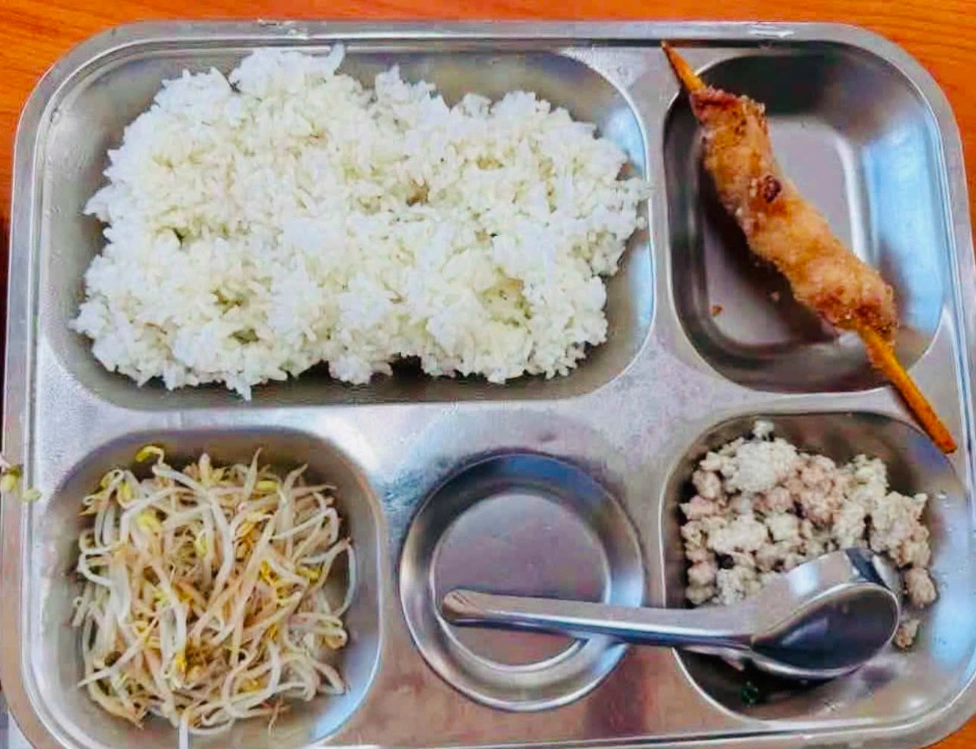 |
A meal criticized as "meager" at Trung Gia Primary School on 7/9. *Photo courtesy of parents* |
Additionally, relevant units are required to intensify their inspection, supervision, and guidance on organizing and managing student lunches across educational institutions in the area. This is to ensure that city policies are sustained, effectively implemented, and compliant with regulations.
Communes, wards, and educational institutions are instructed to professionalize the organization and management of student lunches, guaranteeing nutritional quality and food safety.
These units are to report their implementation results to the standing board of the city Party Committee by 20/9.
Earlier, on 7/9, parents at Trung Gia Primary School in Trung Gia commune reported that their children's meals were "meager" compared to the cost. A typical stainless steel tray contained only minced meat, bean sprouts, and a single grilled skewer. The daily lunch fee is 40.000 VND, with the city subsidizing 28.000 VND and parents covering the remaining amount.
Parents at various other schools expressed dissatisfaction due to lunch delivery vehicles arriving two to three hours late. For instance, at Kim Bai Primary School in Thanh Oai commune, students typically eat lunch around 11 AM to allow time for their nap. However, for two consecutive days, meals were delivered closer to 1 PM, with many portions missing rice or soup. The school had to purchase cakes and milk for the students, but concerned parents still arrived to pick up their hungry children, resulting in missed afternoon classes.
Parents of students at Duc Giang Primary School (Thuong Thanh branch) also protested, alleging that the meal supplier used cargo trucks and manual labor for transportation, raising serious questions about the hygiene, quality, and nutritional value of the meals.
In recent years, Hanoi has implemented numerous effective and humane policies, including a lunch subsidy program for primary school students, which began in the 2025-2026 academic year. Currently, over 633,000 primary students across Hanoi, encompassing both public and private schools, receive a daily subsidy of 28.000 VND for their school lunches, with eligible policy beneficiaries receiving 40.000 VND.
This year marks the first time the city has utilized the HanoiCheck application, a database for school nutrition and food safety, allowing parents and schools to verify the list of qualified meal suppliers. Communes and wards are now responsible for supplier assessment, a change from the previous system where schools took the initiative.
By Vo Hai