On 27/2, Hanoi city issued a plan to convert fossil fuel taxis to electric and green energy vehicles within the city.
The plan outlines a roadmap to complete the conversion of 100% of gasoline and diesel taxis to electric and green energy vehicles by 2030 at the latest.
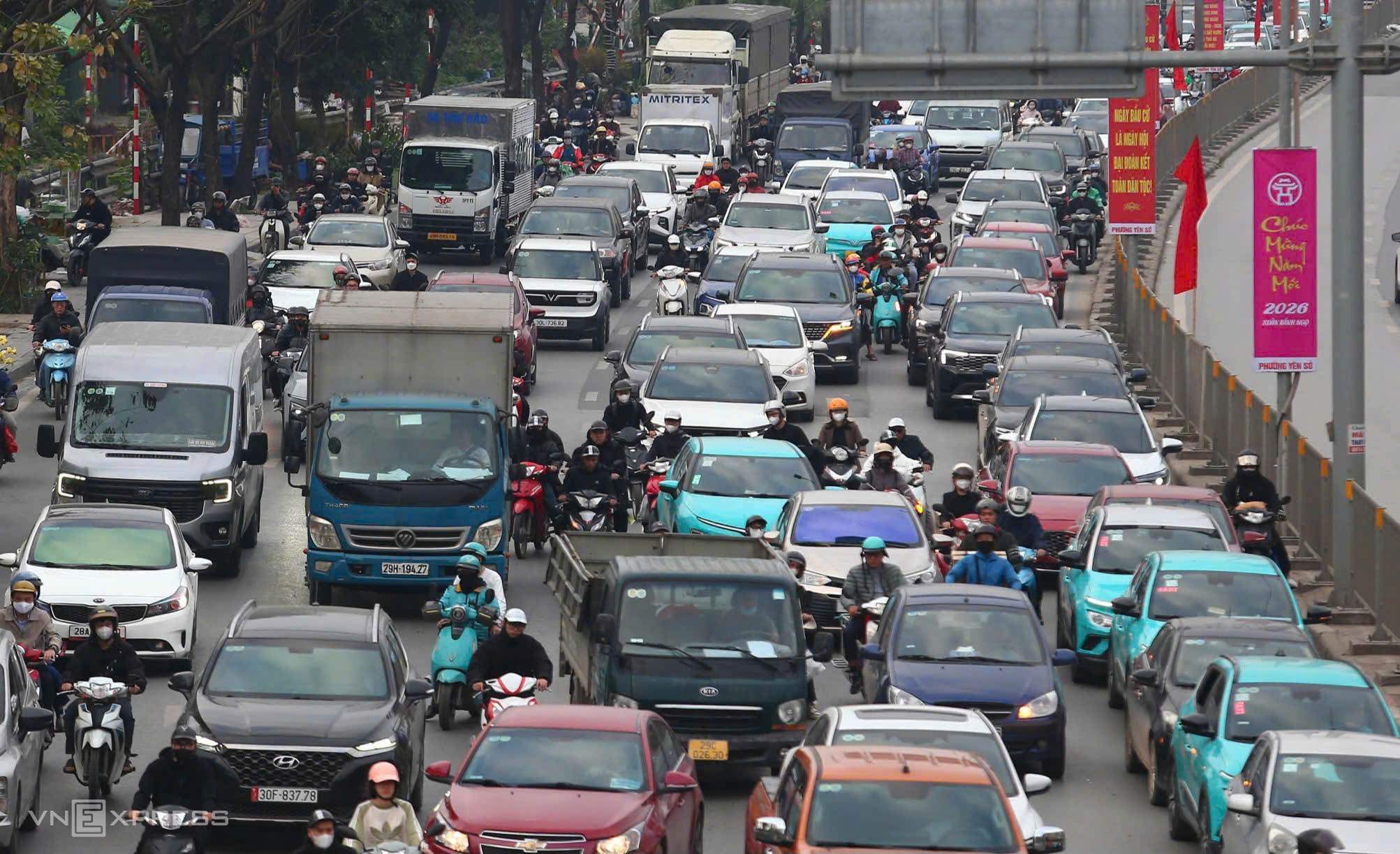 |
Some electric taxis, featuring their distinctive green color, operating on Giai Phong street in 1/2026. *Photo: Pham Chieu*
The specific conversion rates are: 63-64% by 2026, 68-70% by 2027, 74-77% by 2028, 88-96% by 2029, and 100% by 2030.
Beyond 2030, the city will focus on perfecting and maintaining stable operating conditions for electric and green energy taxis. This includes prioritizing improved access to charging infrastructure, designated stops, and traffic management tailored to the operational characteristics of these vehicles.
To implement this roadmap, the city requires relevant units to finalize mechanisms and policies supporting the conversion of taxis to clean energy, integrated with the establishment of low-emission zones.
Concurrently, the city will develop and submit to the City People's Council a resolution outlining policies to support the conversion of road transport vehicles to clean energy and measures to restrict polluting road vehicles within the area.
The City People's Council's resolution will encompass mechanisms and policies to promote the conversion of taxis to electric and green energy, including: loan and interest rate support, preferential vehicle registration fees, and incentives for public charging station infrastructure investors.
The city will also propose that competent authorities consider extending the 100% exemption policy for registration fees on electric and green energy oto, particularly for vehicles owned by taxi passenger transport businesses.
Currently, Hanoi has over 14,300 active taxis, with nearly 8,800 being electric vehicles. Additionally, around 13,600 taxis are inactive and awaiting replacement. The total number of taxis projected for conversion by 2030 is nearly 28,000.
Vo Hai