The Ministry of Agriculture and Environment announced its plan to request government approval to classify pollution treatment for the Bac Hung Hai irrigation system as an urgent project. The ministry estimates the total cost at approximately 38.500 billion VND, excluding land clearance and urban redevelopment.
The proposed solutions are categorized into three groups. The first focuses on infrastructure completion and management modernization. This includes renovating 13 major headworks, such as Xuan Quan, Cau Cat, An Tho, and Nam Ke Sat, installing automatic monitoring systems, and reinforcing critical canal sections.
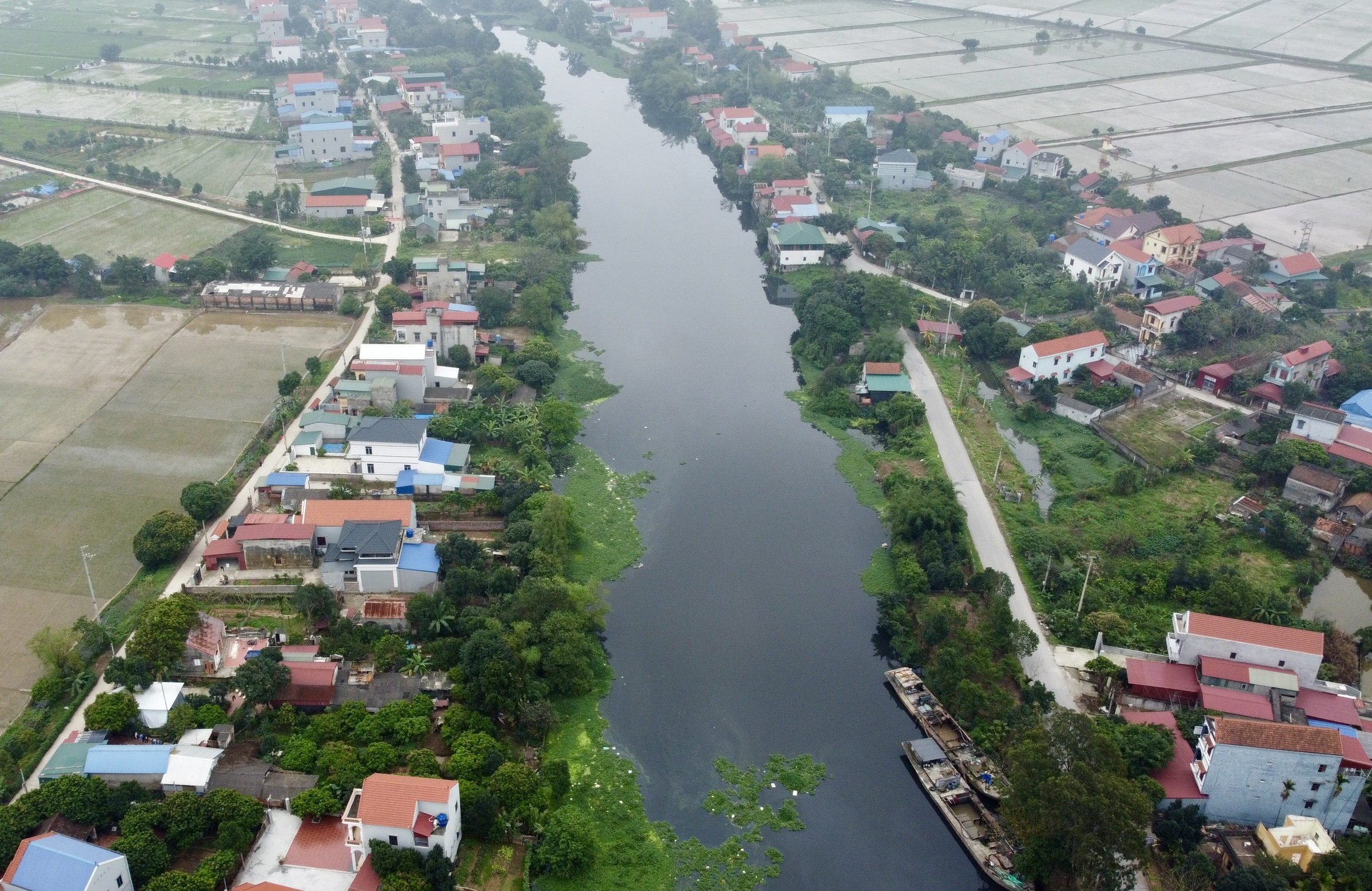 |
Pollution in the Bac Hung Hai irrigation system in 2024. *Gia Chinh*
The second group addresses pollution control and water quality management. Its core involves constructing wastewater treatment systems at 18 canal entry points, collecting dispersed waste sources, and clearly defining management responsibilities.
The third group focuses on multi-layered spatial development, promoting ecological urban areas along the canals. This includes renovating key structures, fostering tourism connections, and allocating approximately 2.150 hectares of land for urban and service development.
Based on this estimate, the Ministry of Agriculture and Environment plans to distribute investment responsibilities: 6.000 billion VND for the ministry, 2.185 billion VND for Hanoi, 2.670 billion VND for Bac Ninh, 13.425 billion VND for Hung Yen, and 14.125 billion VND for Hai Phong.
The Ministry of Agriculture and Environment stated that if the government approves the proposal, it will mandate localities to develop plans adhering to common standards. This aims to prevent disparate approaches among provinces, particularly concerning waste discharge and monitoring systems.
In recent years, the irrigation system has suffered from severe pollution, with water quality frequently falling below minimum standards for agricultural irrigation. According to Nguyen Hoang Hiep, Deputy Minister of Agriculture and Environment, the primary challenge is the sharp decline in water supply to the system, which poses a significant risk to water security.
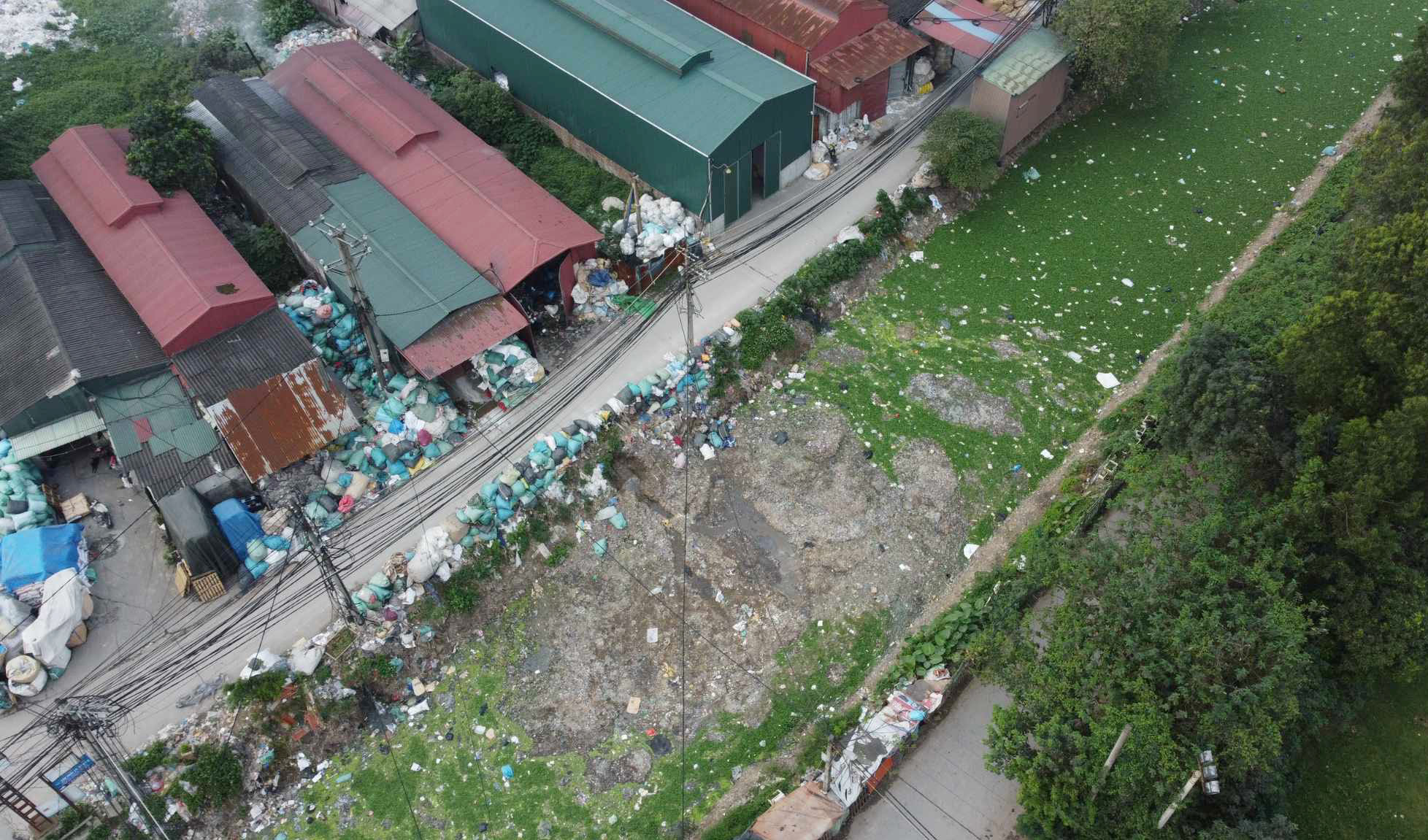 |
A section of the Bac Hung Hai canal in Hung Yen covered with trash in 2024. *Gia Chinh*
The primary water source from the Red River, flowing through the Xuan Quan sluice gate, has recently only reached about 20% of its designed capacity due to lowered river water levels. Concurrently, saltwater intrusion is increasing, with salinity levels above 3‰ appearing more frequently. The permissible threshold for water intake is below 1‰.
Addressing pollution in Bac Hung Hai has been a longstanding concern, yet efforts have yielded limited effectiveness. Mr. Hiep added, "Under the pressure of urbanization, industrialization, and climate change, the system faces severe challenges. The most prominent is the prolonged water pollution, which has become a critical issue but has not been thoroughly resolved. This significantly impacts the system's water supply and drainage functions, as well as its potential for multi-purpose development."
Constructed in 1958, Bac Hung Hai was the largest irrigation system in the northern region. It comprised over 200 km of canals and dams, pumping stations, and dikes, serving irrigation, drainage, and flood control for four provinces and cities: Hanoi, Bac Ninh, Hung Yen, and Hai Duong. The system was designed to supply irrigation water for over 116.600 hectares of agricultural land, supporting aquaculture, daily life, and various economic sectors.
Gia Chinh