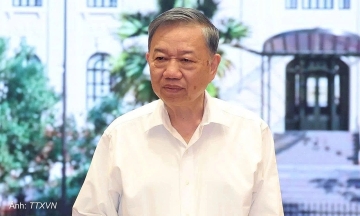
"Officials do not have to wait for instructions before acting, so the notion of HCMC waiting for central guidance will be a thing of the past," Quang stated at a conference on disseminating and implementing the Urban Development Law, on the morning of 26/8, two days after the National Assembly's approval.
The law takes effect from 1/10/2026. Within over one month, the city must finalize 168 documents to ensure immediate implementation of regulations upon the law's effectiveness, including 117 resolutions from the People's Council, 48 decisions from the People's Committee, and three decisions from the HCMC People's Committee Chairman.
According to the Party Committee Secretary, the law brings three significant benefits to the city: increased decentralization and delegation of power; opening up space for new policy and economic model experimentation; and enhancing implementation speed and efficiency.
The law grants 240 authorities to the city's People's Council, People's Committee, and People's Committee Chairman for decision-making. When provisions of the Urban Development Law differ from other laws on the same issue, the mechanisms within this law are prioritized.
Quang referred to this as a "diamond value" because conflicts between legal documents often create practical obstacles. He likened infrastructure to a "runway", capital to "fuel", and institutions to the factor determining whether HCMC can "take off".
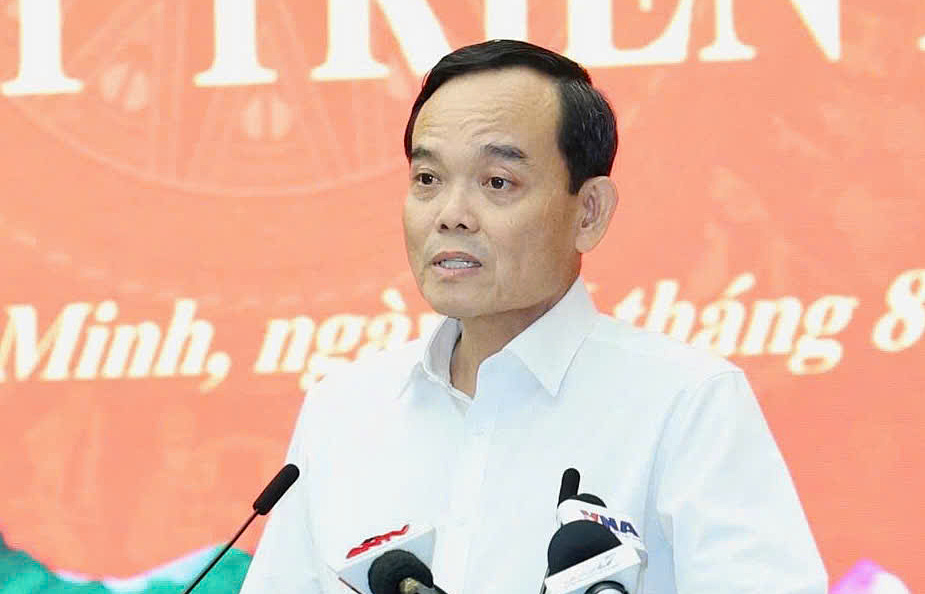 |
Party Committee Secretary Tran Luu Quang delivers a concluding speech at the conference on the Urban Development Law, on the morning of 26/8. Photo: An Phuong
However, according to him, opportunities do not automatically translate into results without people to organize implementation and without narrowing the gap between mechanisms and action. Following the conference, each official needs to answer three questions: What authority does the law grant their agency? What results will that authority generate? And who is responsible if it is not implemented or performed ineffectively?
With the new decentralization mechanism, the Party Committee Secretary requires the administrative apparatus to change its approach. Previously, when addressing specific issues, officials typically identified solutions and then sought mechanisms for implementation. Now, with the authority granted by the law, the city must proactively design solutions within legal limits.
"Do not draft documents for lengthy consultations," he said, adding that officials will be reviewed if this situation occurs.
Departments and sectors must clearly understand their scope of authority, identifying decisive tasks for focused implementation instead of waiting for other agencies to act first before following suit.
Decentralization, according to Quang, must be accompanied by power control. Management methods need to shift from "control by permission" to openness, transparency, and accountability.
The city will protect officials who dare to think, dare to act, and dare to take responsibility for the common good. Errors arising during the innovation process, if not for personal gain and aimed at serving development, will be considered for protection. Conversely, those who procrastinate and avoid making decisions to ensure their own safety must also be held responsible.
"We cannot delegate authority to an individual who then dares not use their power," Quang said.
Evaluating Officials by Tangible Results
The Party Committee Secretary stated that officials will be evaluated through three channels: capacity indicators and output products; feedback from agencies and leaders; and opinions from citizens and businesses.
Among these, 168 wards, communes, and special zones must proactively develop action programs, resolve difficulties, and foster development, as these are the levels closest to citizens and businesses. "Discipline and official assignments must be based on measurable results," he said.
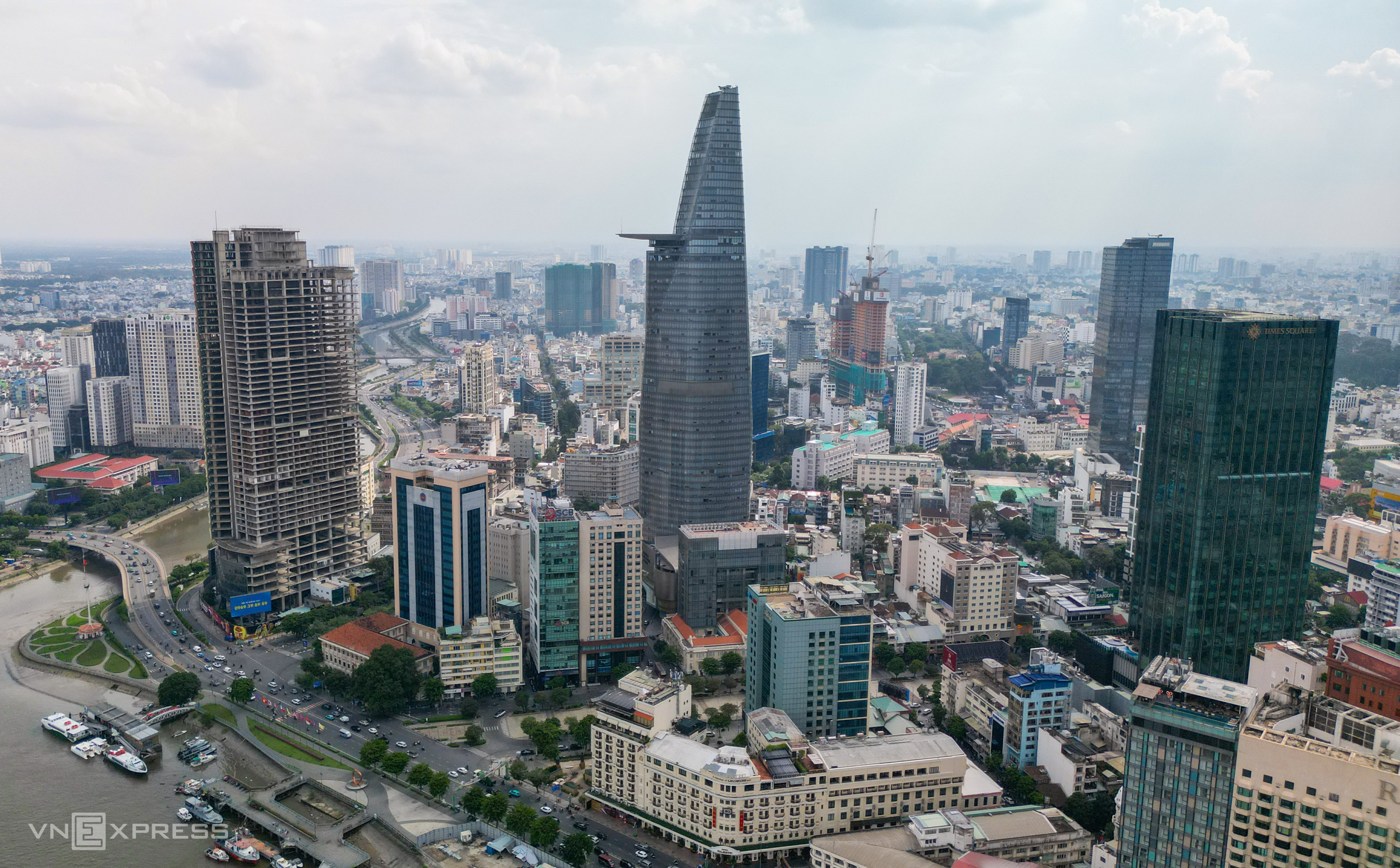 |
HCMC's central area, near the Saigon River, in 8/2026. Photo: Quynh Tran
Evaluation metrics could include the number of simplified procedures, reduced processing days, time saved by businesses, or months by which a project is expedited. Officials with clear results will be recognized, rewarded, and given timely opportunities for advancement and promotion, without necessarily waiting for a specific cycle or sequence.
Previously, HCMC People's Committee Vice Chairman Nguyen Manh Cuong stated that the Urban Development Law comprises five chapters, 66 articles, and seven specific policy groups related to organizational structure, planning, economic development, science and technology, resource mobilization, and regional linkages.
The city gains increased authority regarding organization, personnel, planning, urban development oriented towards transit-oriented development (TOD), free trade zones, finance, land, and science and technology. Some new mechanisms and policies can be piloted for a maximum of 5 years after approval by competent authorities.
In urban planning, the city's People's Council can decide on matters related to underground, low-rise, high-rise, and TOD spaces. The city also has the right to apply specific mechanisms for investment, land use targets, and site clearance.
HCMC can decide on establishing and adjusting free trade zones linked to international seaports; issuing urban bonds and project bonds; and building controlled experimental mechanisms for artificial intelligence, big data, and new technologies.
The law also designates HCMC as the coordinating nucleus for the special urban area and the Southeast region.
Le Tuyet