During a workshop organized by the Science, Technology, and Environment Committee of the Hanoi People's Council on the afternoon of 23/4, the Department of Agriculture and Environment announced that establishing a low-emission zone within Ring Road 1 is a new initiative, the first of its kind in Vietnam. The project aims to reduce vehicle emissions, promote the transition to green vehicles, and increase public transport usage.
According to Nguyen Minh Tan, Deputy Director of the Department of Agriculture and Environment, the city plans to implement the pilot in three phases. The first phase, from 1/7 to 31/12/2026, will focus on Hoan Kiem Ward. It will then expand to Cua Nam Ward, encompassing 14 surrounding streets, from 1/1/2027 to 31/12/2027. The third and final phase, from 1/1/2028 to 31/12/2029, will cover the entire Ring Road 1 area.
Tan explained the choice of Hoan Kiem, noting that the area experiences minimal impact from major construction activities and external emission sources. Additionally, it has years of experience managing traffic-restricted zones through its successful weekend pedestrian streets model.
Existing infrastructure supports this transition, including a network of charging stations and battery swap points within and near the area. An AI-powered traffic camera system is already installed and continues to expand, facilitating control over vehicle entry and exit.
The pilot area spans approximately 0,5 square kilometers, with a perimeter of 3,5 kilometers and a population of about 20.000 people. It includes 11 streets such as Trang Tien, Hang Khay, Le Thai To, Hang Dao, Hang Ngang, Ma May, and Nguyen Huu Huan. This scale is ideal for testing and evaluating effectiveness before wider replication, a strategy adopted by many international cities.
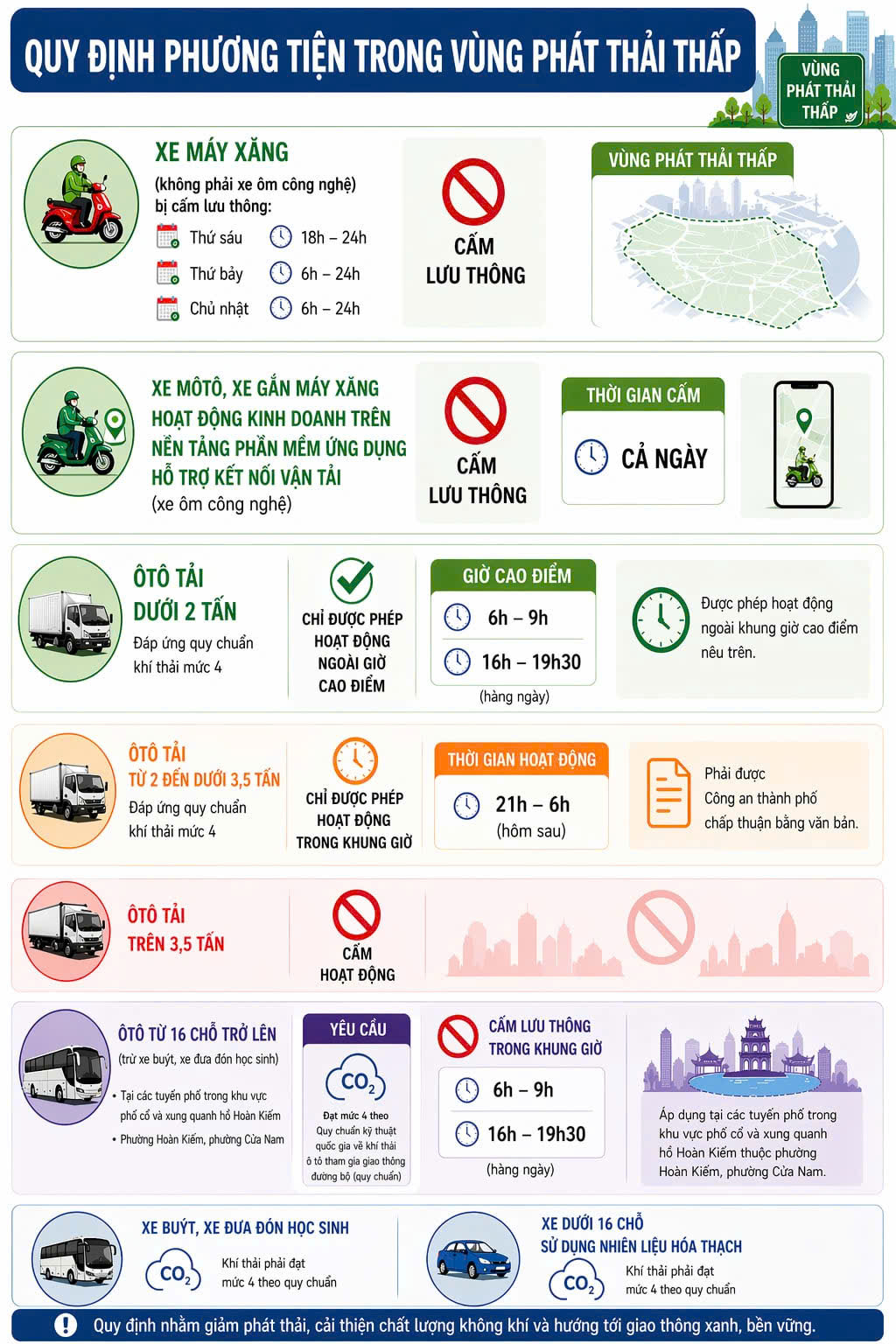 |
AI-assisted graphic. |
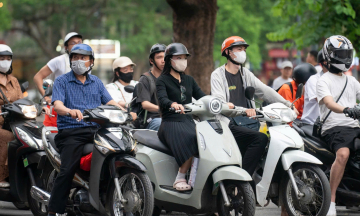
Hoan Kiem Ward authorities support the pilot initiative, recognizing its potential to improve the central area's environment. Statistics indicate that the number of private vehicles in the zone is not high, consisting primarily of motorbikes, making restrictions and the shift to green vehicles more feasible than in other areas.
However, the ward requested that the city promptly issue support policies for green vehicle conversion, particularly for small-scale businesses currently using gasoline motorbikes. They also sought assistance for businesses investing in public transport infrastructure and vehicles.
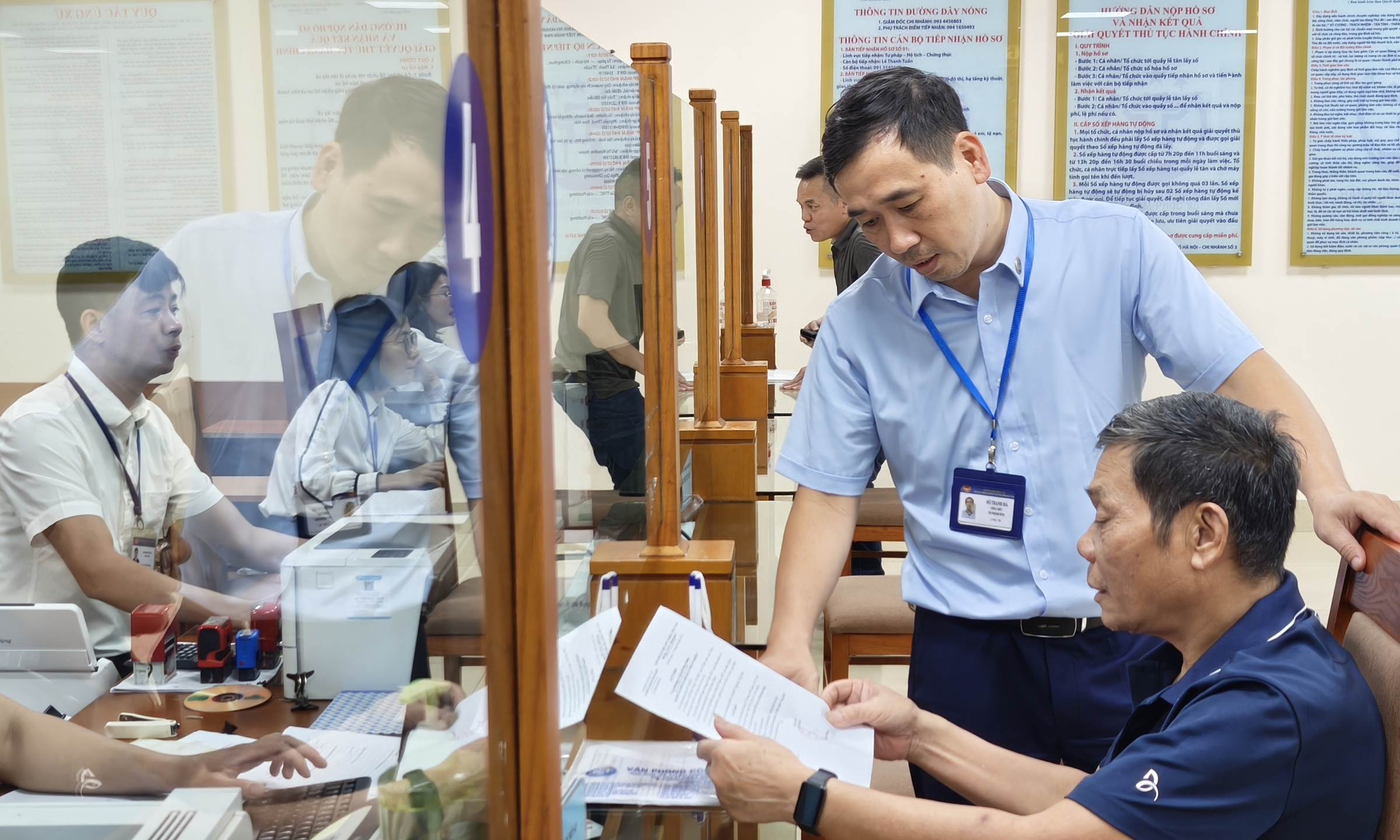
Dao Viet Long, Deputy Director of the Department of Construction, stated that the city is developing support policies for the transition, expected to be submitted to the People's Council soon. These policies include loan interest support, aid for vulnerable groups, and assistance for affected parties like taxi operators.
Under the draft proposal, individuals switching from fossil fuel motorbikes to green vehicles could receive support covering 20% of the vehicle's value, up to 5 million VND. Poor households may receive up to 20 million VND, and near-poor households 15 million VND.
The draft low-emission zone proposal for Ring Road 1 is currently undergoing public consultation. In the pilot area, the city plans to implement measures restricting fossil fuel vehicles, develop public transport, and support the transition to green vehicles.
Vo Hai