In a report submitted to the National Steering Committee for Civil Defense on 17/4, the Ministry of Agriculture and Environment stated that the natural oscillation between the ocean and atmosphere in the equatorial Pacific (ENSO) is transitioning from a La Nina state to neutral, with a high probability of shifting to El Nino during the june-august 2026 period, at an 80-90% likelihood. This phenomenon may intensify by the end of the year, potentially reaching a very strong intensity and extending into 2027.
Since early 2026, dry and hot conditions have emerged earlier than the multi-year average. Rainfall nationwide from the beginning of the year to mid-april has seen a common deficit of 10-40%, while water levels and flows in many river basins have dropped to low levels, indicating a risk of water scarcity from the start of the season.
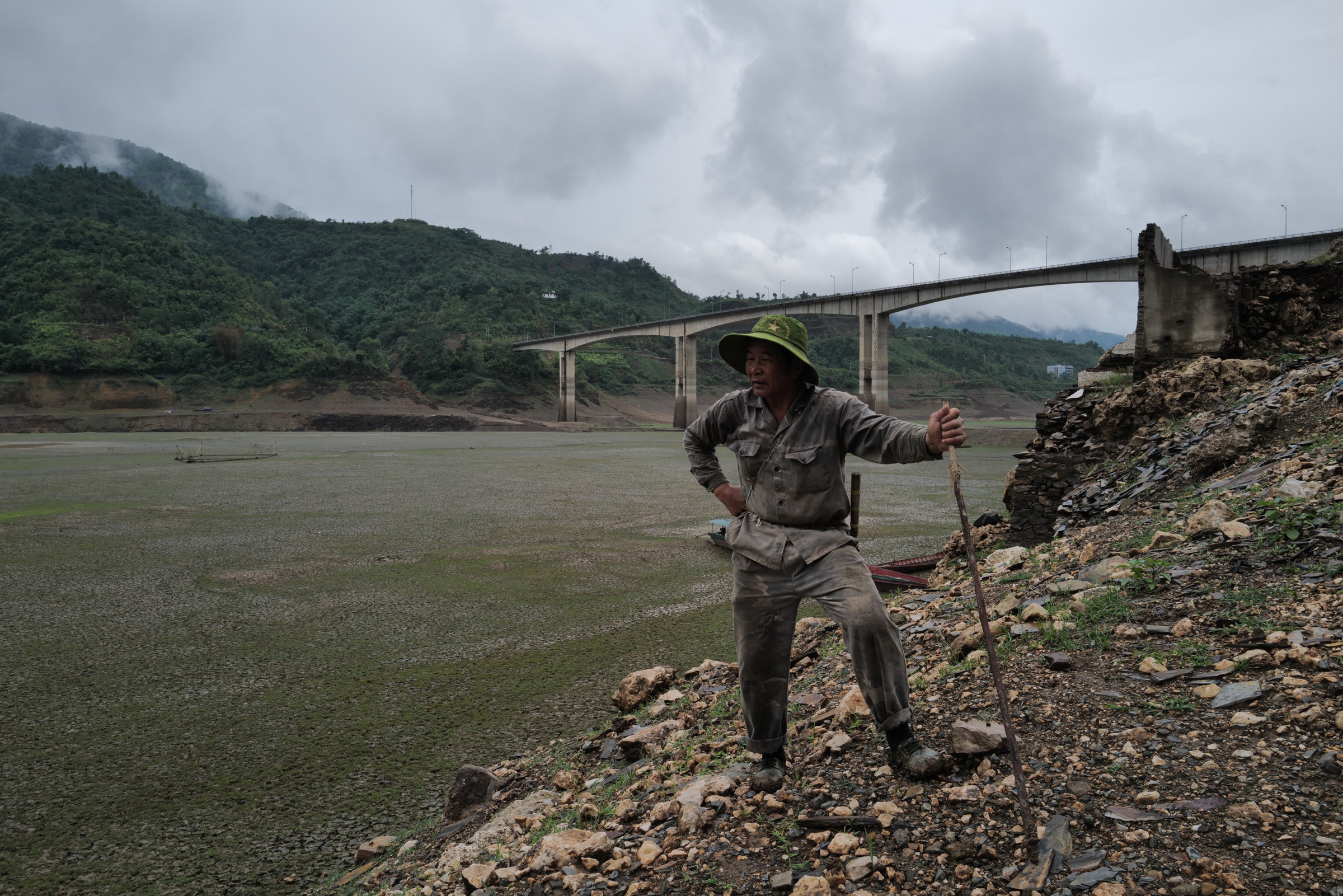 |
Da River bed exposed, 6/2023. Photo: Ngoc Thanh |
The Ministry of Agriculture and Environment forecasts that El Nino will impact different regions. In the northern region, the most noticeable effects are rising temperatures and an increased number of hot days. Heatwaves may appear early, last longer, and be more intense than the multi-year average. Although not the most severely affected by rainfall deficits, precipitation still tends to decrease during certain periods, increasing the risk of localized water shortages and putting pressure on electricity demand during summer.
The central region is expected to be most significantly affected during El Nino years. Reduced rainfall increases the risk of drought and water scarcity, especially in coastal provinces that rely heavily on natural water sources. The rainy season may arrive late and end early, reducing water storage capacity for agriculture and daily life.
In the Central Highlands, drought conditions tend to increase due to a combination of high temperatures and reduced rainfall. Stream flows decline, and soil rapidly loses moisture, affecting irrigation activities, especially for long-term crops. The risk of forest fires also rises during the peak dry season.
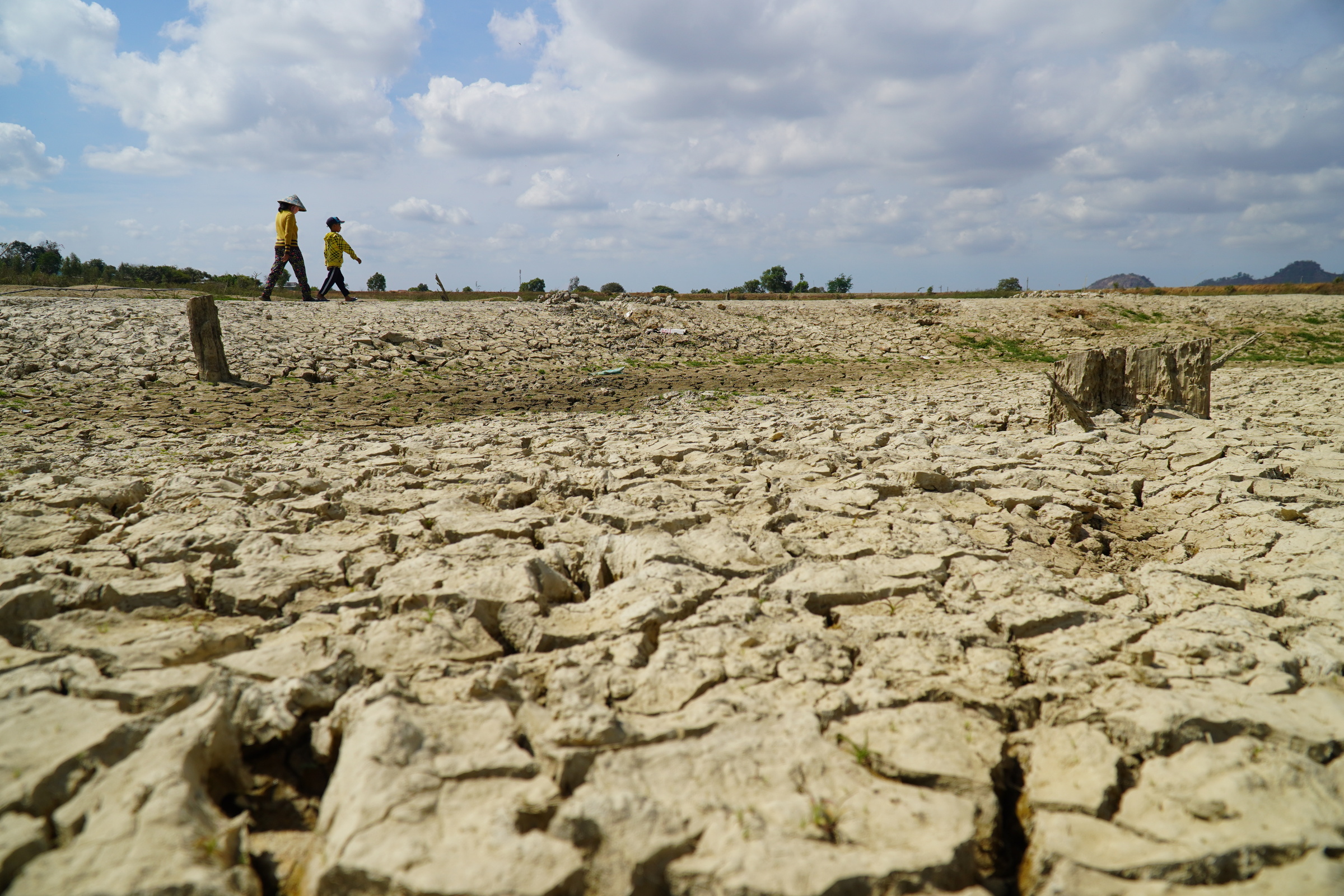 |
Ta Mon irrigation lake, Lam Dong, completely dry, 4/2020. Photo: Viet Quoc |
The southern region, particularly the Mekong Delta, faces a dual risk of water scarcity and saline intrusion. As water flow from the upper Mekong River declines, saltwater can intrude deep into inland areas during the dry season. Widespread water shortages could occur in late 2026 and the early months of 2027.
Despite a general trend of reduced total rainfall during El Nino years, the meteorological agency notes that localized heavy rainfall and extreme short-term downpours can still occur, causing flash floods, landslides, and urban flooding. Typhoon and tropical depression activity in the East Sea tends to be less frequent than the multi-year average; however, there remains a risk of strong, complex, and unpredictable storms.
Regarding response, Doctor Truong Ba Kien, Deputy Executive Director of the Center for Meteorological and Climate Research, believes preparations should adopt a "multi-risk" approach, rather than solely focusing on heatwave and drought scenarios. For agriculture, it is essential to adjust cropping schedules, crop structure, and enhance water-saving irrigation. For water resources, monitoring water balance, early water storage, and developing contingency water supply scenarios are necessary.
In the energy sector, a dual risk must be considered: increased electricity demand due to heatwaves, while hydropower sources may decline due to water scarcity. Furthermore, localities must prepare not only for drought, water shortages, and forest fires but also for extreme phenomena such as: severe thunderstorms, hail, localized heavy rainfall, or strong typhoons with unpredictable trajectories.
According to Kien, a suitable approach involves risk management based on long-term climate forecasts and continuously updating scenarios as ENSO developments become clearer in the coming period.
Gia Chinh