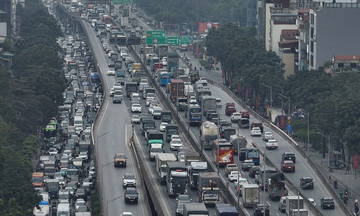
Regional minimum wage to increase by over 7%
Decree 293 of the Government, regulating minimum wages for employees working under labor contracts, will come into effect from 1/1, replacing Decree 74/2024. This decree stipulates a monthly increase of VND 250,000-350,000 in regional minimum wages, averaging approximately 7,2%.
Hourly minimum wages will also see corresponding adjustments. Region one will increase from VND 23,800 to VND 25,500; region two from VND 21,200 to VND 22,700; region three from VND 18,600 to VND 20,000; and region four from VND 16,600 to VND 17,800. The average increase is about 7,2% compared to current rates.
The application of regional minimum wages depends on the employer's operational location. Businesses operating in a specific area must apply the corresponding regional minimum wage. If a business has branches in multiple areas with different wage levels, each branch applies the wage for its respective region.
For industrial parks, export processing zones, high-tech parks, or concentrated digital technology zones located in areas with varying wage levels, the highest minimum wage applies. In cases where an area's name changes, or it is divided or newly established, the previous regional wage will temporarily apply until the Government issues new regulations.
| Region one | 5,310,000 VND | 4,960,000 VND | 350,000 VND | 7,1% |
| Region two | 4,730,000 VND | 4,410,000 VND | 320,000 VND | 7,3% |
| Region three | 4,140,000 VND | 3,860,000 VND | 280,000 VND | 7,3% |
| Region four | 3,700,000 VND | 3,450,000 VND | 250,000 VND | 7,2% |
 |
Workers at March 29 Textile and Garment Joint Stock Company, Da Nang. Photo: Nguyen Dong |
Taxpayer deductions increase by VND 4.5 million
According to the amended Personal Income Tax Law, from 1/1, the progressive tax schedule will reduce from seven to five tiers, with the highest tax rate remaining at 35%. The lowest tax rate of 5% will apply to incomes up to VND 10 million per month; the 35% rate will apply to incomes over VND 100 million per month, a change from the current threshold of over VND 80 million.
From 1/1, businesses will provisionally calculate and deduct personal income tax monthly and quarterly based on the new rates. Taxpayers will finalize their tax declarations to determine the tax payable for 2026 between 1/1/2027 and 31/3/2027.
Regarding family deductions, a resolution from the National Assembly Standing Committee states that the deduction for the taxpayer themselves will increase to VND 15.5 million per month, an increase of VND 4.5 million; the deduction for dependents will increase to VND 6.2 million per month, an increase of VND 2.2 million. These rates apply from the 2026 tax period. With the new regulations, a taxpayer with no dependents and an income of approximately VND 17 million per month will not have to pay tax after deducting insurance contributions and family deductions.
Personal income tax schedule effective from 1/1:
| 1 | Up to 10 | 5 |
| 2 | Over 10 to 30 | 10 |
| 3 | Over 30 to 60 | 20 |
| 4 | Over 60 to 100 | 30 |
| 5 | Over 100 | 35 |
Business households with annual revenue over VND 500 million must pay tax
Under the Personal Income Tax Law, from 1/1, business households with annual revenue of VND 500 million or more will be subject to tax. This threshold also marks the revenue level for exemption from value-added tax and personal income tax when transitioning from a lump-sum tax method to self-declaration and payment. Compared to current regulations, the tax threshold increases five times, from VND 100 million to VND 500 million per year.
The law also adds a profit-based tax calculation method for business households, based on the difference between revenue and expenses. Accordingly, households with annual revenue under VND 3 billion, if they can determine input costs, will apply a 15% tax rate on the profit. This rate corresponds to the corporate income tax incentives for micro-enterprises with equivalent revenue.
Business households with annual revenue from VND 3 billion to VND 50 billion will apply a 17% tax rate. If annual revenue exceeds VND 50 billion, a 20% tax rate applies.
For individuals and business households unable to determine expenses, tax payment will continue at a percentage of revenue, as currently applied, ranging from 0,5% to 2% depending on the industry. However, taxpayers can deduct the portion of revenue below the tax-exempt threshold before calculating tax, meaning they will not pay tax on their entire revenue from the first dong.
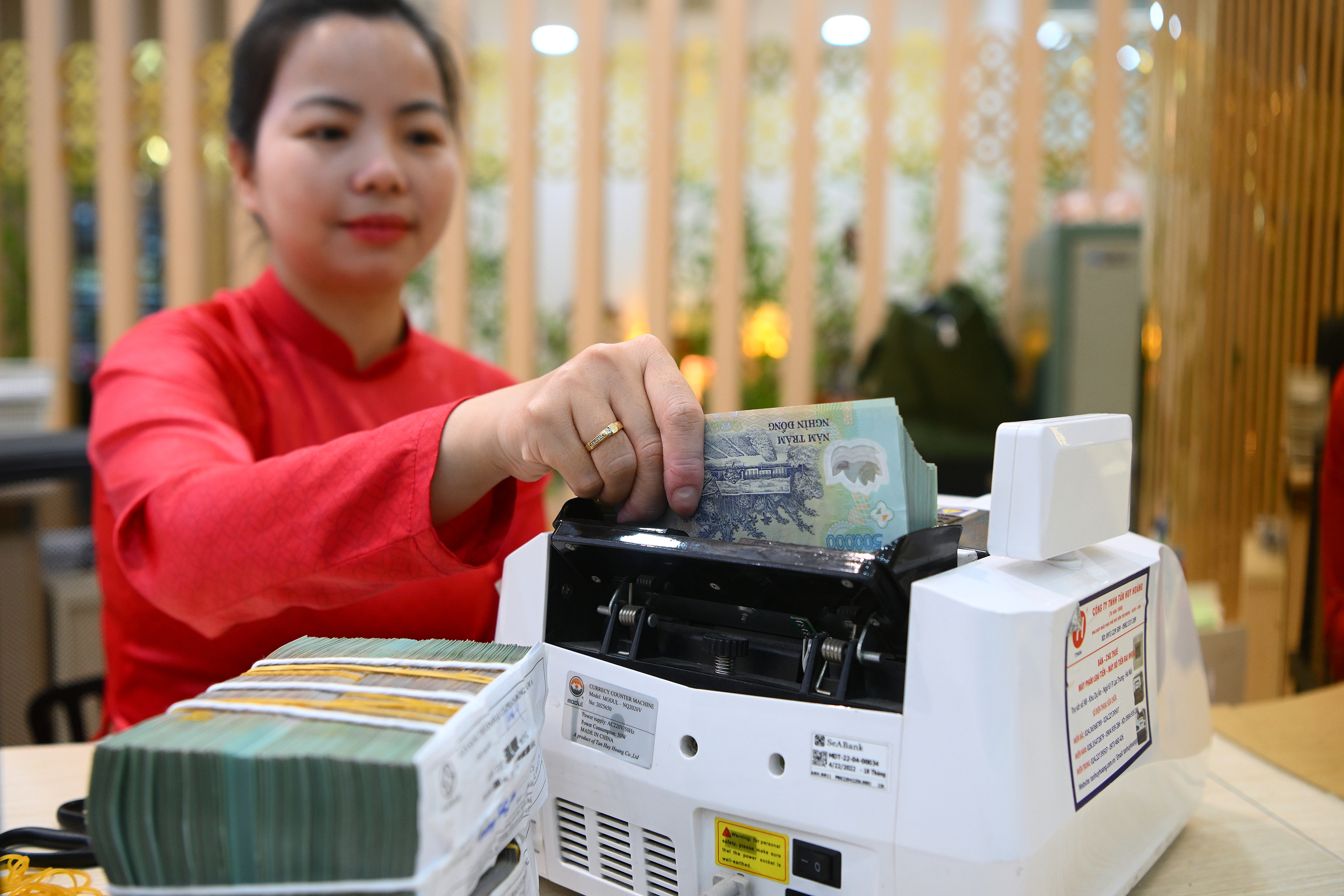 |
A transaction office at a bank in Ha Noi. Photo: Giang Huy |
Three additional cases for state land recovery
A resolution on mechanisms to address difficulties in implementing the Land Law, effective from 1/1, stipulates that the State will add three cases for land recovery for socio-economic development.
Specifically, the State will recover land to implement free trade zone projects or projects within international financial centers. The second case involves projects where the investor has reached an agreement for over 75% of the land area and with more than 75% of landowners; the remaining area will be considered and decided for recovery by the provincial People's Councils to be allocated to the investor. The third case is land recovery to create a land fund for payment under BT contracts, land leasing, and continued production and business.
The resolution also mandates that land price tables and adjustment coefficients be used as the basis for compensation when the State recovers land. These land price tables, developed based on land type, location, and area, will be decided by the provincial People's Councils and applied from 1/1; these tables will be amended and supplemented as needed. Previously, compensation was based on specific land prices determined by the provincial People's Committees at the time of approving compensation and resettlement plans.
Another provision allows people converting garden land or agricultural land to residential land within the permitted limits to pay only 30-50% of the land price difference, instead of 100% as currently regulated. This aims to reduce the financial burden for those needing to convert land for residential use.
Teachers to be ranked highest in the public service salary scale
The Law on Teachers, effective from 1/1, introduces several preferential policies regarding salaries, allowances, housing, and grants recruitment autonomy to the education sector. Accordingly, teachers will receive the highest salary ranking within the public service salary scale; they will also receive professional incentive allowances and other allowances depending on the nature of their work and regional conditions.
Teachers working in sectors or professions with specific regimes will receive the highest benefits among applicable policies when regimes overlap. The law also outlines a system of support policies for teachers, including: allowances based on job nature and location; support for training and professional development; regular health check-ups and occupational health care; and mobile allowances for teachers involved in literacy programs, universal education, secondments, enhanced teaching, inter-school teaching, and teaching at remote school sites.
The law grants the education sector autonomy in recruiting teachers. The Minister of Education and Training will regulate the recruitment of preschool and general education teachers. At public vocational education institutions and public higher education institutions, the head of the institution is granted the authority to directly recruit teachers. For non-public educational institutions, recruitment authority belongs to the head of the institution, based on the unit's organizational and operational regulations.
Son Ha