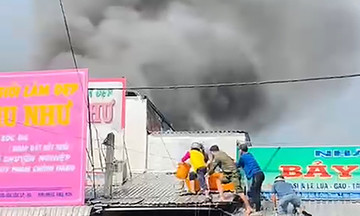
More than ten years ago, Mai was a wealthy landowner, possessing 13 hectares of rubber on the Viet Trung state farm, now Phu Quy street in Nam Trach commune. Rubber was often called "white gold", and during peak days, he employed more than ten people to tap latex, bringing in 30 million VND.
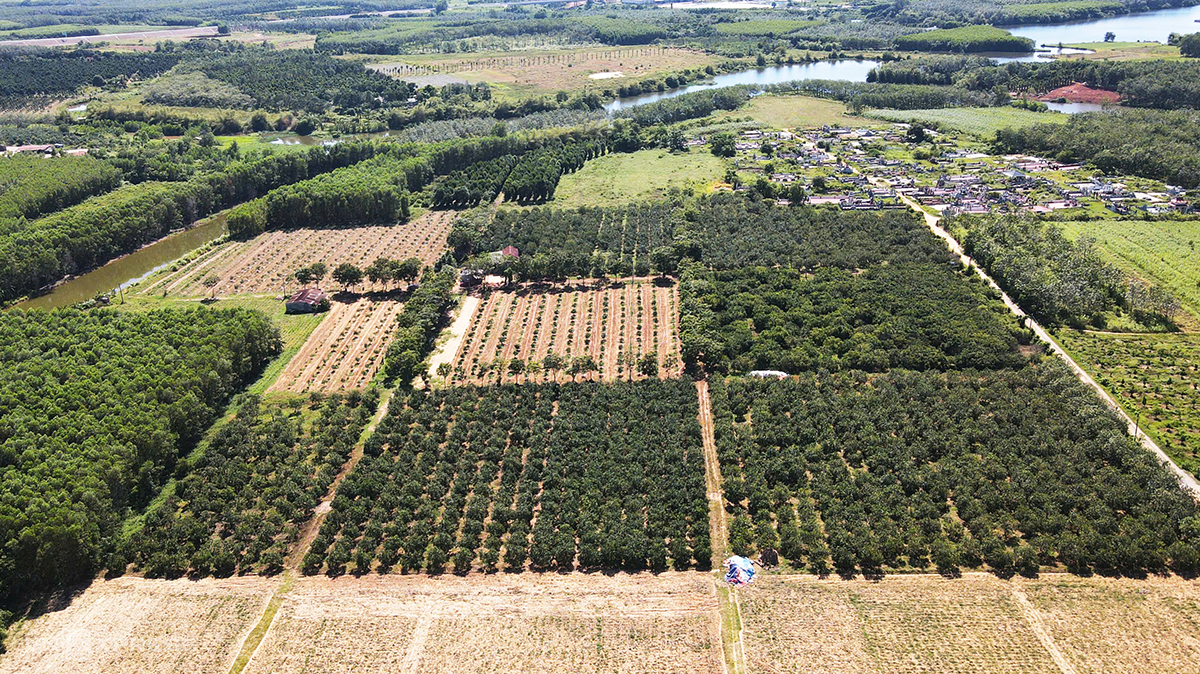 |
Vuon cam rong 6 ha cua ong Be Van Mai. Anh: Dac Thanh
However, Typhoon Wutip swept through in September 2013. In just two hours, 70% of his 13 hectares of rubber trees were broken. Broken rubber trees must be cut down and new ones planted. He hired laborers to fell the trees, selling the large ones for timber and using the smaller ones for firewood.
Mai, of Nung ethnicity, hails from Cao Bang province but was born and raised on the Viet Trung state farm. In 1982, he left the military to operate a bulldozer for the farm and later married Nguyen Thi Thanh, a worker. They have two children.
In the early 1990s, the family faced severe financial difficulties. Thanks to Government Decree 64 on greening barren land and hills, he was allocated 15 hectares of such land. Many were hesitant to accept the land, but Mai saw it as a lifeline. Beyond his work at the farm, the couple tirelessly cleared land, filling bomb craters and removing rocks and weeds, to plant rubber trees. After seven years, the trees began yielding "white gold". Rubber provided a good income due to high latex prices. He paid off all his debts, purchased a multi-billion VND car, sent his children to study abroad, and invested billions of VND in a construction company. From a struggling farmer, he became a renowned rubber magnate in Nam Trach commune, owning the largest plantation on the state farm.
Watching the rubber sap flow daily, he envisioned a comfortable retirement. However, Typhoon Wutip left the farmer with nothing.
"After the storm, I saw my rubber plantation lying broken, and my investment in the construction company also failed," he recounted. In an instant, his retirement savings vanished, and the "white gold billionaire" was back at square one.
Unwilling to accept defeat, Mai used the money from selling rubber wood and firewood to visit renowned orange-growing regions to learn. He traveled to Cao Phong, Hoa Binh, then Nghe An and Ha Tinh, to gather experience.
"I noticed that famous orange-growing areas had similar weather and climate to ours. Citrus trees offer high income, withstand storms, and are suitable for the Viet Trung state farm land," the 65-year-old farmer explained. At that time, no one in Quang Binh was cultivating these orange varieties. He understood that planting on new land would be challenging but also an advantage, offering a broad market and a quicker harvest compared to rubber.
As a former tank soldier, Mai was a man of action. He immediately began implementing his plan. He sold his multi-billion VND car and mortgaged his assets to secure a bank loan, planting 6 hectares of Thuong Loc, Cao Phong, V2, and Duong Canh orange varieties.
However, his wife disagreed with the plan.
Nguyen Thi Thanh thought her husband was crazy for planting such a vast orange field. He had mortgaged their garden land and house to the bank for the loan. "I told my husband that this path would lead us to begging on the streets. Everyone I met asked me, 'Are you insane to let your husband plant oranges everywhere?'"
"'This couple is crazy,' they told me," she recalled.
Some agricultural officials from the province and members of the garden association visited the orange grove. They considered his actions reckless and advised him to start with a trial planting, expanding only if it proved effective, rather than planting on a large scale immediately. The local seed center's experimental orange trees had not yielded good results.
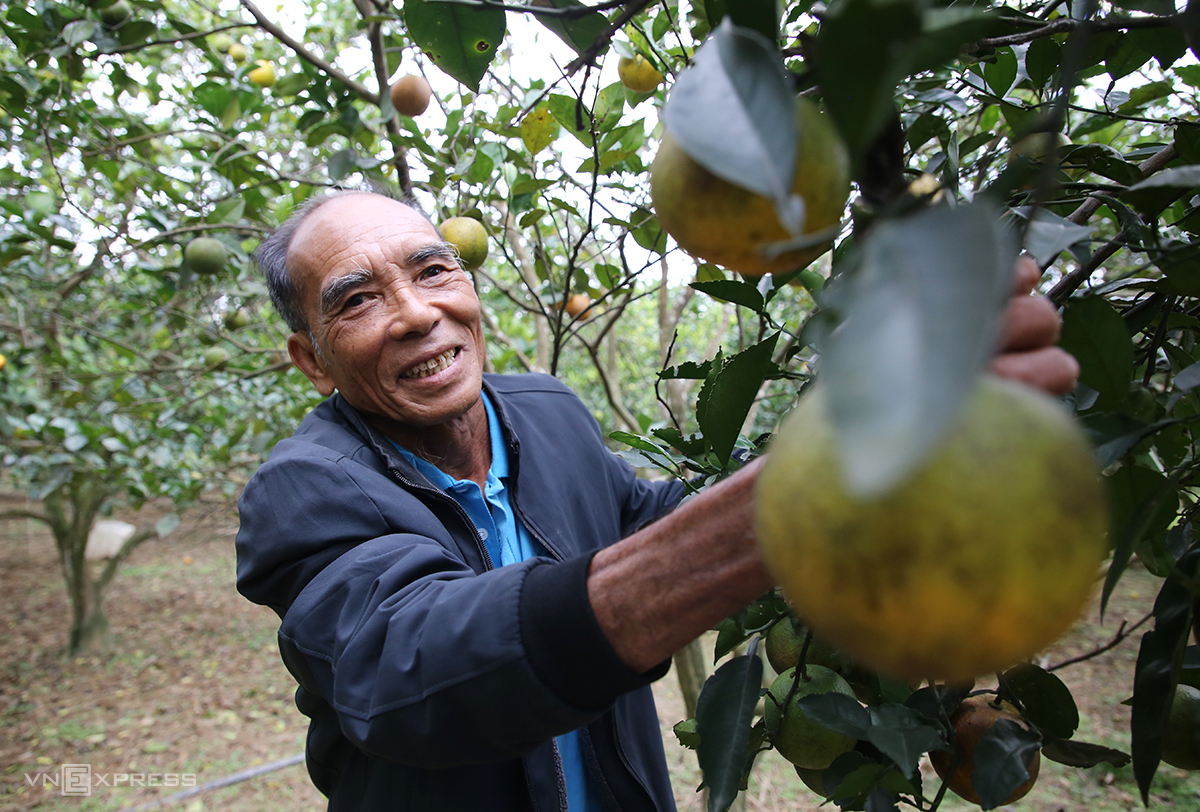 |
Ong Be Van Mai ben cay cam cho qua chin. Anh: Dac Thanh
Nguyen Thi Thanh argued with her husband, but to no avail. Many nights she lay awake, worrying about the mortgaged assets and bank loans; if they failed, they would lose their home and land. Mai comforted his wife, suggesting that if they lost everything, they would ask relatives for a small piece of land to build a shack. Seeing his determination, she gave up trying to stop him, resolving to work as a laborer if their venture failed.
Just as they had done when planting rubber, the couple dedicated themselves day and night to digging holes, purchasing seedlings, and caring for the trees. In early 2015, he planted 2 hectares of Cao Phong oranges, which developed well. He then continued to buy Thuong Loc (Ha Tinh) and Cam Vinh (Nghe An) varieties. Within two years, he had planted 6 hectares of oranges.
With 500 trees rooted in each hectare, Mai traveled to Lam Dong to study irrigation techniques. Based on his learnings, he dug a one-hectare pond to store water, installed electric pumps, and set up an automatic irrigation system. This method aimed to save time, reduce costs, and increase labor efficiency. "To establish this orange grove, I invested 3.5 billion VND. Bank loans were the primary source," he stated.
According to Mai, oranges are fruit trees that demand precise planting techniques and strict procedures. Whenever he encountered difficulties, he consulted experts he had befriended to gain more experience and manage signs of pests and diseases. He diligently researched care methods, using biological pesticides and organic fertilizers to nourish his trees. Pest and insect control were carried out using biological safety methods.
After four years of cultivation, the orange trees from Nghe and Cao Phong grew well and began to bear fruit. In 2018, the first orange harvest generated 400 million VND. The second year brought in 1.4 billion VND, with subsequent years yielding even higher incomes from widespread fruiting. He has since paid off all his bank debts.
"I listened to anyone who criticized me. I'm like an eel burrowing in mud, one day I'll poke my head out," he reflected on his philosophy in pursuing orange farming, asserting that after five years, everyone was surprised by his success.
After ten years, as many orange trees aged, he cut them down to plant new ones. Oranges typically suffer from pests and diseases if replanted in the same soil, so new locations are chosen for subsequent plantings. After clearing the land, he planted pepper and acacia wood to improve the soil for rotation, he shared.
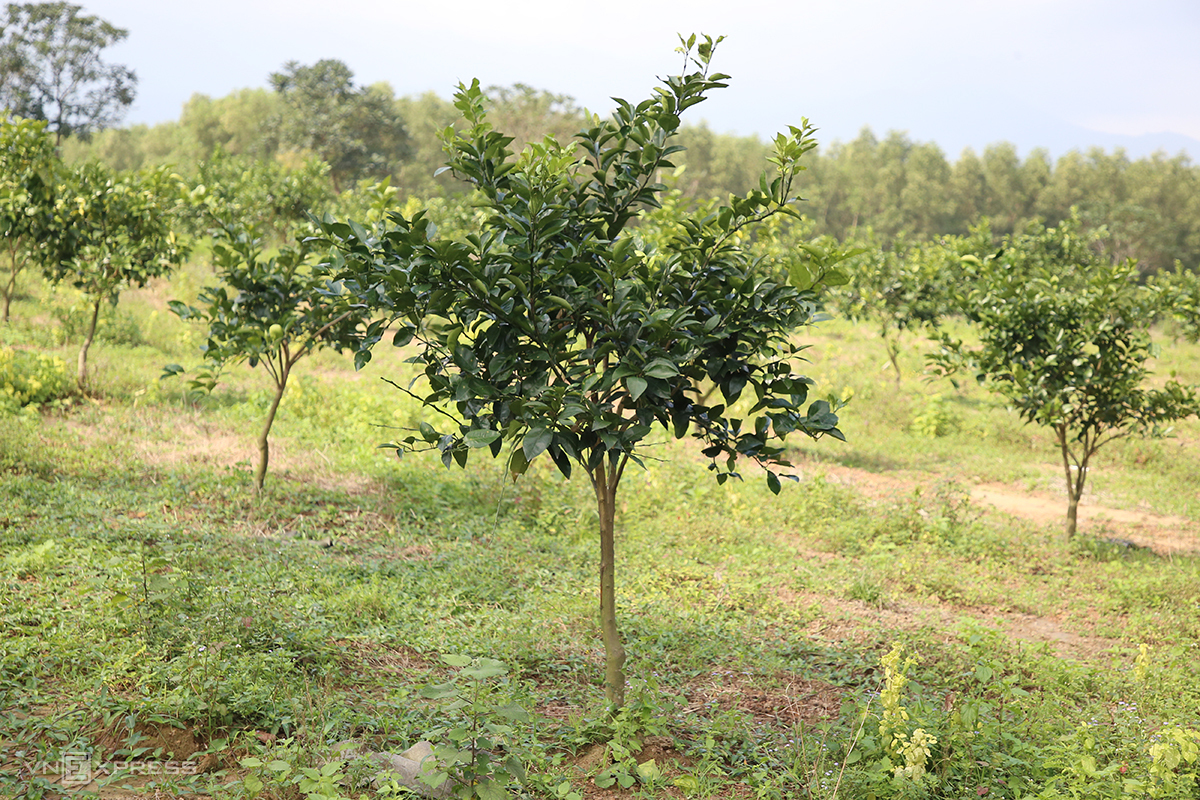 |
Sau 12 nam cay lao hoa, ong chat bo trong moi. Anh: Dac Thanh
With 6 hectares of VietGap-certified oranges, the average annual yield ranges from 20-25 tons per hectare. Selling prices of 20,000 - 25,000 VND per kg generate over 2.4 billion VND in revenue. He also cultivates one hectare of lemon, one hectare of pepper, and acacia wood, in addition to raising fish and poultry. After expenses, he earns a net profit of over 1 billion VND annually.
Beyond developing his family's economy, Mai also creates seasonal employment for about 15 local laborers. He donates seedlings, provides capital support, and shares his experience to help struggling households confidently transition crops and increase their income.
Tran Tien Sy, Chairman of the Quang Tri Farmers' Association, praised Be Van Mai's entrepreneurial journey as a realization of aspiration, daring to think and act, and embodying the farmer's will in the era of innovation.
Despite numerous setbacks, Mai did not waver in the face of difficulties. This farmer persistently researched, learned, and chose a new path. With bold and long-term thinking, he introduced orange varieties from other regions. Through the diligence and perseverance of the couple, Mai's family has built a stable livelihood. His orange grove is now among the largest farms in Quang Tri province; with its organic production process, it has affirmed its quality, efficiency, and brand, Mr. Sy noted.
Recognizing these tireless efforts, in 2025, Be Van Mai was selected as one of two exemplary farmers in Quang Tri province, honored by the Central Vietnam Farmers' Association with the title "Outstanding Vietnamese Farmer."
Dac Thanh