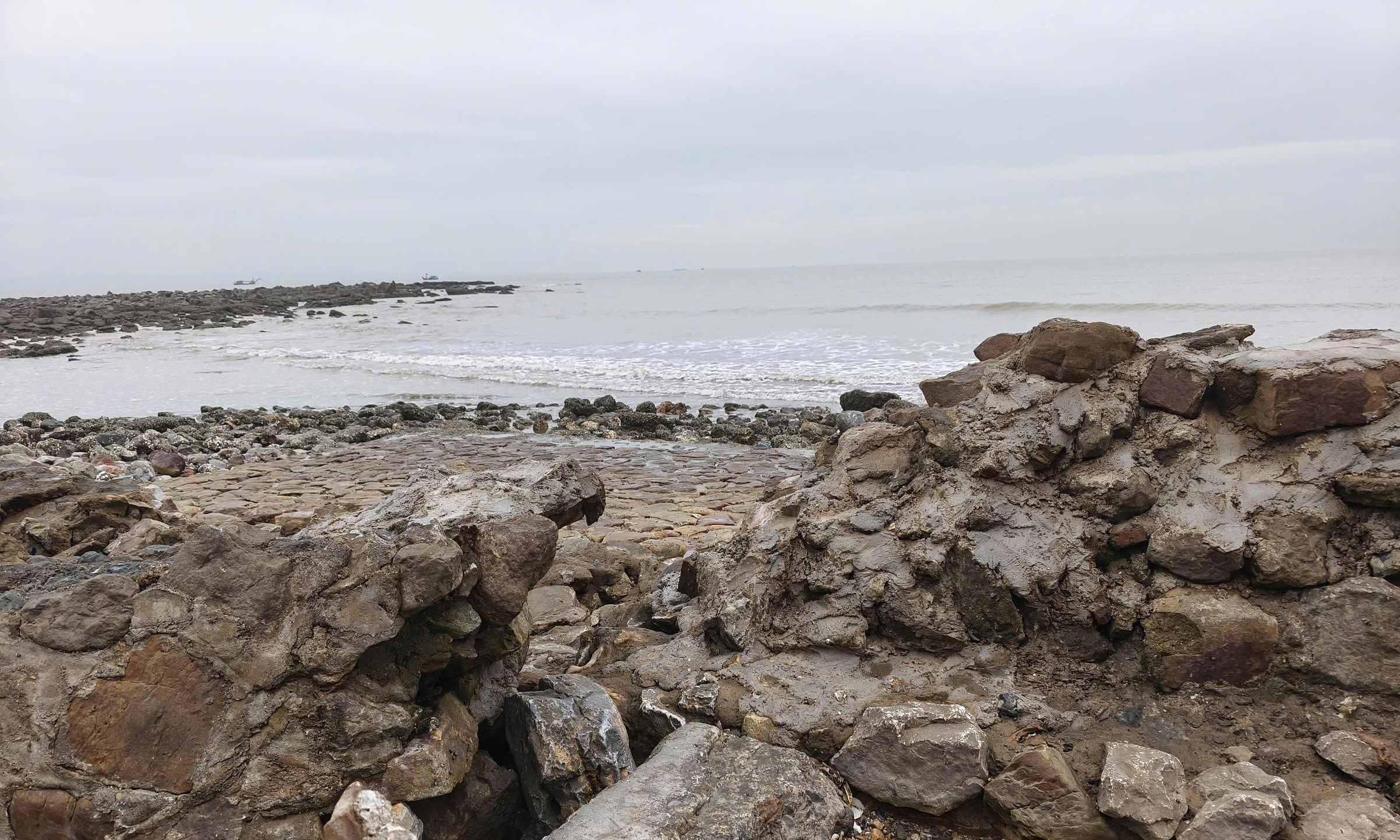
In early June, the Ly Hoa sea mouth in Dong Trach commune was blocked by a sandbar measuring about 1,6 km long, nearly 100 m wide, and almost 2 m high. The navigation channel for boats is now only half a meter deep and just over 15 m wide.
The Ly Hoa sea mouth is severely silted with sand. *Video: Dac Thanh*
Every afternoon, Ho Si Quang, owner of a 15 horsepower fishing boat, spends hours observing the tides at the sea mouth before deciding whether to depart. His greatest concern is not offshore storms but the narrow, shallow channel directly at the sea mouth. While navigating through the current, Quang stands at the stern, checking the water's color to find sufficient depth. A slight deviation in course can cause his boat to run aground. "On many days, when the tide is low, boats cannot enter, forcing me to anchor offshore, which is very dangerous in bad weather," he stated.
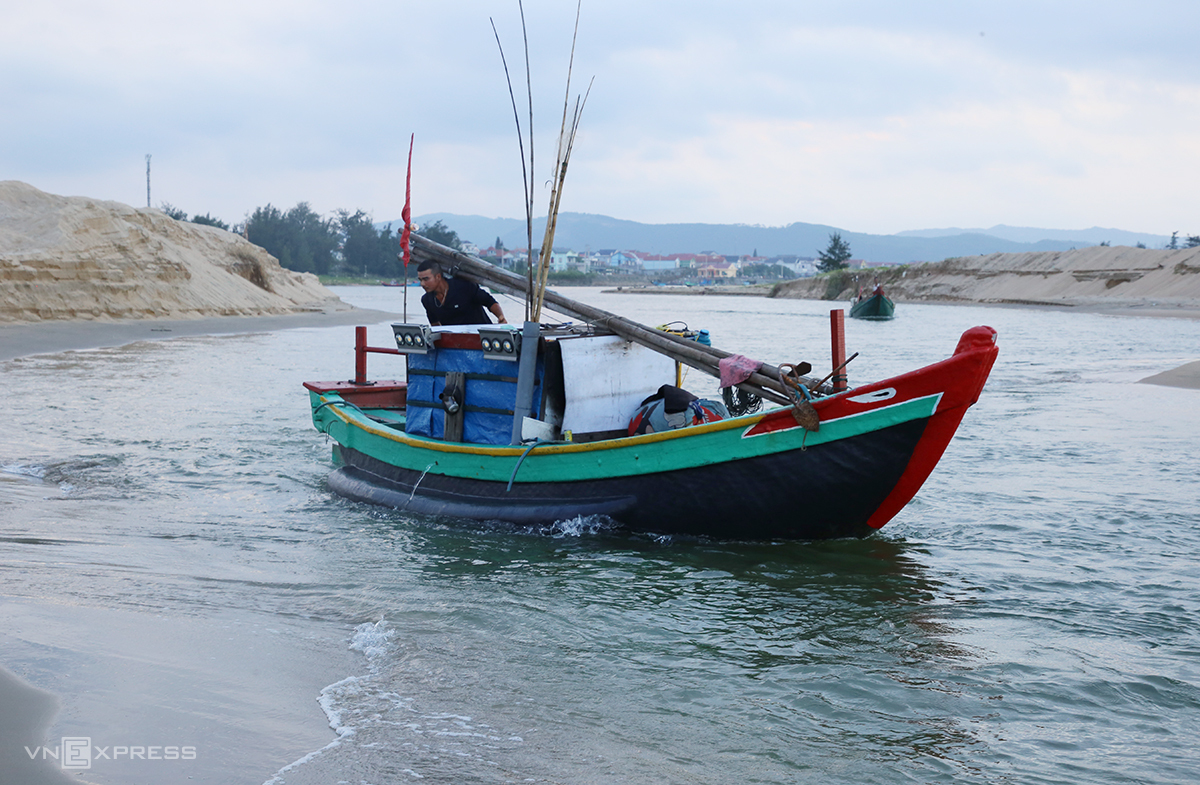 |
Ho Si Quang navigates his boat through the half-meter-deep channel to fish offshore. *Photo: Dac Thanh*
The Ly Hoa sea mouth serves as the sole access point for over 210 fishing boats measuring 6-12 m and more than 100 smaller boats under 6 m. With the channel silted, many boats cannot go out to sea for fishing. Some owners resort to hiring cranes to move their vessels over the sandbar, incurring additional costs at a time when fuel and fishing expenses are already rising. For larger boats, around 12 m long, entry and exit are almost impossible. Many owners are forced to relocate their vessels to Thanh Khe dock, about 6 km away, or to Dong Hoi ward, approximately 20 km away, further increasing travel and gear transportation costs.
This issue of the sea mouth silting up has persisted for many years, according to Quang. Each time authorities dredge the channel, it only remains clear for a few days before strong seasonal winds refill it with sand. "This approach is like a drop in the ocean; money is spent, but the effectiveness is low," the 45-year-old fisherman remarked, urging the state to invest in building embankments for a permanent solution.
Earlier this year, Dong Trach commune spent 200 million VND to hire four excavators, removing thousands of cubic meters of sand to create a temporary sea passage, 100 m long and 30 m wide. This effort aimed to drain flooded fields and provide boat access. Subsequently, the Quang Tri Provincial People's Committee allocated an additional 700 million VND for suction dredging, creating a channel 50 m wide, 200 m long, and 4 m deep. Yet, after only a few strong seasonal winds, this newly formed channel also became completely silted.
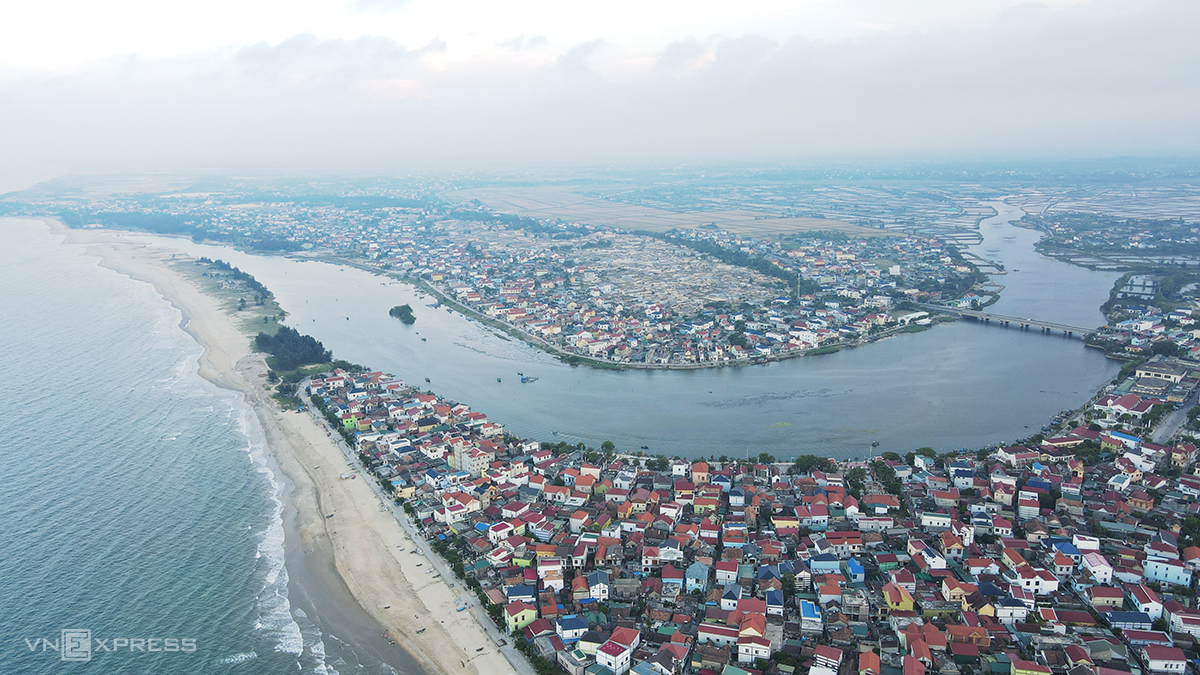 |
Water from the Ly Hoa river flows into the sea, blocked by a sand dune 1,6 km long and 100 m wide. *Photo: Dac Thanh*
Beyond its impact on fishing, the blocked sea mouth impedes water flow from the Ly Hoa river to the sea. Approximately 50 ha of rice fields are submerged, and 20 ha cannot be planted on schedule. More than 200 ha of aquaculture are also affected by stagnant water. Furthermore, the south bank of the Ly Hoa river is experiencing severe erosion, with significant areas of protective forest washed into the river, posing an ongoing landslide risk to riverside homes.
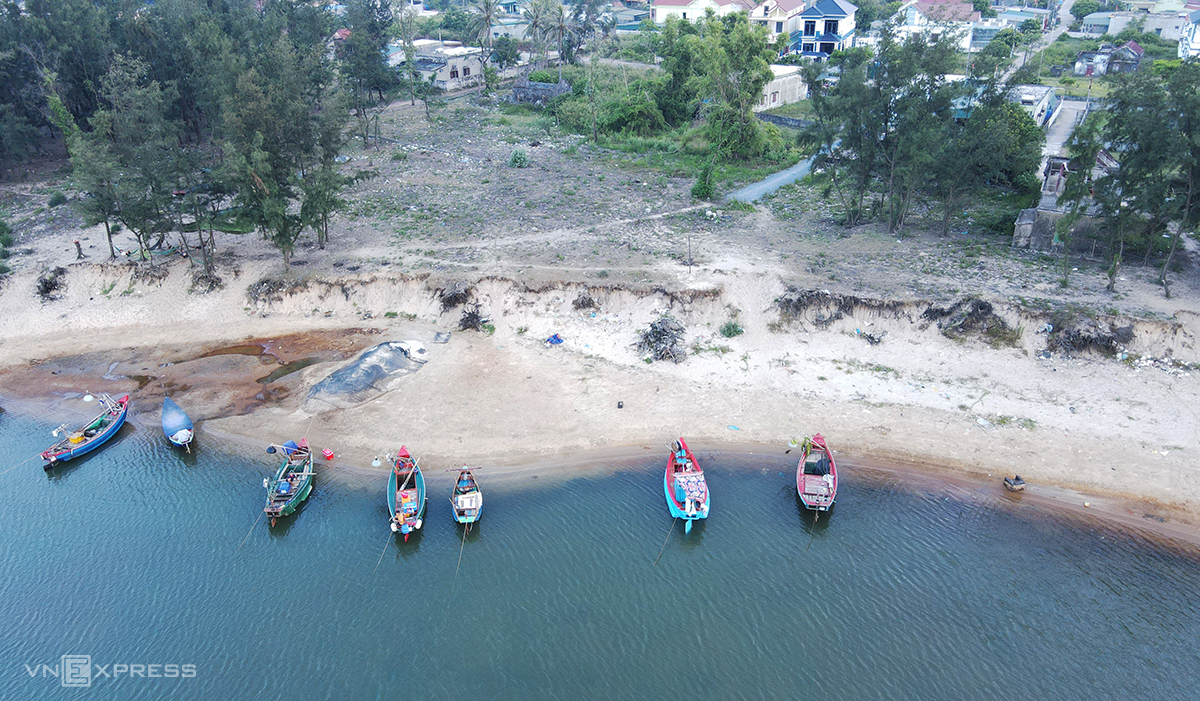 |
The south bank of the sea mouth is eroding. *Photo: Dac Thanh*
Vo Hai Quan, Chairman of Dong Trach commune, stated that current dredging solutions are merely temporary. Since the beginning of this year, the locality has dredged twice, costing a total of 900 million VND, yet the risk of the sea mouth being blocked again remains. Hundreds of fishermen anxiously monitor the tides daily, facing safety hazards and reduced livelihoods. Quan emphasized, "The commune has proposed that the province and relevant departments study flow regulation methods, including building embankments at the Ly Hoa river mouth to prevent erosion, control water flow between the river and sea, and integrate a navigation lock to ensure safe passage for fishing boats."
The Quang Tri Provincial People's Committee has tasked the Department of Agriculture and Environment with researching a comprehensive plan for regulating the Ly Hoa river mouth. This plan includes constructing flow-directing embankments, sand barriers, or other suitable technical solutions to stabilize water flow, limit siltation, ensure flood drainage, and provide safety for vessels.
The Ly Hoa sea mouth is one of five major river mouths in northern Quang Tri province. In 2022, it faced similar siltation, prompting the former Quang Binh province to invest 14 billion VND in dredging. However, after the rainy season and floods that same year, the sea mouth was once again blocked by sand.
Dac Thanh