According to the National Center for Hydro-Meteorological Forecasting, El Nino has formed and is expected to intensify in the coming months. There is a 63% probability of a very strong El Nino occurring between 11/2026 and 1/2027. Should this scenario materialize, Vietnam could face one of its most severe El Nino events since 2015-2016.
Nguyen Manh Hung, head of the Department of Operations and Irrigation Management under the Department of Water Resources Management and Construction, Ministry of Agriculture and Environment, stated that amidst uncertainties, the most crucial solution is to maximize water storage during the rainy season.
"Starting this rainy season, we must store the largest possible volume of water," he said. "This is the most important solution to proactively respond to drought, water scarcity, and saltwater intrusion in the upcoming dry season."
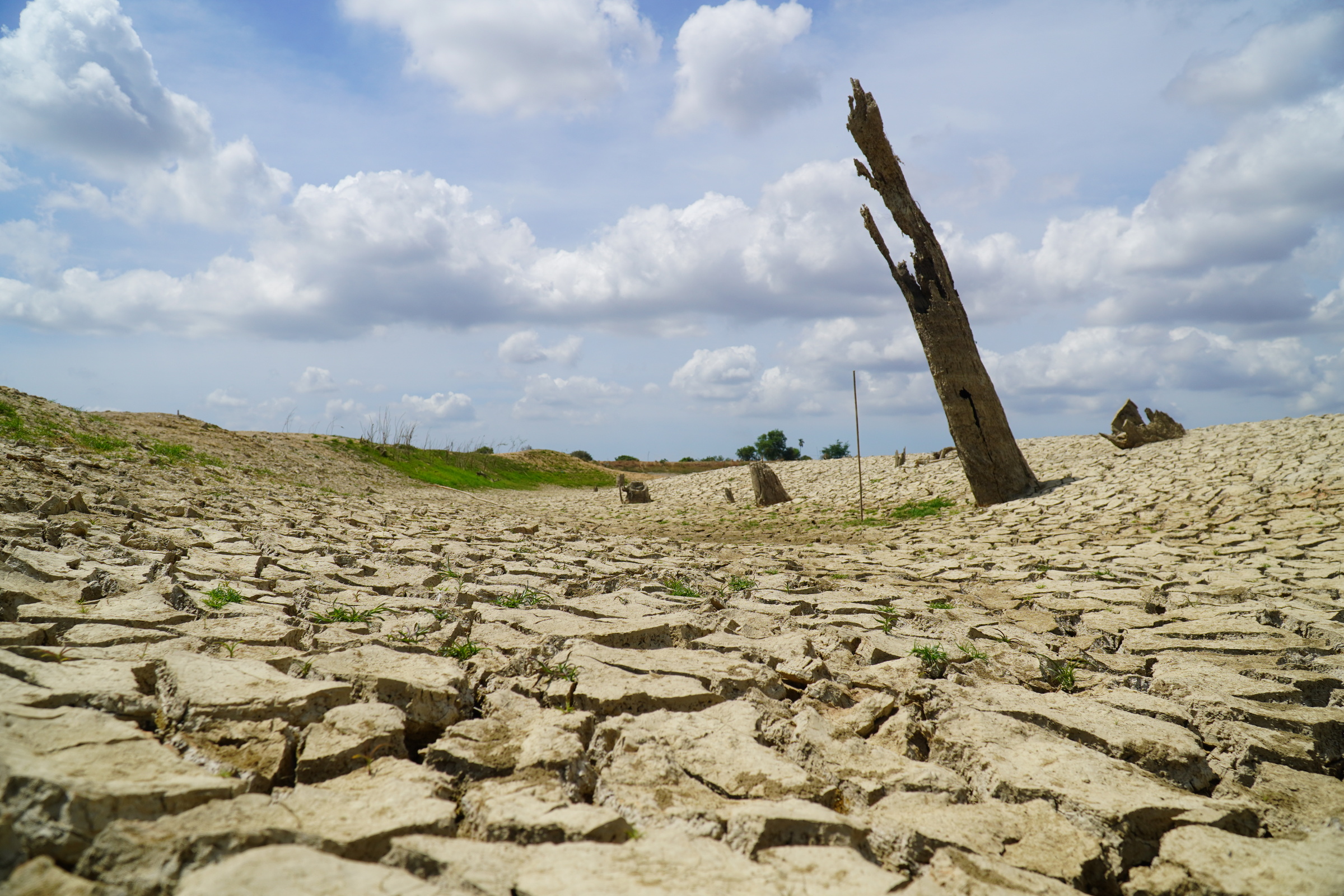 |
Ta Mon irrigation lake, Lam Dong in 2020. *Viet Quoc* |
The Ministry of Agriculture and Environment has directed local authorities to develop drought, water scarcity, and saltwater intrusion response scenarios based on risk levels. Utilizing forecasts and water balance assessments, localities are required to establish water use plans, adjust agricultural calendars, and prepare domestic water supply solutions for residents in high-risk areas.
In high or extreme drought scenarios, the top priorities are ensuring domestic water supply and maintaining water for high-value crops.
If water resources are insufficient, localities may consider halting production in certain areas to minimize losses for farmers. Additionally, solutions such as crop conversion, water-saving irrigation, and emergency water supply are being prepared for areas at severe risk of water shortages.
Another challenge for the irrigation sector is balancing maximum water storage for El Nino preparedness with ensuring structural safety against flood risks. Nguyen Hong Khanh, deputy director of the Department of Water Resources Management and Construction, stated, "The goal is to operate reservoirs promptly for water storage while maintaining structural safety and responding to extreme flood situations."
Currently, irrigation reservoir capacities in many regions remain above their multi-year averages. The northern region has reached approximately 65,4% of its design capacity, 7% higher than the multi-year average. The north central region stands at 54%, 3% higher, while the south central coast is at 58%, also 3% higher. The southeast region has achieved 49,3%, a significant 10,5% increase above its average.
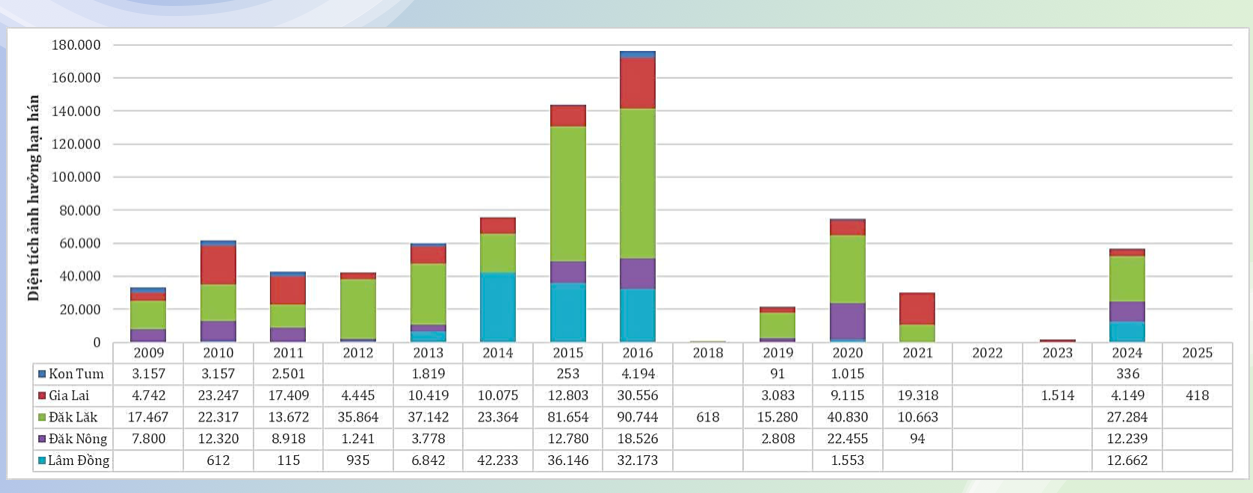 |
Drought damage in the Central Highlands. *Department of Water Resources Management and Construction* |
Vietnam previously experienced a historic El Nino event in 2015-2016, which caused severe widespread drought and saltwater intrusion. In the Mekong Delta alone, over 400.000 hectares of rice and other crops were affected, and hundreds of thousands of households faced domestic water shortages. Concurrently, many reservoirs in the central region dropped to record low levels.
According to Hung and Khanh, the most significant concern is not a single year of severe drought but prolonged water scarcity over consecutive years. "In reality, based on our experience, we don't fear a strong El Nino as much as a prolonged one," Hung stated. "This is because accumulated water shortages – a little this year, a little next year – will add up to a very significant deficit."
Gia Chinh