


On the morning of 21/1, Minister of Science and Technology Nguyen Manh Hung presented solutions at the 14th Party Congress, aiming to position science and technology, innovation, and digital transformation as the central drivers of a new, rapid, and sustainable growth model.
Minister Hung noted Vietnam has progressed through two development phases: agriculture helped the nation overcome poverty, and industry, foreign direct investment, along with manufacturing and assembly, elevated Vietnam to a middle-high income country. He stated that for the third phase of development, moving from middle to high income, Vietnam must rely on a "trio" comprising science and technology, innovation, and digital transformation.
He elaborated that while science and technology generate new knowledge and tools, they remain abstract. To bring this knowledge "down to earth," innovation is essential. It transforms knowledge and digital technology into productivity and added value through products and services that serve daily life. Digital transformation then rapidly disseminates these products and services across society, ensuring quick growth and that no one is left behind.
According to the Minister, countries entering their third development phase historically relied on one driver: science and technology. Vietnam, however, benefits from three growth drivers. The nation targets increasing its per capita income from 5,000 USD to 20,000 USD, a goal that can achieve double-digit growth with this "trio."
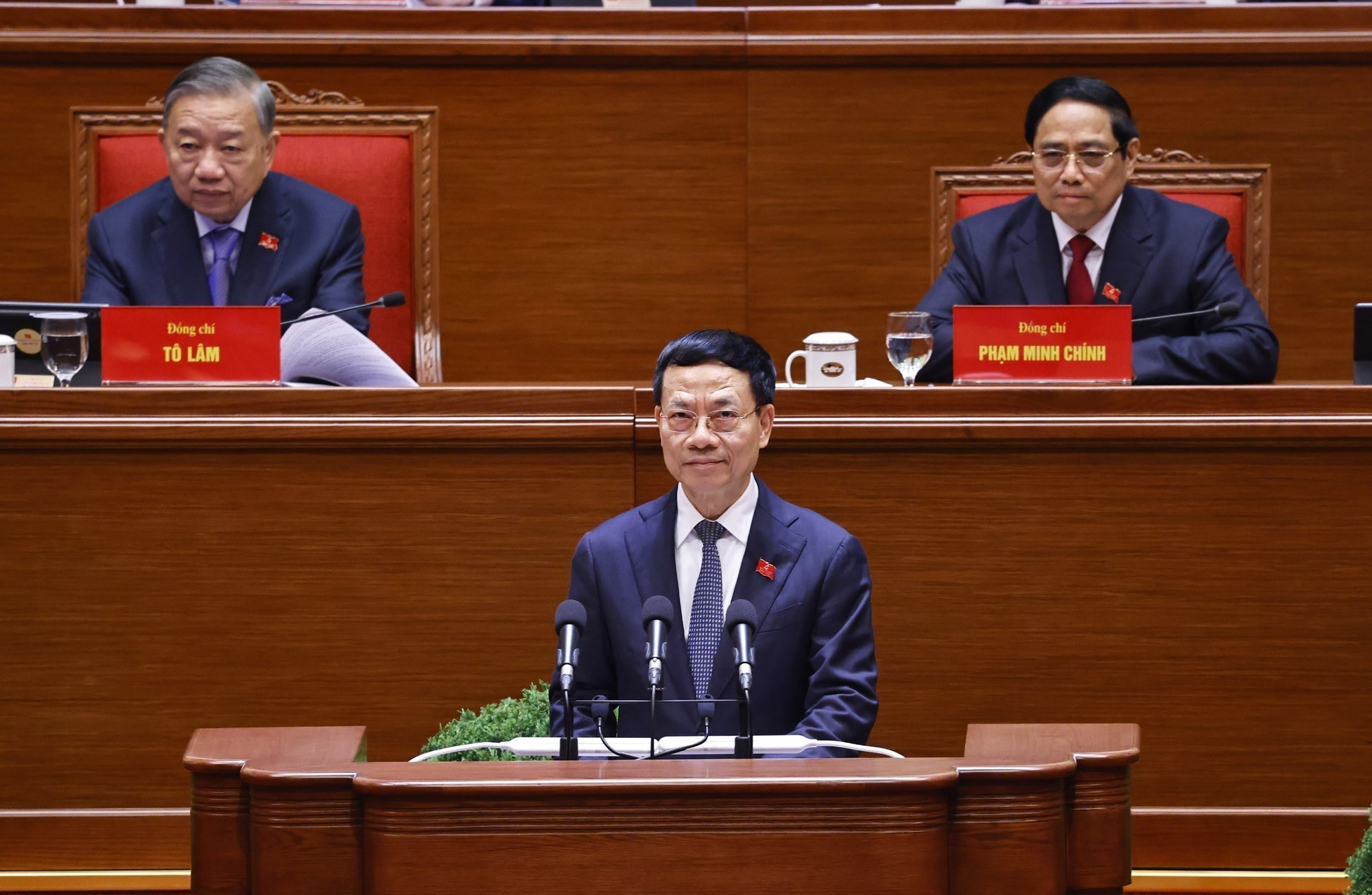 |
Minister of Science and Technology Nguyen Manh Hung presenting his report at the congress on the morning of 21/1. Photo: TTXVN
Minister Hung cited the Politburo's Resolution 57, which identifies science and technology, innovation, and national digital transformation as top breakthroughs. These are crucial drivers for rapidly developing modern production forces, perfecting production relations, reforming national governance, and enhancing the country's self-reliance and autonomy. Therefore, Resolution 57 can be considered a "Resolution 10" for science and technology, innovation, and digital transformation.
He explained that the spirit of the Resolution emphasizes management by objectives, not by methods. It empowers and holds individuals accountable, accepts risks, evaluates based on overall effectiveness, and ensures that creators benefit from their labor and innovation. "Resolution 10 helped Vietnam escape poverty; Resolution 57 is to escape the middle-income trap. Resolution 10 liberated labor; Resolution 57 liberates creativity," he affirmed. He expressed hope that Vietnam will transition from scarcity to abundance, ultimately becoming a major exporter in science and technology, innovation, and digital transformation, mirroring its success in agriculture.
Emphasizing that no two nations "transform into dragons or tigers" in the same way, the Minister stressed that finding the right approach to create breakthroughs is crucial. Vietnam must achieve self-reliance in core and strategic technologies as a vital component of national sovereignty. Simultaneously, the country should permit and encourage the practical application of new ideas, viewing this as a fast and effective path to form, refine, and develop new technologies.
The spirit of innovation must permeate society, becoming a lifestyle for every individual and organization. This involves building a culture that encourages exploration and tolerates failure. Intellectual property should be recognized as an asset that can be valued, bought, sold, transferred, and exploited in the market, becoming a strategic competitive tool for businesses and the nation. A developed nation is one where intangible assets, including intellectual property, can account for up to 80% of total assets.
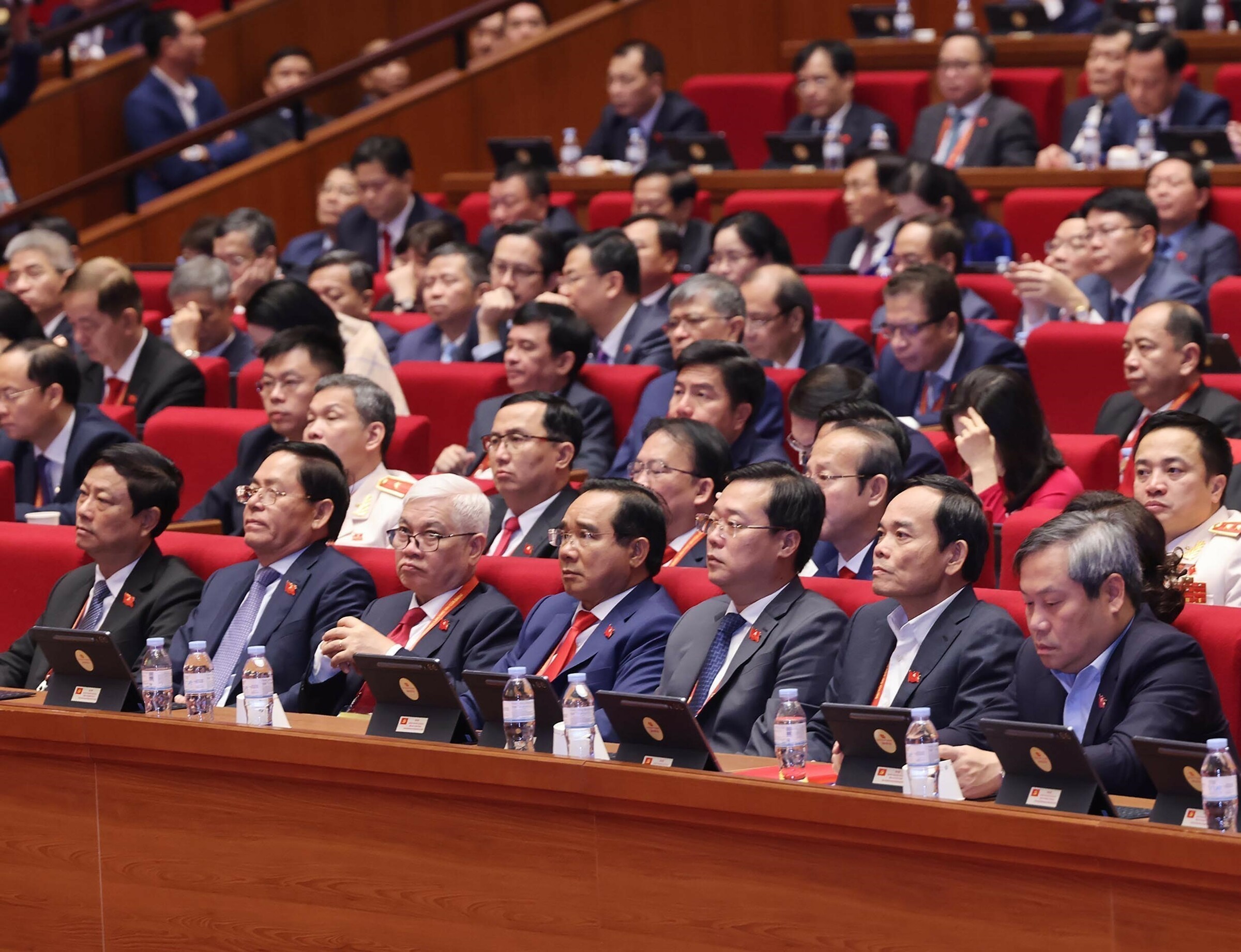 |
Delegates attending the 14th Party Congress. Photo: TTXVN
Minister Nguyen Manh Hung also highlighted the need to measure the contribution of the "trio" to GDP growth. He stated that the Ministry of Science and Technology is developing measurement methods for both national and local levels, based on the principle that "what can be measured can be managed." He anticipates Vietnam will be one of the first countries to aim at measuring the impact of science and technology, innovation, and digital transformation on GDP growth.
"If every citizen has a virtual assistant, Vietnam's power will double," he stated, emphasizing that digital transformation requires 100% immediate implementation, not a gradual approach. The goal is to create a "digital version" of the real world and deploy common platforms nationwide.
Regarding innovation implementation, the Minister noted that the Ministry of Science and Technology is advising the government to direct each ministry, sector, and locality to establish one innovation center. This initiative aims to foster nationwide startups driven by technology and creativity.
The Minister underscored that spending on science and technology should follow the principle that one dong of the state budget must activate 3-4 dongs from businesses. "Then, 2% of state budget spending will become 2% of the total societal GDP spent on science and technology," he said, adding that the Ministry is finalizing a co-funding mechanism between the state and businesses.


