On the afternoon of 14/3, Prime Minister Pham Minh Chinh chaired a working session between the Standing Government and Ha Noi leaders to discuss the Capital's 100-year master plan. The Prime Minister commended the city for undertaking three important tasks: drafting the Politburo's Resolution on the Capital's development in the new era, preparing an amended Capital Law to submit to the National Assembly, and developing the overall Ha Noi Master Plan.
According to the Prime Minister, the Politburo's Resolution serves as the political foundation, the amended Capital Law as the legal foundation, and the Capital Master Plan as the foundation for spatial development. The city meticulously prepared all drafts, which demonstrate high intellectual content and practical relevance, reflecting Ha Noi's strong determination. Land clearance efforts are also accelerating, driving many major projects and gradually addressing development bottlenecks.
 |
Prime Minister Pham Minh Chinh speaks on 14/3. Photo: Hoang Phong |
Prime Minister Pham Minh Chinh speaks on 14/3. Photo: Hoang Phong
The head of government asserted that the Capital Master Plan holds significant importance for the development of Ha Noi, the region, and the entire country. It embodies Viet Nam's intellect, culture, identity, people, and development vision in the new era. Therefore, the planning philosophy must center on people, aiming to build a prosperous, civilized, and modern city that retains its identity, with a 100-year vision. Ha Noi needs to develop following a multi-polar, multi-layered, multi-centered, multi-directional, and multi-dimensional model, while also orienting towards digital, smart, green, clean, beautiful, and cultured growth.
The plan must harmonize people, culture, society, and nature, adopting a spatial structure of "village within city, city within village" that combines conservation, inheritance, and development. Key breakthroughs include urban regeneration, rural modernization, service intelligence, and advanced industrial development.
The Prime Minister urged Ha Noi to research locations for a planning exhibition center. This center would facilitate public disclosure and oversight of the plan, promote investment, and develop tourism. He also noted that the city needs to plan for economic space development across different levels, including low-altitude, high-altitude, and aerospace; additionally, it should develop underground spaces to underground electrical, water, telecommunications, and transport infrastructure.
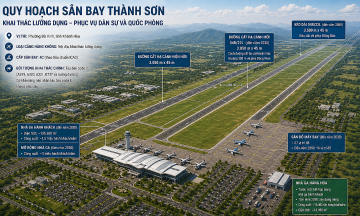
Ground space needs optimization, especially in the southern areas of the city, Xuan Mai, Ba Vi, Son Tay, and Soc Son. Ha Noi should develop an airport economy, effectively utilize the West Lake center, and restore rivers to be green, addressing environmental issues, traffic congestion, and flooding.
Ha Noi's identity, the Old Quarter, and historical-cultural relics require preservation, conservation, and value promotion. The Capital also needs to lead the development of cultural and entertainment industries. "The plan must maximize Ha Noi's distinct potential, outstanding opportunities, and competitive advantages. Implement the plan rigorously; complete what is started, and finish what is undertaken," the government leader stated.
 |
Secretary of the Ha Noi Party Committee Nguyen Duy Ngoc speaks at the meeting on 14/3. Photo: Hoang Phong |
Secretary of the Ha Noi Party Committee Nguyen Duy Ngoc speaks at the meeting on 14/3. Photo: Hoang Phong
According to a report at the meeting, Ha Noi previously developed the Capital Plan and the General Capital Plan in parallel, leading to overlaps and incomplete solutions for issues such as traffic congestion, flooding, and environmental pollution. The new Capital Master Plan, with its 100-year vision, aims to create a unified legal basis and foster breakthrough development momentum in this new phase.
The planning document is now complete, covering short-term phases to 2035, medium-term to 2045, long-term to 2065, and a 100-year strategic vision. Ha Noi identified 11 breakthrough groups, including a "nucleus-satellite" model for the Capital Region, with Ha Noi serving as the urban nucleus, a radiating center leading the Capital Region, the Red River Delta, the Northern key economic region, and the entire country.
The urban railway system will see robust development alongside a transit-oriented urban development model. Inner-city populations will disperse to new growth poles, while environmental pollution issues are targeted for fundamental resolution.
Vu Tuan