The working group will directly collaborate with localities to review fare management and address challenges, aiming to ensure a smooth road transport supply chain. A leader from the Department of Transport and Traffic Safety will head the delegation, with participation from representatives of the Vietnam Road Administration and experts. This initiative is a step to enhance supervision as transport fares fluctuate significantly with fuel prices.
In April, the group will engage with construction departments and several transport businesses that have implemented significant fare increases in Ho Chi Minh City, Dong Nai, and Dak Lak. Beyond these areas, the head of the delegation is authorized to add other localities or entities as the situation demands.
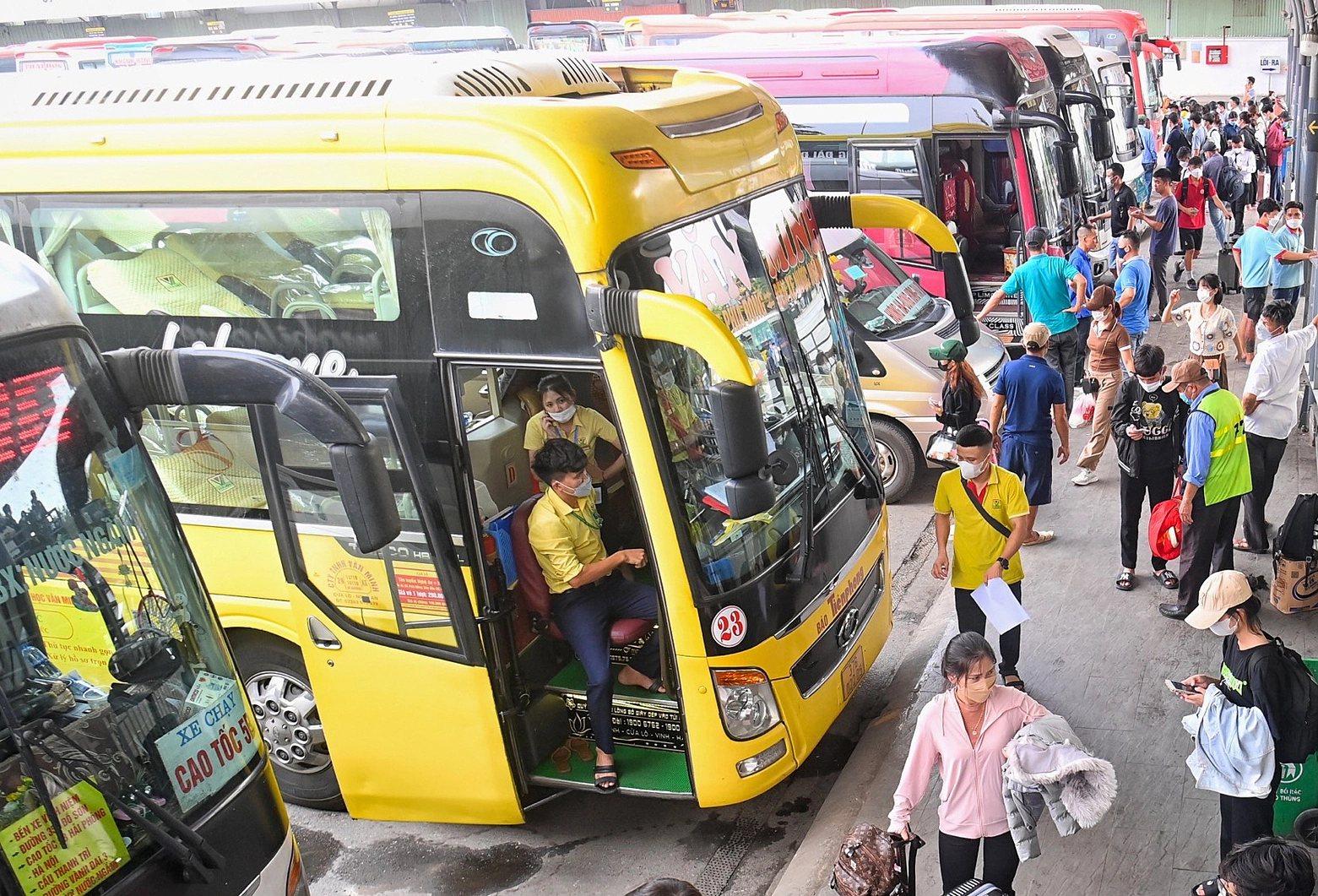 |
Nuoc Ngam Bus Station (Hanoi). *Photo: Giang Huy* |
The working group's agenda focuses on fare management; assessing the impact of fuel prices on transport operations, including local supply; and ensuring compliance with price declaration and listing regulations. Reports from local construction departments to the group must clarify reasons for price adjustments, compare declared, listed, and actual selling prices to assess business compliance. Additionally, localities must provide information on fare trends, management solutions amid changing fuel prices, and specific recommendations.
For businesses with fare increases exceeding 30%, the Ministry requires supplementary price declaration documents for the two most recent consecutive periods, along with a report for review and assessment. This initiative is expected to help strictly control transport fares, limit unreasonable price hikes, thereby stabilizing the market and supporting logistics operations.
Previously, according to reports from local construction departments in March, many transport businesses in 30 of 34 provinces and cities declared fare increases. Ho Chi Minh City recorded the highest number of entities increasing prices, with 15 businesses across 96 routes, showing increases from 5% to 36%. Some localities reported high increases ranging from 30% to 50%, including Dak Lak, Dong Nai, Hanoi, Ninh Binh, Hue, Vinh Long, Ca Mau, Lao Cai, Quang Ninh, Tuyen Quang, and Nghe An.
The Vietnam Road Administration stated that the main reason for the transport fare increases is the sharp rise in domestic gasoline and diesel prices, by approximately 20-30%.
Anh Duy