|
The West Lake area will promote its value as a unique landscape heritage space. |
For the first time, Hanoi's 100-year vision master plan establishes a multi-layered, multi-tiered urban model, developing a volumetric city that optimizes vertical space.
According to the master plan, underground space is organized into 4 functional levels, aiming to develop underground structures across more than 40% of the central urban land area by 2065.
 |
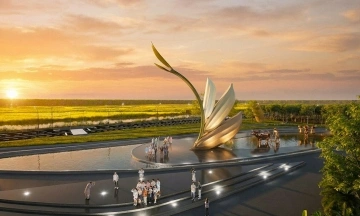
This area is set to become a new creative cultural and tourism hub for the capital, highlighted by the international-scale Quang An Opera House. |
The master plan prioritizes allocating ground-level space for cultural facilities, public amenities, parks, and green areas.
Meanwhile, elevated spaces will be used more effectively with high-density building complexes in urban development areas oriented towards transit-oriented development (TOD).
 |
The Red River landscape boulevard axis is identified as Hanoi's strategic development axis, serving as both a central green space and a primary economic, commercial, service, and urban corridor. |
The master plan also introduces, for the first time, the development of low-altitude economic airspace below 1,000 meters, catering to air taxis, eVTOL (electric vertical takeoff and landing) vehicles, and smart drones.
This direction aims to transform Hanoi into a city operating on a real-time digital twin platform.
 |
The master plan outlines the restructuring of the historic inner city area to free up land resources and enhance the quality of urban space.
Around Ho Guom (Sword Lake), traffic will be reorganized to prioritize pedestrians, while also expanding and upgrading the square system.
The 36 streets of the Old Quarter will be preserved, safeguarding the historical, cultural values, and identity of Thang Long - Ke Cho. Open spaces and underground areas will be integrated with pedestrian craft streets, enhancing connectivity between the Hang Dao and Dong Xuan areas.
 |
The old quarter, characterized by French architecture, is planned to develop into a global financial center following a garden city model.
Key spatial axes will focus on developing grade A office systems, combining the preservation of architectural value and the area's distinctive landscape.
 |
 |
 |
 |
The master plan aims to create a symbolic space along the Red River, embodying Hanoi's cultural heritage, identity, and creativity.
This area will feature multi-layered linear parks, riverside tourism and entertainment complexes, combined with flood control measures to ensure drainage and create a linked corridor for economic centers.
Photo from video