According to Saigon Urban Railways Company Limited No. 1, the operator of the line, passenger traffic has risen markedly since early 3 and remained stable. The week of 7-13/3 recorded nearly 468,000 passengers, an increase of about 12% compared to the previous week. By the period of 17-23/3, passenger numbers reached over 486,000, equivalent to nearly 70,000 daily.
Not only the metro, but Ho Chi Minh City Public Transport Management Center also reported an increase in bus ridership. Combining both modes of transport, the average daily passenger count is about 340,000, a 35% rise from late 2 and 12% higher than the same period in 2025.
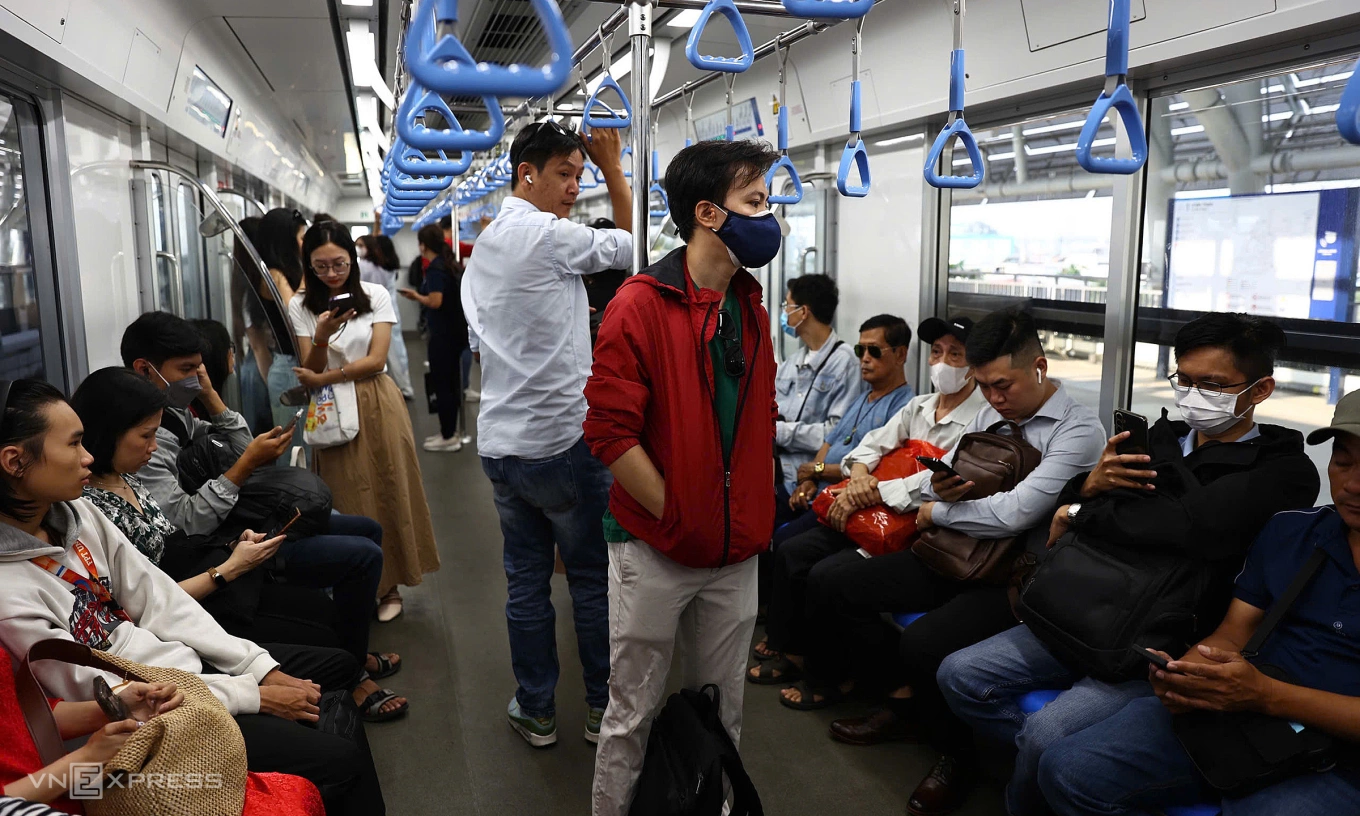 |
Passengers on the Ben Thanh - Suoi Tien metro line. Photo: Quynh Tran
The transport sector attributes this trend to rising fuel prices, which encourage residents to switch to public transport. Additionally, the return of students, who represent a large proportion of passengers, to the city after Tet (Lunar New Year) has also contributed to the increased travel demand.
Recently, Ho Chi Minh City has implemented various measures to enhance service quality. These include operating new buses, expanding cashless payment options, and offering free fares every friday or during special events, which has helped attract more passengers.
The Ben Thanh - Suoi Tien metro line is Ho Chi Minh City's first urban railway, stretching nearly 20 km and connecting the city center with the eastern gateway. The line features three underground stations and 11 elevated stations. It began operation in 12/2024, running from 5h-22h with over 220 trips daily; service frequency increases during holidays and Tet.
Currently, the city's bus network comprises about 179 routes with over 2,300 vehicles. Many electric bus routes have been put into operation, contributing to improved service quality.
Giang Anh