The Chairman of the Quang Ngai Provincial People's Committee recently ordered a rectification and accountability process for collectives and individuals involved in the slow resolution of land documents in Nghia Lo Ward, a central ward located in the eastern part of the province.
According to regulations, ward-level authorities must coordinate to inspect and verify documents at the request of specialized agencies within a maximum of 7 working days. However, Nghia Lo Ward has repeatedly delayed coordination without valid reasons, leading to prolonged backlogs in document processing.
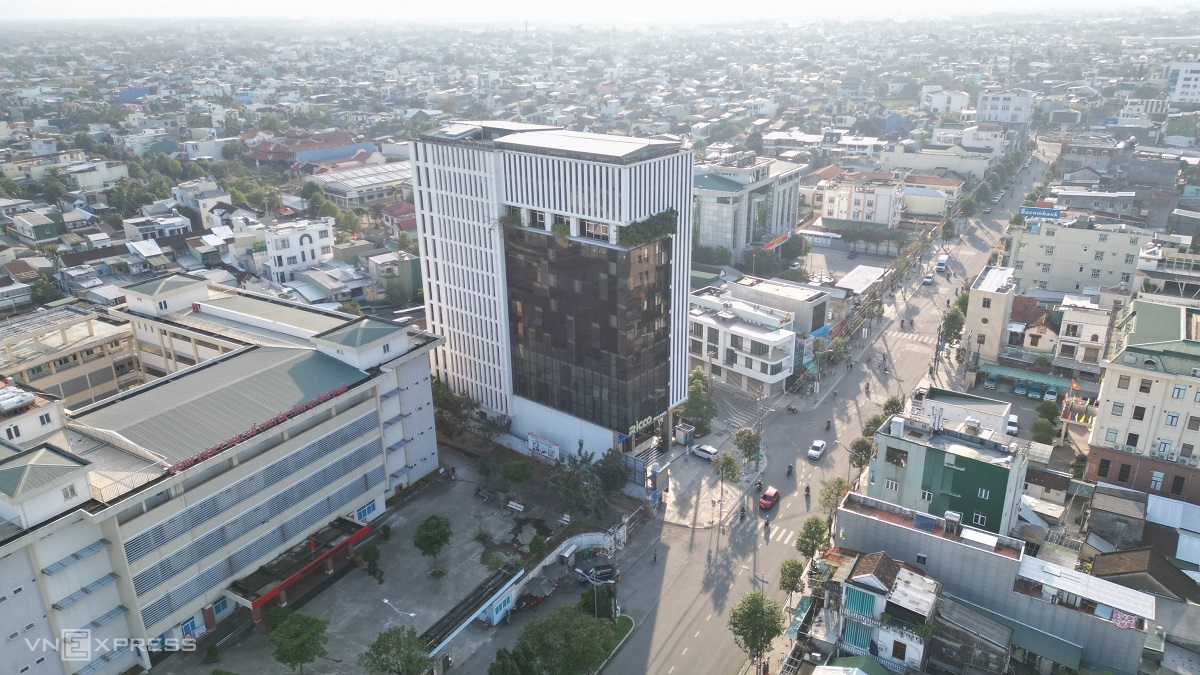 |
Hung Vuong Street in Nghia Lo Ward, eastern Quang Ngai. Photo: Pham Linh
Many documents required Branch III of the Land Registration Office to issue follow-up requests between 7 and 11 times. In exceptional cases, some documents were reminded for the 12th or 13th time but remained unresolved, with delays extending over 90 days. Additionally, some cases required specialized agencies to return documents due to a lack of coordination from the local authorities. There were instances where a fifth follow-up was needed before the ward responded.
Nghia Lo Ward People's Committee also faced complaints regarding its slow resolution of citizen petitions. Some cases extended beyond 100 days, significantly exceeding the maximum 15 working day deadline. The Provincial People's Committee Office had issued multiple reminders, but responses from the local authorities were deemed unsatisfactory, failing to clearly identify individual responsibilities.
The Provincial People's Committee criticized the chairman of Nghia Lo Ward for insufficient inspection and supervision, which led to prolonged delays and caused frustration among residents. It also noted that some specialized civil servants exhibited signs of shirking and avoiding responsibility.
The province has directed the local authorities to conduct a review, clarify the responsibilities of collectives and individuals, assess staff capabilities, and address cases involving underperforming, harassing, or consistently overdue document handlers. The ward must also resolve all outstanding documents and report the results by 30/5.
Speaking to VnExpress on 9/5, Tran Dinh Truong, chairman of Nghia Lo Ward, acknowledged the shortcomings and committed to rectifying them as directed by the Provincial People's Committee.
According to Truong, the backlog in land documents stems from the ward's large area, dense population, numerous ongoing projects, and a heavy workload, coupled with a shortage of specialized personnel. He added that many older land documents are complex and incomplete.
The leadership of Nghia Lo Ward also stated that they have instructed a comprehensive review of all errors, clarified individual responsibilities, and proposed that the province assign more specialized civil servants to support the local authorities.
Nghia Lo Ward was formed by the merger of the former Le Hong Phong, Tran Phu, Quang Phu, and Nghia Lo wards. The new ward covers an area of over 17 km2, has a population exceeding 73,000 people, and is currently implementing 18 projects.
This is not the first locality in Quang Ngai to face accountability for slow land procedure resolution this year. Previously, An Phu Commune and Tinh Khe Commune were also criticized by the province for persistent document backlogs, which affected citizens' rights.
Pham Linh