Along the Thot Not canal, passing through Thanh Hung hamlet in Co Do commune, four rice mills have operated for many years within one kilometer. Residents living along provincial road 921 must constantly keep their doors closed and use rubber screens and thick fabric to limit dust, but these measures prove ineffective.
Fine dust thickly covers trees, roads, houses, and household items. According to residents, the pollution has persisted for many years, becoming severe during the rice harvest season.
 |
A tabletop in Pham Thi Ngoc Anh’s living room covered in dust after one morning of mill operation. *An Binh*
Sweeping a layer of dust from her floor, Pham Thi Ngoc Anh, 52, said the area is almost entirely covered in dust year-round.
"The mills operate almost all year, and dust flies everywhere. Just opening the door lets dust into the house, covering furniture and food, making it suffocating," she stated.
Huynh Thi Bach Tuyet, 56, living nearby, reported that she frequently suffers from allergies and itchy skin due to the dust. Her husband has a persistent cough, and their children require regular medication for skin issues.
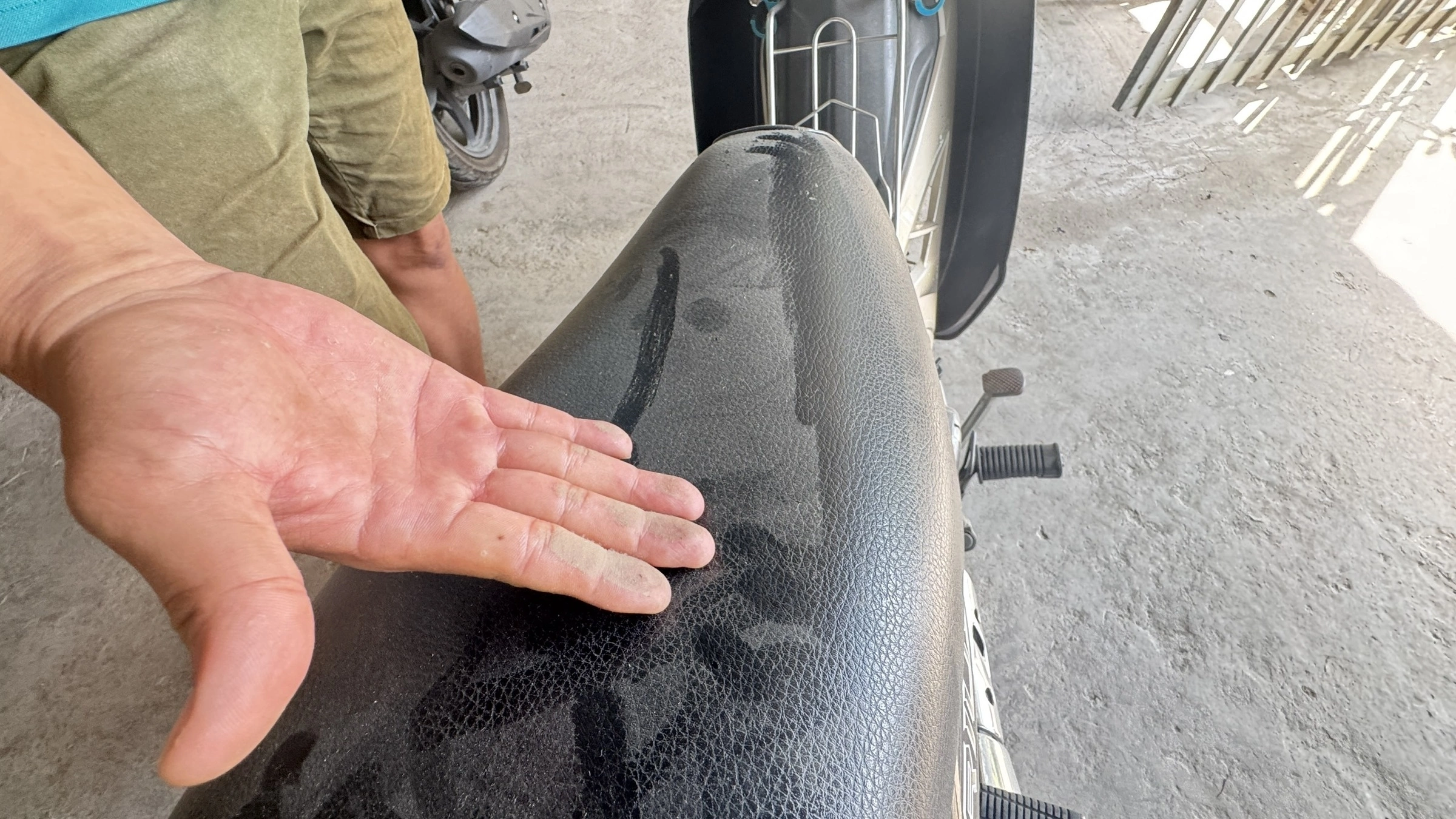 |
A motorbike seat covered in dust after a few hours parked inside a resident’s home, about 40 m from a mill. *An Binh*
Beyond dust from the milling process, residents believe that mills pumping rice husks directly onto barges, instead of compacting them into fuel briquettes as before, causes dust and husks to spread more widely.
Tran Hoang Vu, 49, noted that each time husks are pumped, thick dust blows into the residential area with the wind. "We do not oppose production, but the mills must implement pollution control measures to protect residents’ health," he said.
Residents have reported that some mills, including Thanh Tam Co Do and To Hong, are causing the most significant impact.
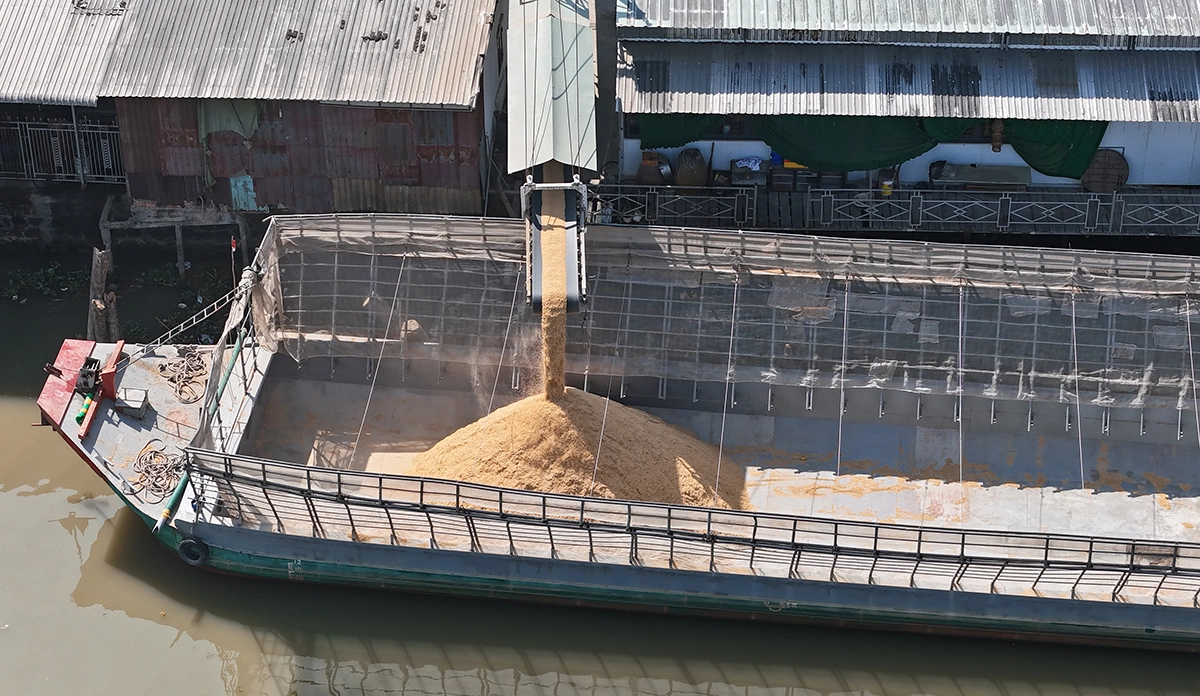 |
To Hong rice mill pumps husks onto a barge, causing dust to spread into the residential area. *An Binh*
Tran Van Bon, owner of Thanh Tam Co Do mill, stated the facility has operated since 2013, with a capacity of about 400 tons of rice per day. According to him, a partially damaged duct system over the past half-month caused more dust to spread. However, the mill has repaired and improved its dust-reducing misting system since 4/5.
Despite these efforts, many households reported that the pollution situation has not significantly improved since the mill resumed operations.
Dust pollution from rice mills in Co Do commune, Can Tho city. Video: An Binh
Le Chi Phuong, Chairman of Co Do commune People's Committee, stated that the locality will coordinate with the Department of Agriculture and Environment, the city Police, and other relevant agencies to inspect, monitor, and assess the environmental impact of the mills. This will allow for the implementation of appropriate handling measures.
Local authorities affirmed that the inspection aims to ensure production activities comply with regulations while protecting the living environment for residents in the area.
An Binh