The distinguishing feature of the motorbike taxi driver, a man in his 70s, was the two helmets, one yellow and one blue, from two ride-hailing companies hanging on his hook. "Need a ride, young man?" Mr. Tien greeted, seeing tourists pass by. But no one replied. He did not bother to press further.
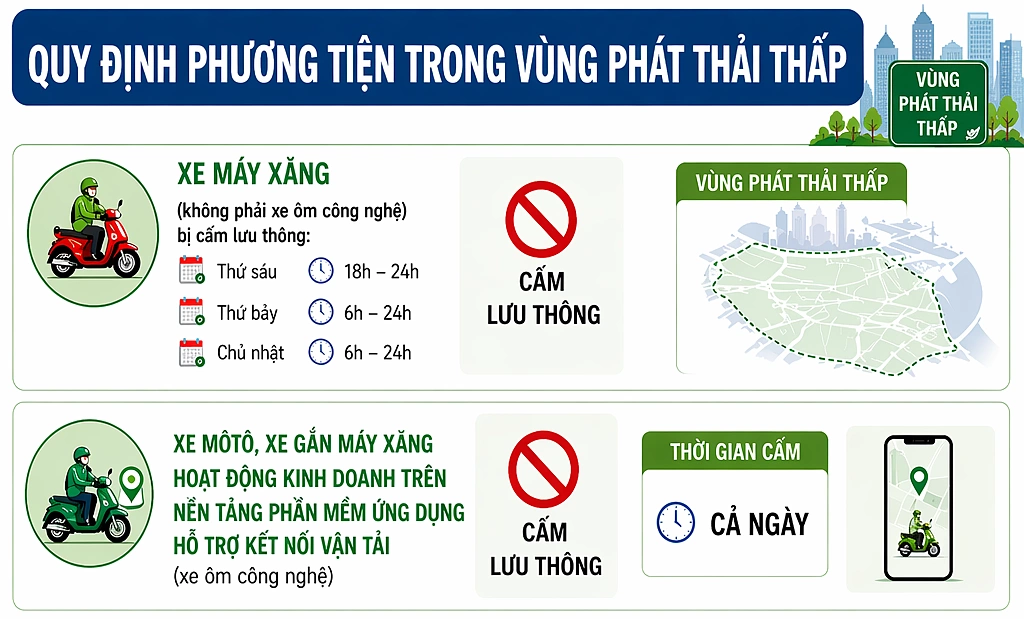
For more than 20 years, Mr. Tien has transported passengers on one of the city's most expensive streets. He now "does not know how much longer he can hold on". Trang Tien street, which leads from the Grand Opera House to Ho Guom Lake, along with a series of central streets in the core Hoan Kiem ward, is expected to begin a pilot low-emission zone from 1/7 until the end of the year. This 0,5 square kilometer area encompasses 11 streets: Trang Tien, Hang Khay, Le Thai To, Hang Dao, Hang Ngang, Hang Buom, Ma May, Hang Bac, Hang Mam, Nguyen Huu Huan, and Ly Thai To.
Traditional gasoline-powered motorbike taxis, which transport passengers and goods without using ride-hailing applications, will be prohibited from operating within the low-emission zone during specified hours. Outside these times, vehicles must meet emission standards set by authorities. Gasoline-powered ride-hailing motorbike taxis will be completely banned in this area.
 |
Graphics with AI support. |
Freelance traditional motorbike taxi drivers like Mr. Tien have witnessed many changes in their profession over the past two decades. They gradually lost market share and customers to the surge of ride-hailing services. Now, they face the choice of switching to electric vehicles or changing professions if the proposal is approved.
"I have not made any plans, and I do not know how to make them work," Mr. Tien stated. He does not oppose the city's policy but worries about his livelihood. Switching to an electric vehicle to continue his profession means he would have to learn new technology, and the cost of a new vehicle is significant for an elderly person without a pension. His old motorbike, used for daily travel, is also his means of earning a living and remains a cherished possession he is reluctant to part with. He bought it 17 years ago for a price nearly equivalent to a gold bar at the time.
In his early years, Mr. Tien averaged 4-5 customers daily. Later, this number halved, and some days he had no rides at all. Many colleagues, unable to endure the harsh weather, quit and switched to other jobs or returned to their hometowns. Mr. Tien, however, tries to "earn a little spending money" while he still has his health. He now takes shorter trips, mainly transporting tourists to Dong Xuan Market or into the Old Quarter for negotiated prices of 20.000-30.000 Vietnamese dong. For longer distances, traditional motorbike taxis often "stand no chance" as customers prefer ride-hailing drivers for higher discounts.
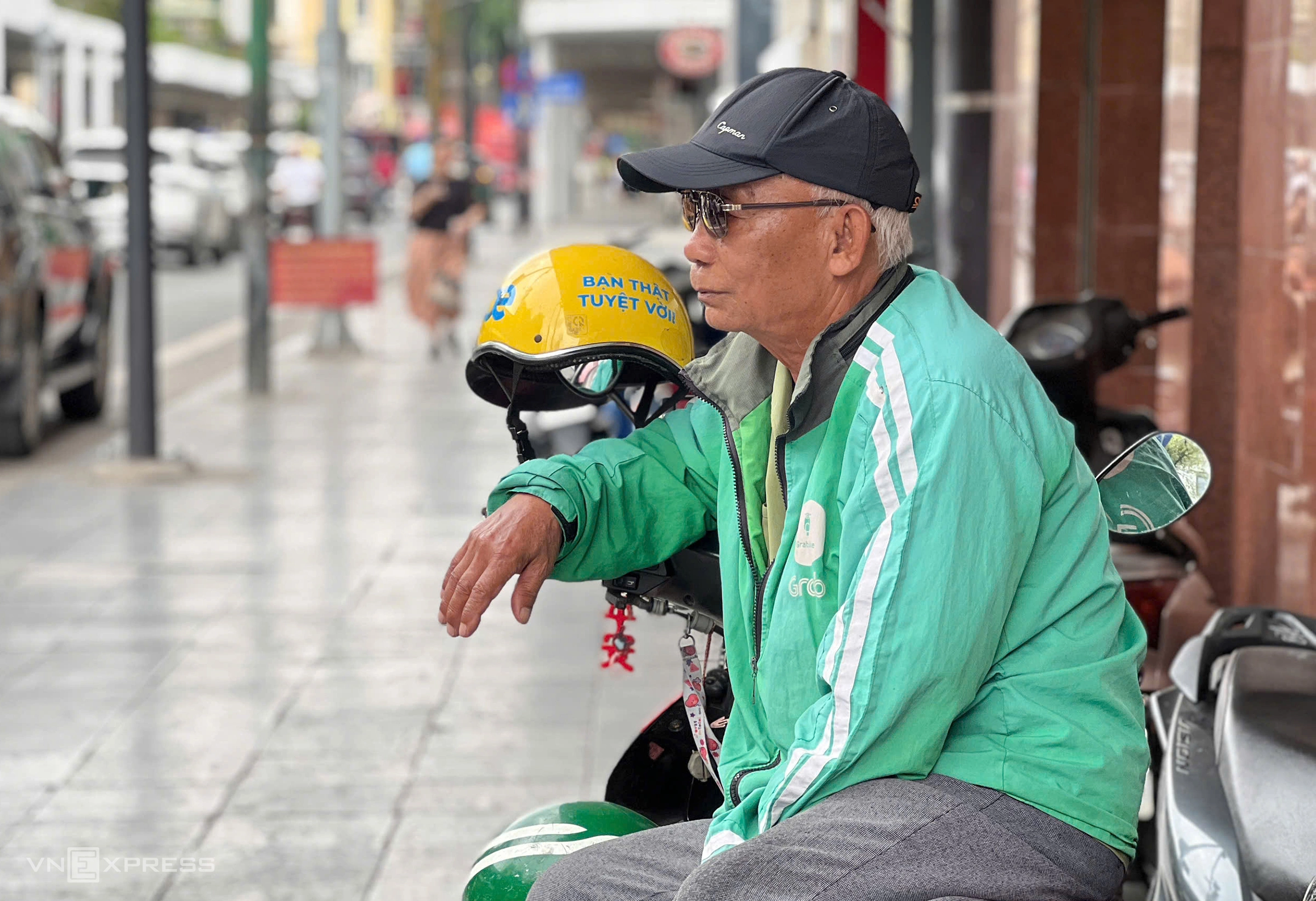 |
Mr. Tien has been a motorbike taxi driver for more than 20 years, mainly picking up customers around Hoan Kiem Lake. Photo: Hong Chieu |
"Young, healthy people can switch to ride-hailing services and move to other areas, but it is difficult for older folks like me. At this age, I do not have the strength to work as a security guard, and no one would hire me," he explained, considering staying home if he cannot switch to an electric vehicle. Older freelance workers like Mr. Tien know they have few opportunities to change professions.
About one kilometer away, Mr. Thai travels daily from his rented room across Chuong Duong Bridge, circling the Old Quarter to pick up customers, buy groceries, deliver food, or pick up children from school. The 68-year-old driver's income primarily comes from a loyal customer base in an old residential area.
"I drive for anyone who hires me. But almost every trip involves Ring Road 1, so it will affect me," Mr. Thai worried. Many restaurants offering good food, which customers order, are located in the Old Quarter. His most stable source of income is picking up children from school 5 afternoons a week. The school is on Ly Thai To street, which will be part of the low-emission zone from 1/7. Mr. Thai hopes the restricted hours for gasoline vehicles do not coincide with school dismissal times, allowing him to maintain his income.
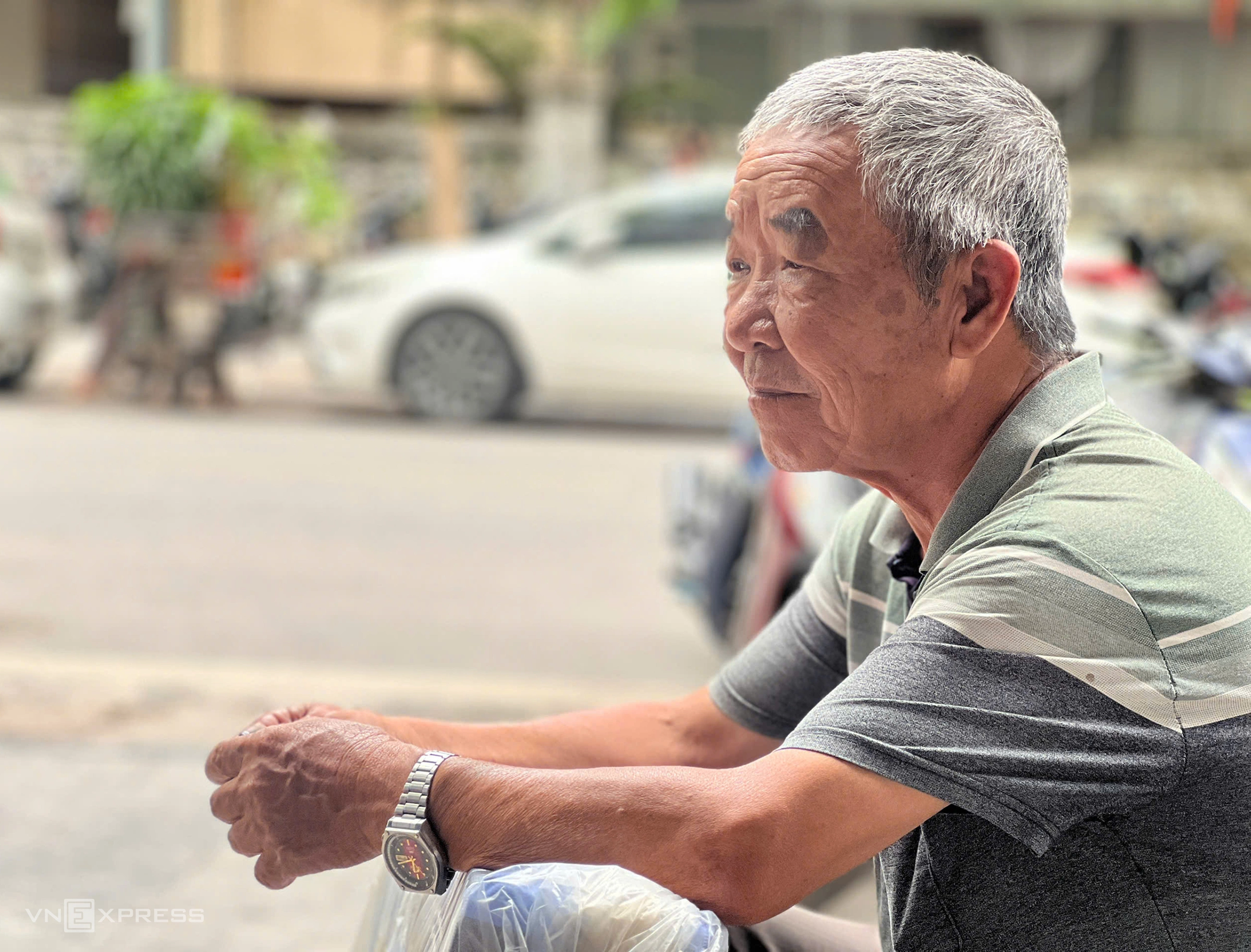 |
Mr. Thai, after three decades in the profession, plans to switch to security work or return to his hometown as he ages. Photo: Giang Huy |
"If gasoline vehicles are too difficult to operate, I will switch to an electric vehicle, but I wonder if the city has a support plan?" the elderly driver asked. After more than 30 years as a motorbike taxi driver, Mr. Thai is familiar with Lo Su, Hang Dau, Hang Mam, and regularly returns to Hang Khay and Trang Tien. He fears it would be difficult to find customers and navigate unfamiliar areas if he moves elsewhere.
His children are married and work far from home. In his hometown of Hung Yen, his wife tends to the fields and house. The elderly driver hopes to continue driving for a few more years while he is healthy to save for his old age, as he has no pension. The only benefit he receives is 100% health insurance as a former veteran who defended the northern border.
"I am considering it; I have a few options. If it does not work out, I will return to my hometown with my garden, pigs, chickens, and a few acres of rice paddies. It is time, after all," Mr. Thai said with a big laugh, summarizing more than half a lifetime spent in the capital's streets.
For gasoline-powered ride-hailing drivers like Nguyen Duc, the choice is easier than for traditional motorbike taxis: they can decline trips or agree with customers beforehand to only travel to the edge of the low-emission zone. The young driver's operating area is extensive, but he usually picks up customers from Linh Nam to the Old Quarter, primarily outside Ring Road 1.
"I am sure the system will have a way to direct electric motorbikes and gasoline motorbikes. Within the restricted zone, trips will be assigned to electric vehicles, and outside the zone, to gasoline vehicles," the 22-year-old driver predicted.
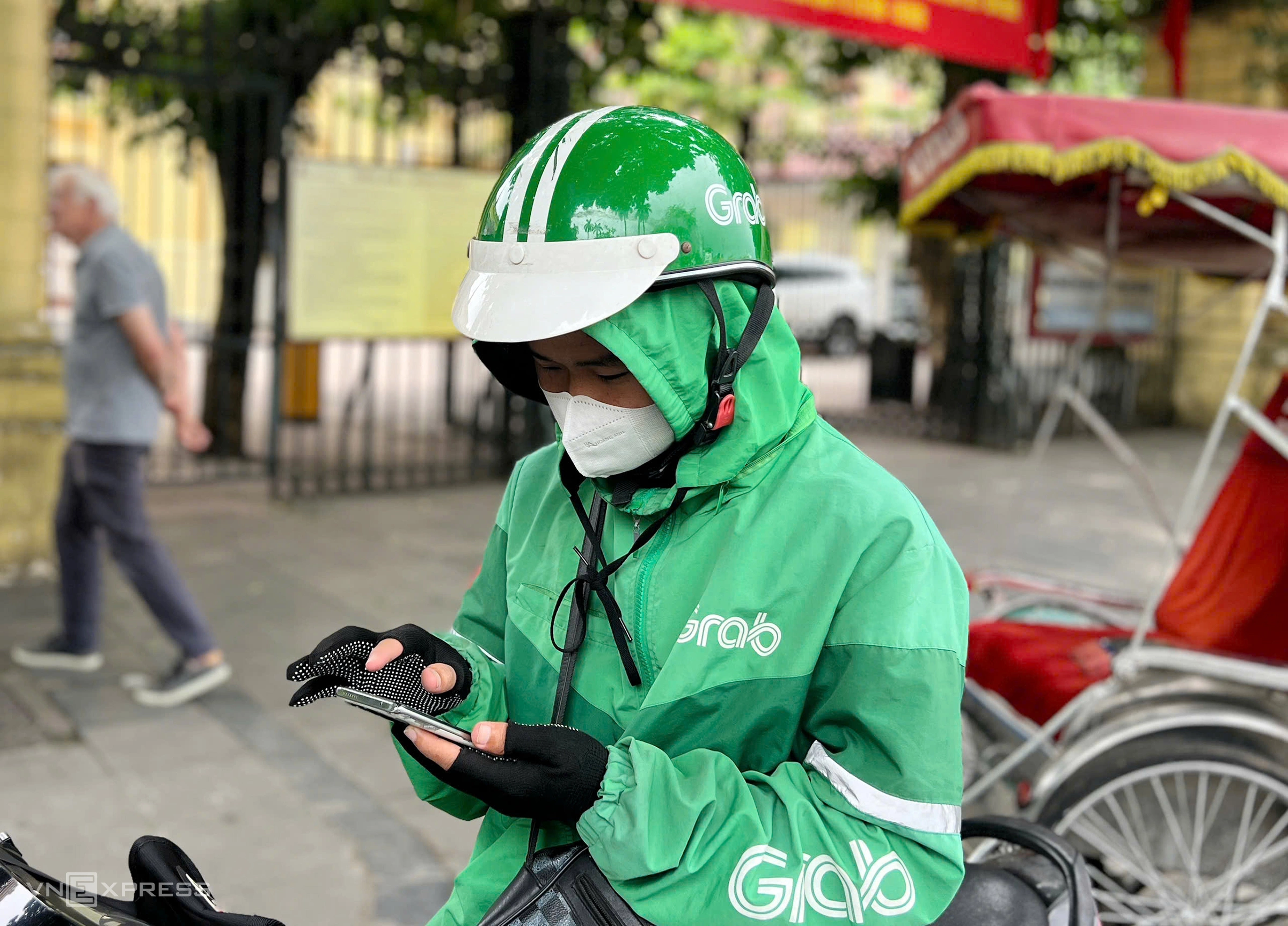 |
Duc, a ride-hailing motorbike taxi driver dropping off a customer in the Old Quarter area, 5/2026. Photo: Hong Chieu |
Duc believes that banning ride-hailing vehicles from the low-emission zone will not significantly impact job opportunities in the short term, as drivers can shift their operating areas. For instance, he primarily works in the South, only occasionally transporting customers into the core zone. This area has gradually restricted vehicles and organized pedestrian streets, so drivers are becoming accustomed to the changes.
Most ride-hailing drivers are young people or students working part-time; they are not long-term employees and can change professions. He cited his own example, noting he only drives a few hours a day to cover 5-6 million Vietnamese dong monthly for rent and food. For those who drive full-time and long-term, he suggested they should be classified as formal laborers with social insurance contributions to receive benefits.
"After graduation, I will return to my hometown to find a less demanding job. Staying here, I am afraid I cannot cope with the high cost of living. Young people cannot drive forever," the driver from Phu Tho calculated, mentally counting 5 industrial parks in his home region. Although fares have increased, giving him a few thousand Vietnamese dong more per trip, the price of a meal or a bowl of vermicelli has also risen proportionally.
Hanoi currently has about 6,9 million motorbikes and scooters, and more than 11.000 electric bicycles and electric motorbikes, not including the 10-15% of vehicles from neighboring provinces that operate regularly. There are about 126.000 ride-hailing motorbike taxis, and the number of unorganized individual and spontaneous transport businesses cannot yet be quantified.
The city believes that the number of motorbikes, scooters, and similar vehicles used for commercial passenger and goods transport, including traditional motorbike taxis, ride-hailing motorbike taxis, three-wheeled vehicles, and cyclo-rickshaws, is increasing rapidly and is difficult to control, causing many problems that require strict management. The draft Decision on the use of motorbikes, scooters, and rudimentary vehicles for commercial passenger and goods transport in the area, after public consultation, will be submitted to competent authorities for issuance in 6/2026.
Hong Chieu