On 14/8, the prime minister issued a directive aimed at strengthening food safety assurance in educational institutions. The directive mandates that schools publicize student meal information to parents through various forms such as notice boards, websites, technology applications, and online communication groups. This initiative aims to provide parents with a basis to monitor and supervise students' semi-boarding meals at school.
The head of the government has assigned provinces and cities to designate leaders and school health staff to directly supervise and control the entire food and meal supply chain entering schools. This ensures meal quality, adherence to menus, and sufficient nutritional quantities according to standards. Schools must receive and address parental feedback within 24 hours.
The prime minister requested schools to facilitate the participation of the Parent Representative Board in supervising food sources, the meal distribution process, and verifying and evaluating meal quality alongside teachers and students. Schools meeting the conditions should conduct rapid tests on high-risk ingredients and food items and inspect processing areas. If meals are sourced externally, the Parent Representative Board can request school leaders to organize a direct inspection team at the supplier's processing facility.
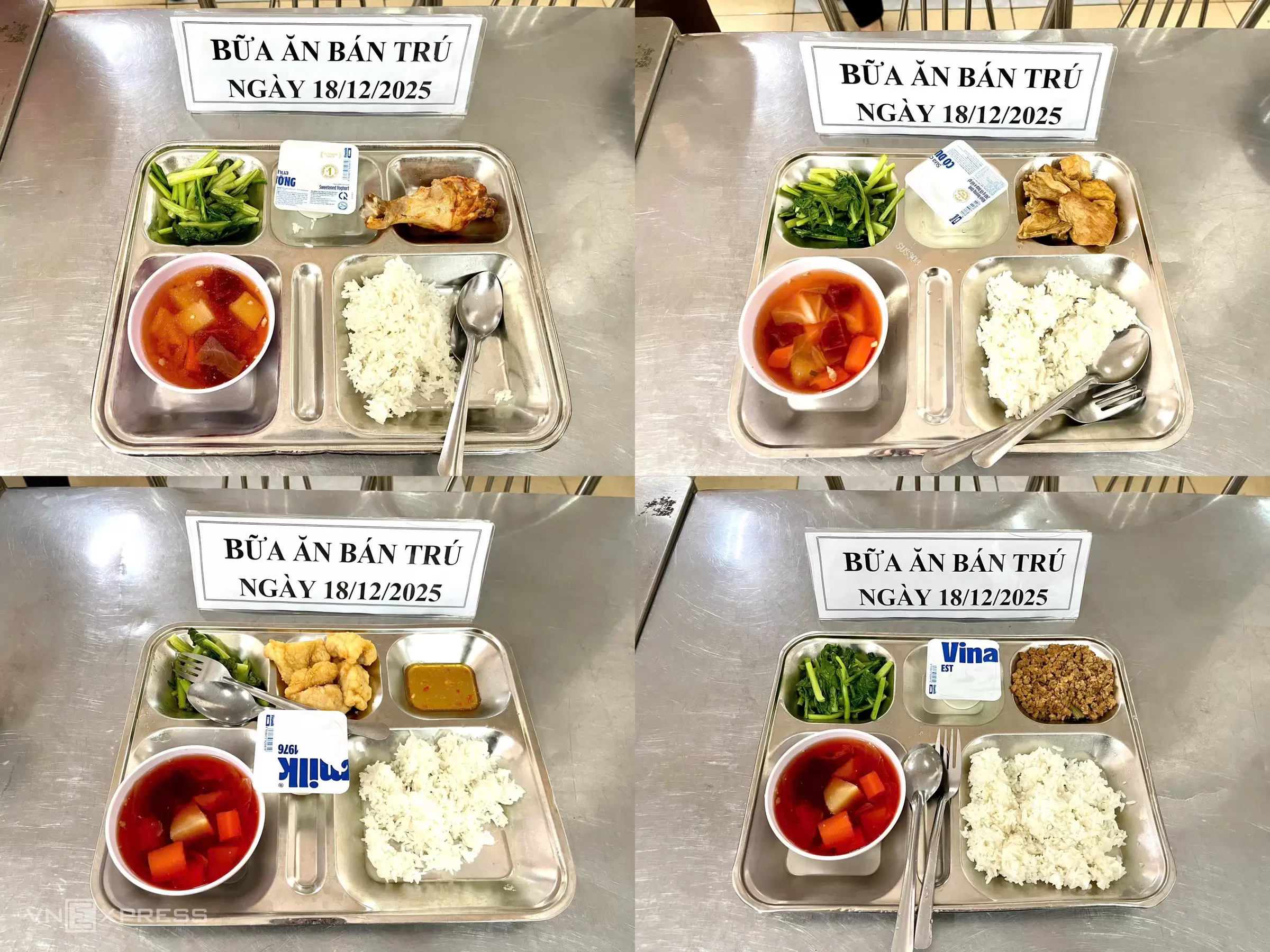 |
Lunch meal at Trung Vuong high school, TP HCM, 12/2025. *Photo: Le Nguyen*
The Ministry of Health is tasked with assigning officials to manage school food safety, covering food supply services, meals, and the organization and operation of cafeterias, collective kitchens, and canteens. The guiding principle is clarity in personnel, tasks, responsibilities, authority, timelines, and outcomes; ending situations of overlap and responsibility evasion.
Government leaders noted the need to add penalties for violations by heads of local health management agencies and school leaders who show irresponsibility, leading to food poisoning incidents.
The Ministry of Public Security directed its professional units to combat and address irresponsible acts in food safety management, and the "skimping" on school meal portions. The ministry will handle several "warning" cases and apply information technology to receive crime reports in this area via hotlines, zalo OA an ninh, and VNeID.
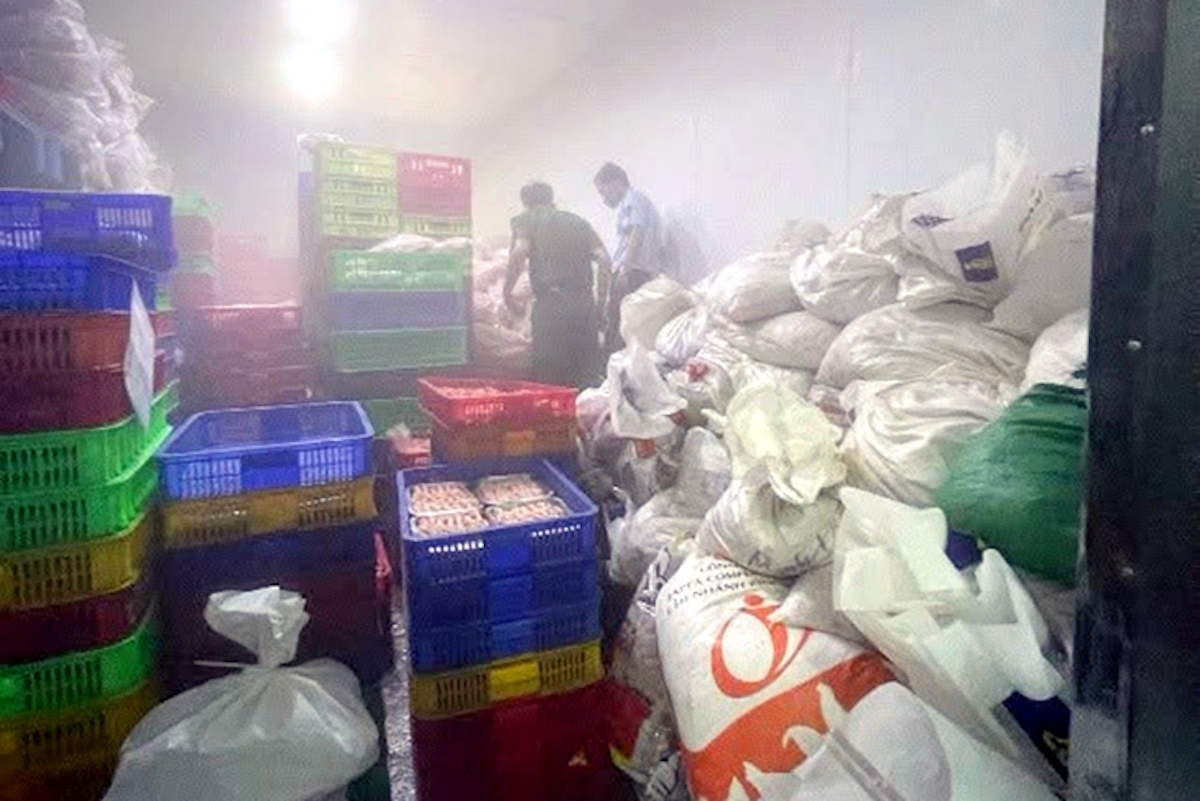
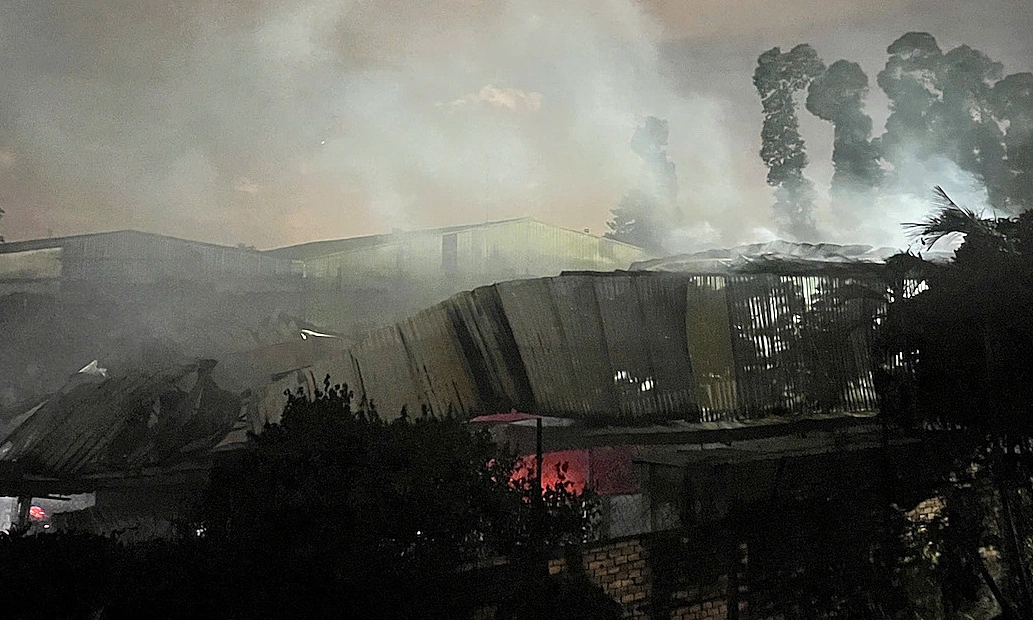
In march, Hanoi police discovered a network slaughtering and distributing 3,600 pigs infected with African swine fever, equivalent to 300 tons. The case involved many veterinary officials who were prosecuted for bypassing control procedures, forming a closed chain from collection, slaughter, to distribution.
In this chain, Cuong Phat company was the primary point for consumption and distribution, supplying meat to some schools in Hanoi. The Ministry of Education and Training subsequently required all schools to publicize their food and ingredient suppliers on their websites and mass media.
African swine fever (ASF) is an infectious disease that only occurs in pigs, including domestic pigs and wild boars. The causative virus (ASFV) spreads rapidly and causes a nearly 100% mortality rate in infected pigs.
Vu Tuan