On the morning of 9/7, at a conference reviewing the first six months and outlining tasks for the latter half of the year, the Ministry of Home Affairs announced this proposal aligns with the Central Committee and Politburo's policy to study a special urban administrative unit model, following the nationwide transition to a two-tier local government system.
On 19/6, the Party Central Committee Office announced the conclusion of General Secretary and President To Lam, who requested further research into establishing core special urban administrative units. These units would coordinate development, connect infrastructure, public services, and key economic zones.
In a report for an early July conference reviewing one year of the two-tier local government system, the Ministry of Home Affairs also proposed forming several large-scale wards to serve as development nuclei for provinces and cities. Additionally, it suggested establishing new-generation special economic zones as growth poles.
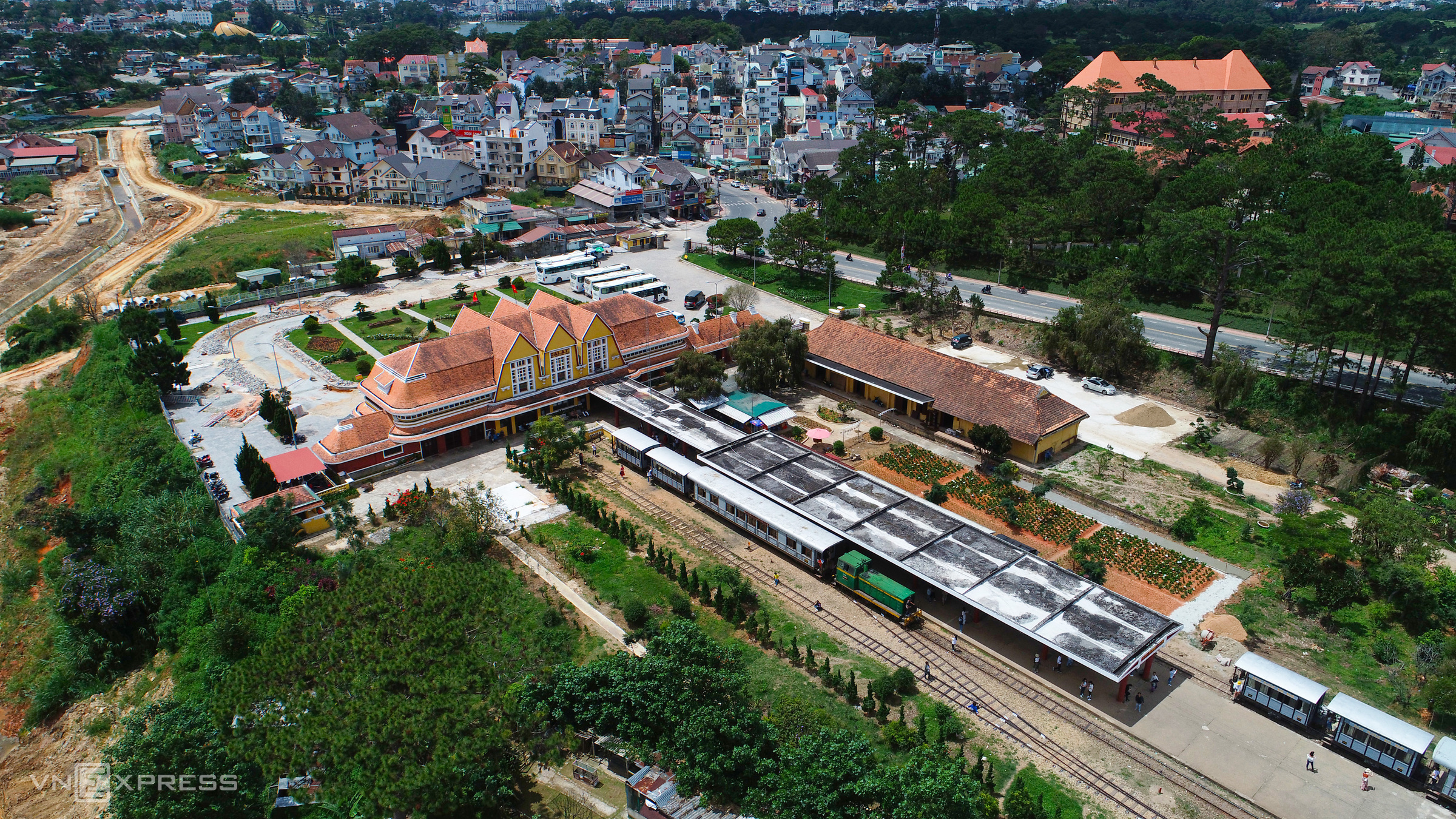 |
Da Lat city before the dissolution of the city-under-province model, 2018. Photo: Giang Huy
In addition to researching new urban models, the Ministry of Home Affairs will continue to propose reorganizing communes and wards that do not meet standards. It will also finalize databases on administrative units, administrative boundaries, and local government organization. Furthermore, the ministry will advise the government on issuing a resolution concerning the natural land area of 34 provinces and cities.
Challenges encountered during the operation of the two-tier local government system will be compiled and reported to the government and relevant authorities, who will then propose solutions.
Starting 1/7/2025, the entire country will operate under a two-tier local government model, comprising provincial and commune levels, while dissolving all district-level units. Among the 696 dissolved district-level administrative units are 84 cities under provinces, 53 towns, and two cities under centrally-run cities: Thu Duc and Thuy Nguyen.
As cities under provinces, cities under centrally-run cities, and towns were all district-level administrative units, these models will no longer be maintained once the district level is abolished. Currently, the country has six centrally-run cities: Ha Noi, TP HCM, Hai Phong, Hue, Da Nang, and Can Tho.
Regarding cadre work, the Ministry of Home Affairs identifies cadre evaluation as a breakthrough in comprehensively reforming cadre management. Selection, assignment, and appointment will focus on matching the right person to the right job, aligning with their abilities and strengths. This approach aims to overcome the "leveling" tendency in evaluations and address delays in replacing individuals who evade or shirk responsibility.
Cadres with limited capacity, low prestige, or those who fail to meet job requirements will be dismissed, asked to resign, or replaced. Conversely, individuals demonstrating outstanding capabilities, creativity, decisiveness, as well as young cadres, female cadres, ethnic minorities, and those with scientific and technical expertise will be highly valued.
The Ministry of Home Affairs will also research mechanisms to promote inter-sectoral movement of cadres between the state and non-state sectors.
Vu Tuan