


 |
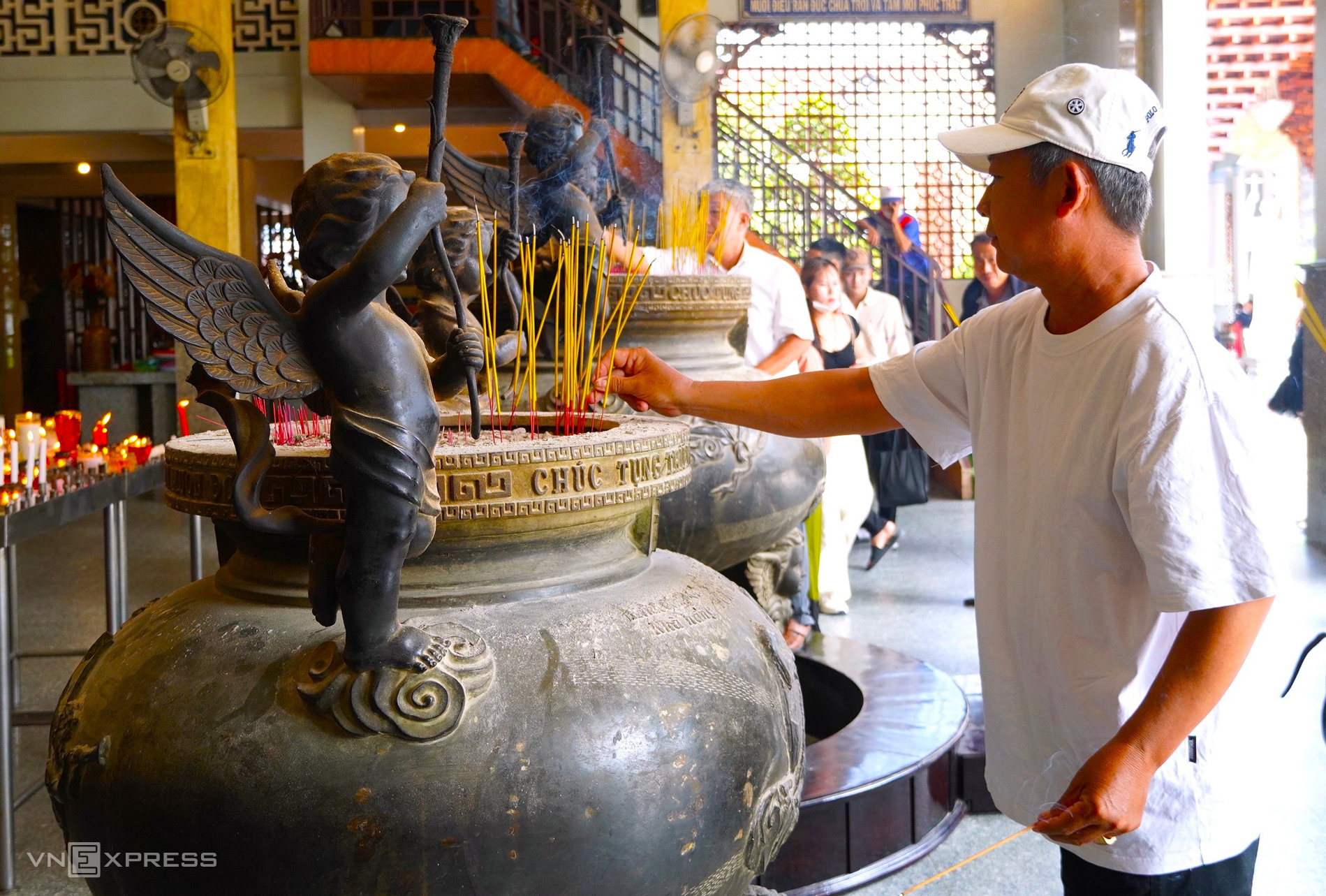
Mr. Mai Van Dung, from Phu Loi ward, Can Tho city, states that he and his family visit the priest annually. Despite the long journey, the family is eager to offer thanks and pray for good things. |
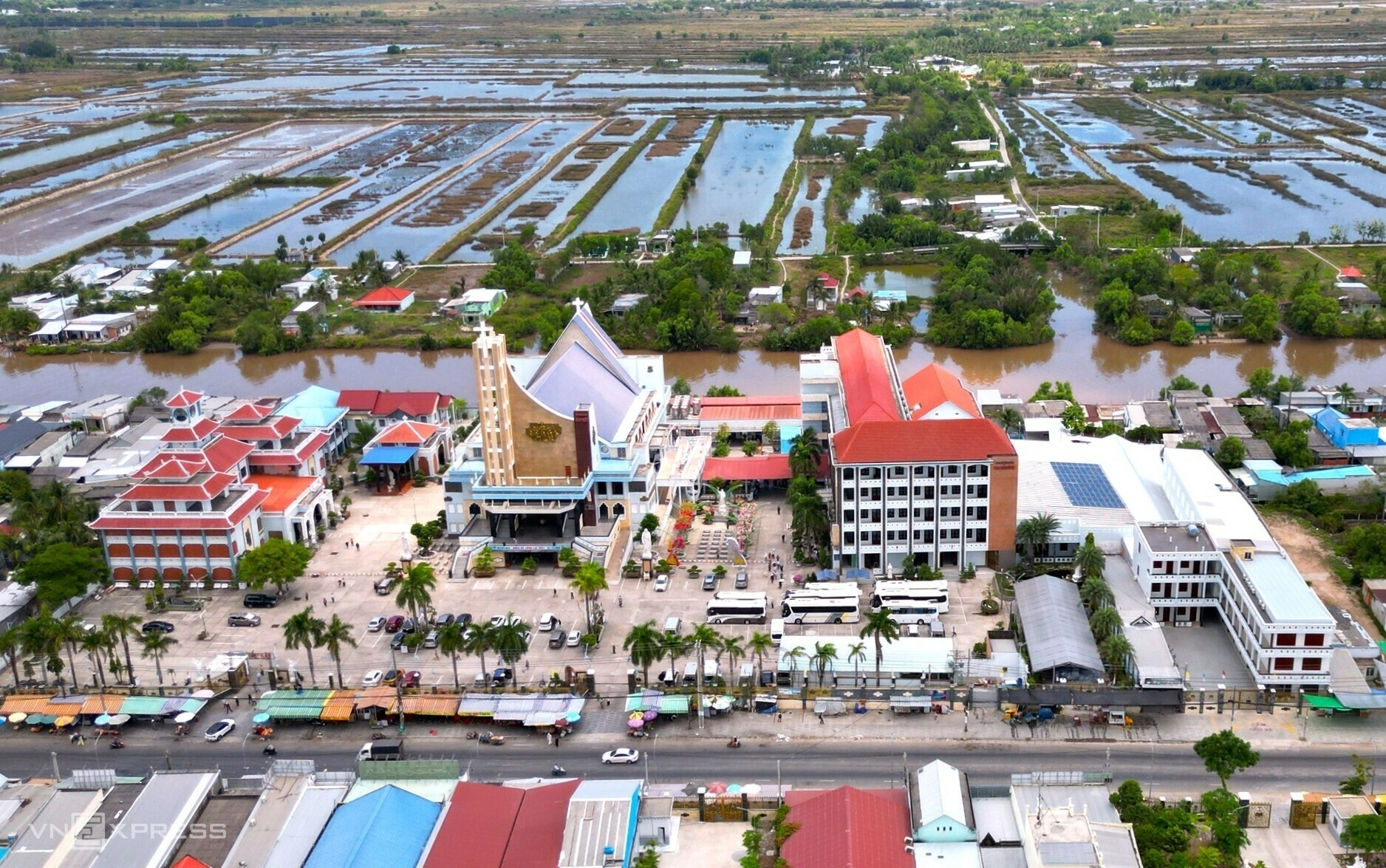
Tac Say Pilgrimage Center, situated in Phong Thanh commune along the Ca Mau – Bac Lieu canal amidst rice fields, is preparing for a significant event. The parish, established in June 1925 with Phalo Tran Minh Kinh as its first parish priest, initially built its chapel from wood and leaves on land owned by Mr. Ba Thai. This center is a major pilgrimage destination, especially as it anticipates the beatification ceremony of Father Truong Buu Diep.
Father Truong Buu Diep, born on 1/1/1897 in Con Phuoc parish (now Long Kien commune, An Giang province), is the central figure of this pilgrimage site. After studying at Cu Lao Giang Minor Seminary and Nam Vang Major Seminary (Cambodia), he was ordained a priest in 1924. He became the parish priest of Tac Say in March 1930. In March 1946, during a period of unrest, Father Diep was arrested along with 70 parishioners. Historical records indicate he was killed by hai Japanese soldiers and his body was later found in a pond. Parishioners initially buried him behind Khuc Treo Church. In 1969, his remains were reinterred at Tac Say Church, transforming it into a pilgrimage site for numerous faithful from within and outside Vietnam.
The parish gradually recovered between 1952 and 1956. In 1963, a solid church was built, measuring 10 meters wide and 32 meters long. The church complex, spanning approximately 20,000 square meters, has undergone multiple renovations. In the late 20th century, the grounds expanded further with the construction of a presbytery, community house, and other auxiliary buildings. By 2000, the parish served over 1,200 parishioners across 5 religious zones, supported by 22 religious.
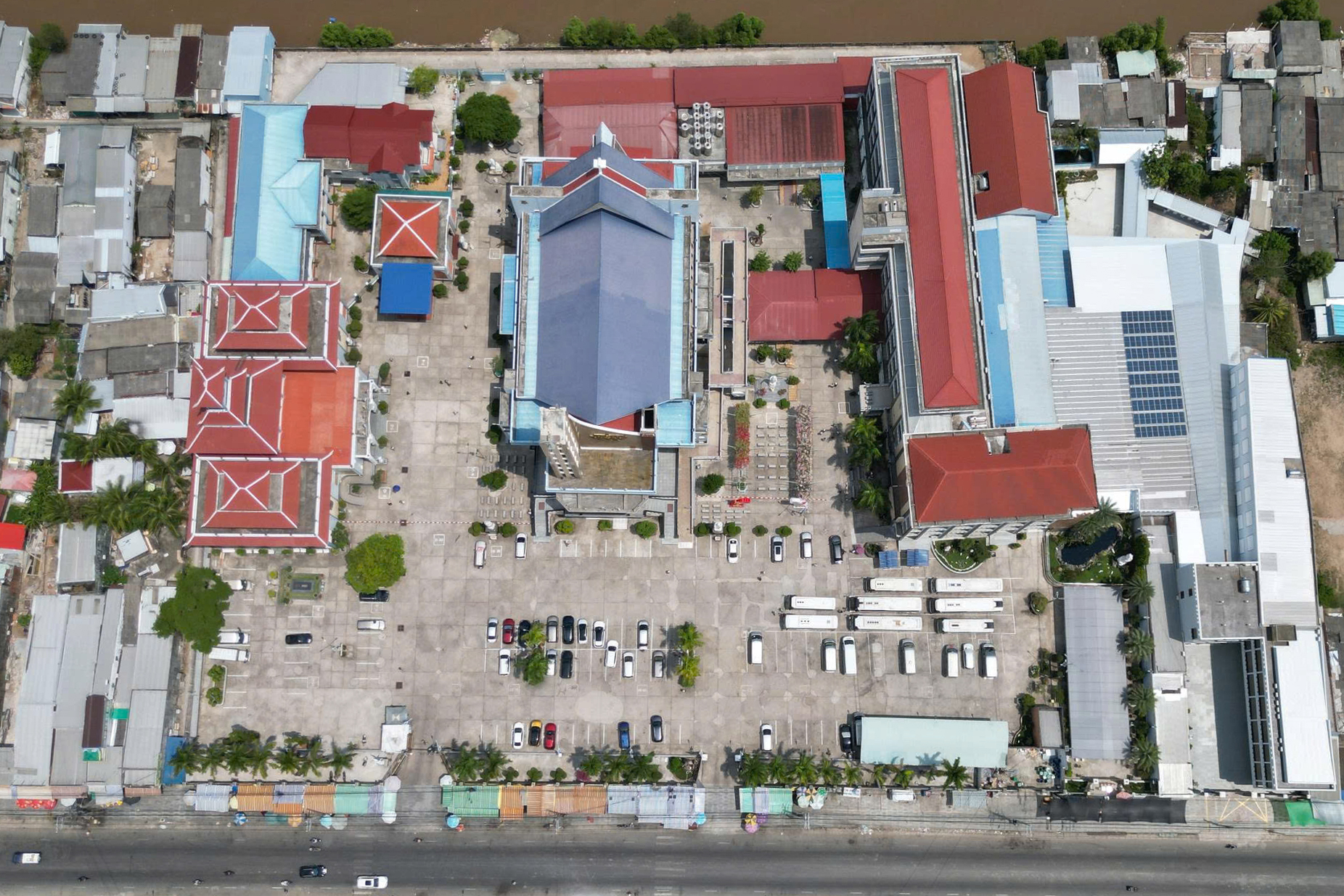 |
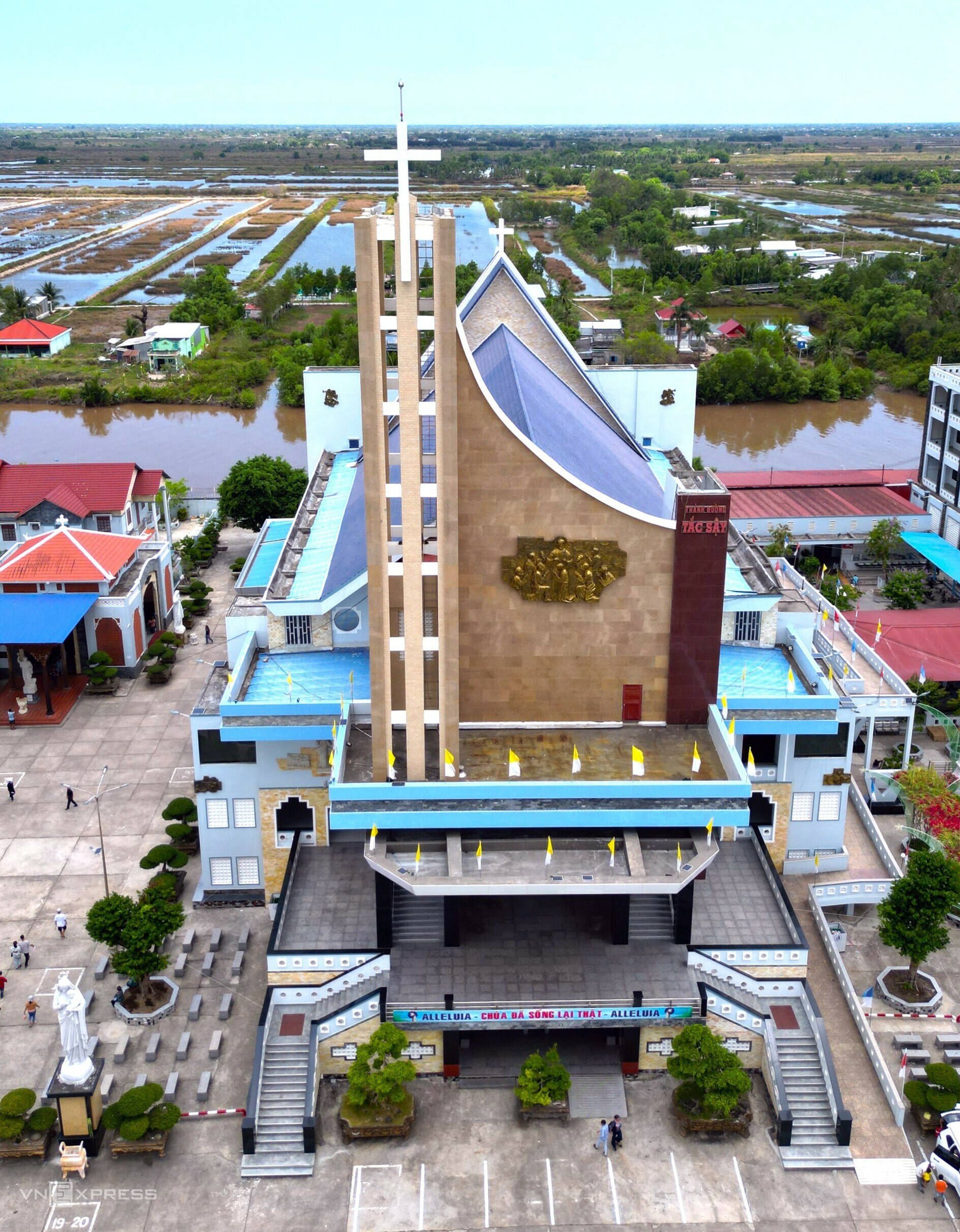
The main church, located at the center of the complex, features a design with ba stories. Its facade is notably clad in brown-yellow stone, with a tall bell tower at the front topped by a white cross and a stylized curved roof. A spacious plaza lies before it, with hai symmetrical staircases leading up to the main floor.
 |
{"caption_all":null,"caption_items":["The sanctuary inside the main church is designed to be spacious, with long rows of pews and architecture deeply rooted in Catholicism, serving various masses. During peak times, such as the 12/3 anniversary of Father Truong Buu Diep, the church organizes multiple mass schedules to accommodate the large number of attendees.","A parishioner prays in the quiet space of the sanctuary."]}
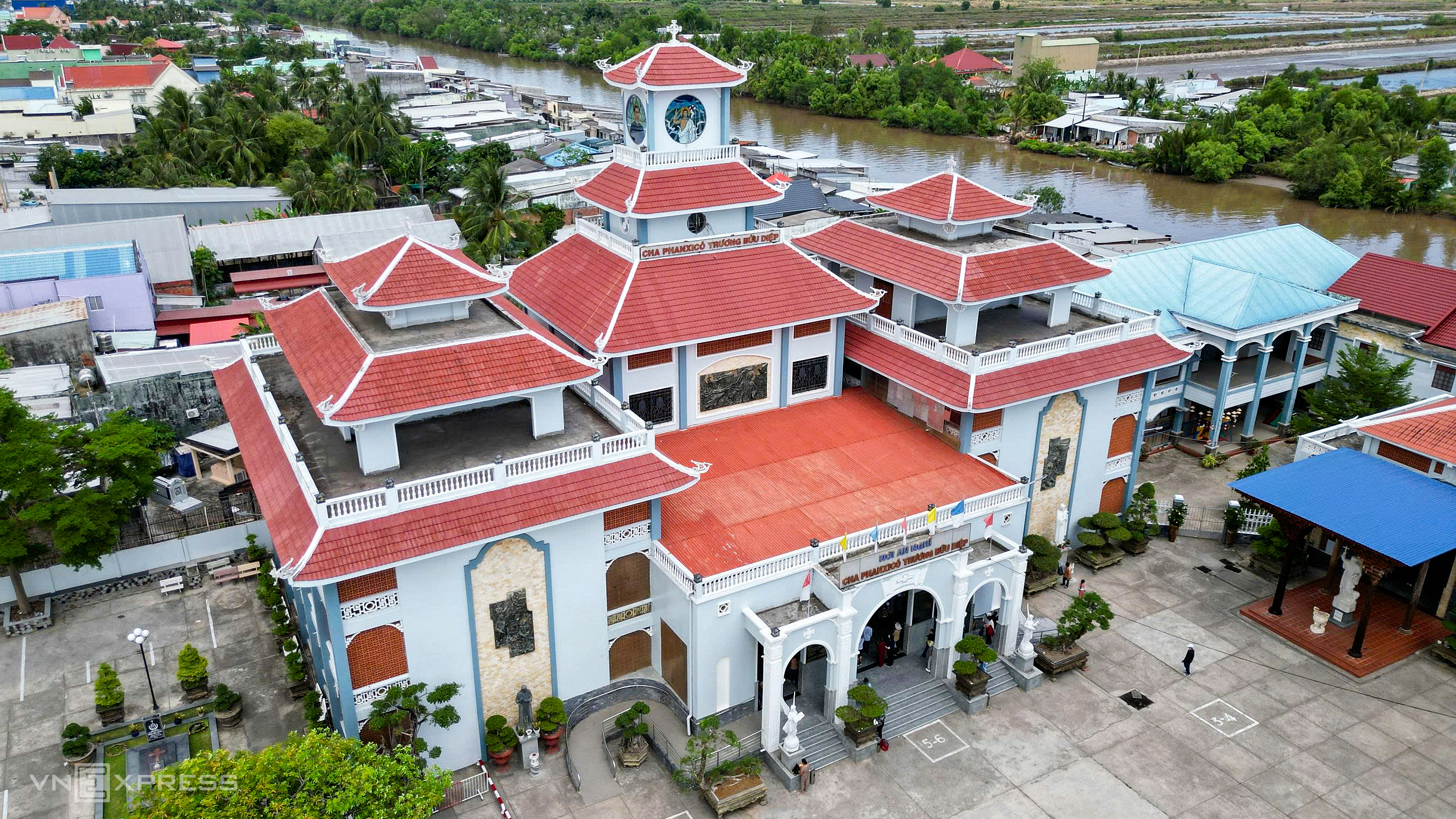
Adjacent to the main church is the tomb house, the resting place of Father Truong Buu Diep. This well-constructed building features a ground floor where the priest's tomb is located, allowing parishioners convenient access for visits and prayers.
 |
{"caption_all":null,"caption_items":["People pray by the priest's tomb.","Pilgrims earnestly pray before the statue of the priest. According to the Can Tho Diocese, on 25/11/2024, the Holy Father authorized the promulgation of a decree recognizing Father Diep's martyrdom, paving the way for his beatification Mass."]}
 |
{"caption_all":null,"caption_items":["The area displays relics related to the priest.","A statue of the priest within the center's grounds."]}
An area of approximately 5 hectares opposite the church is designated for the beatification Mass scheduled for 2/7, expected to welcome around 100,000 parishioners. This site will feature the main altar, large screen systems, and seating for about 10,000 priests, religious, and invited guests. Blessed (A Thanh) is a Roman Catholic title granted to a deceased person recognized for living a holy life and possessing the ability to intercede; it is the thu ba step in the process of canonization: Servant of God - Venerable - Blessed - Saint.


