On 24/3, the Phong Nha - Ke Bang National Park Management Board announced the results of a cave survey conducted from 21/3 to 11/4. The expedition, a collaboration between British and Vietnamese experts, discovered 26 new caves and surveyed three existing ones across Phong Nha, Thuong Trach, Kim Phu, Kim Dien, Tan Thanh, Tuyen Lam, and Truong Son communes. The team, comprising 10 foreign specialists and numerous Vietnamese members, mapped a total length of 13,643 meters.
Among the discoveries are several large-scale caves with high scientific value. Notably, Thien Cung cave, located within Phong Nha - Ke Bang National Park, measures 4,206 meters in length, making it the longest surveyed during this expedition. Its scientific significance and tourism potential are particularly noteworthy.
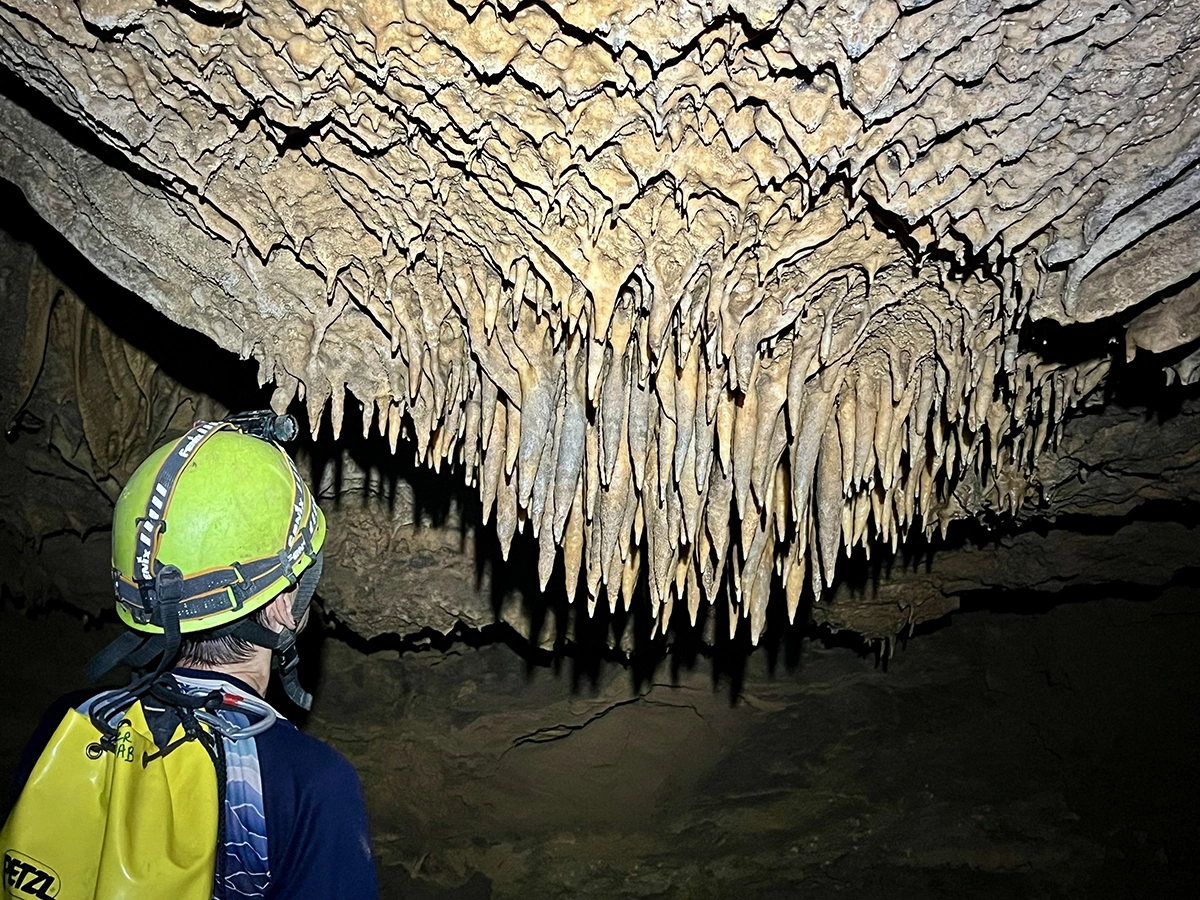 |
Thien Cung cave. Photo: British-Vietnamese cave expedition team. |
The entrance of Thien Cung cave is crucial, identified as an ancient flow path of the Hang Toi River. This extensive cave features numerous stalactites, develops almost parallel to the Hang Toi system, and has a hydrological connection to the Chay River.
Another significant find is Cha Ngheo cave, also within Phong Nha - Ke Bang National Park in Kim Dien commune. Measuring 583 meters, it features a deep, vertical well-like entrance, a waterfall, and a complex structure that descends to an underground stream. The cave continues to develop and has not been fully explored, indicating its potential to be part of a larger cave system in the area.
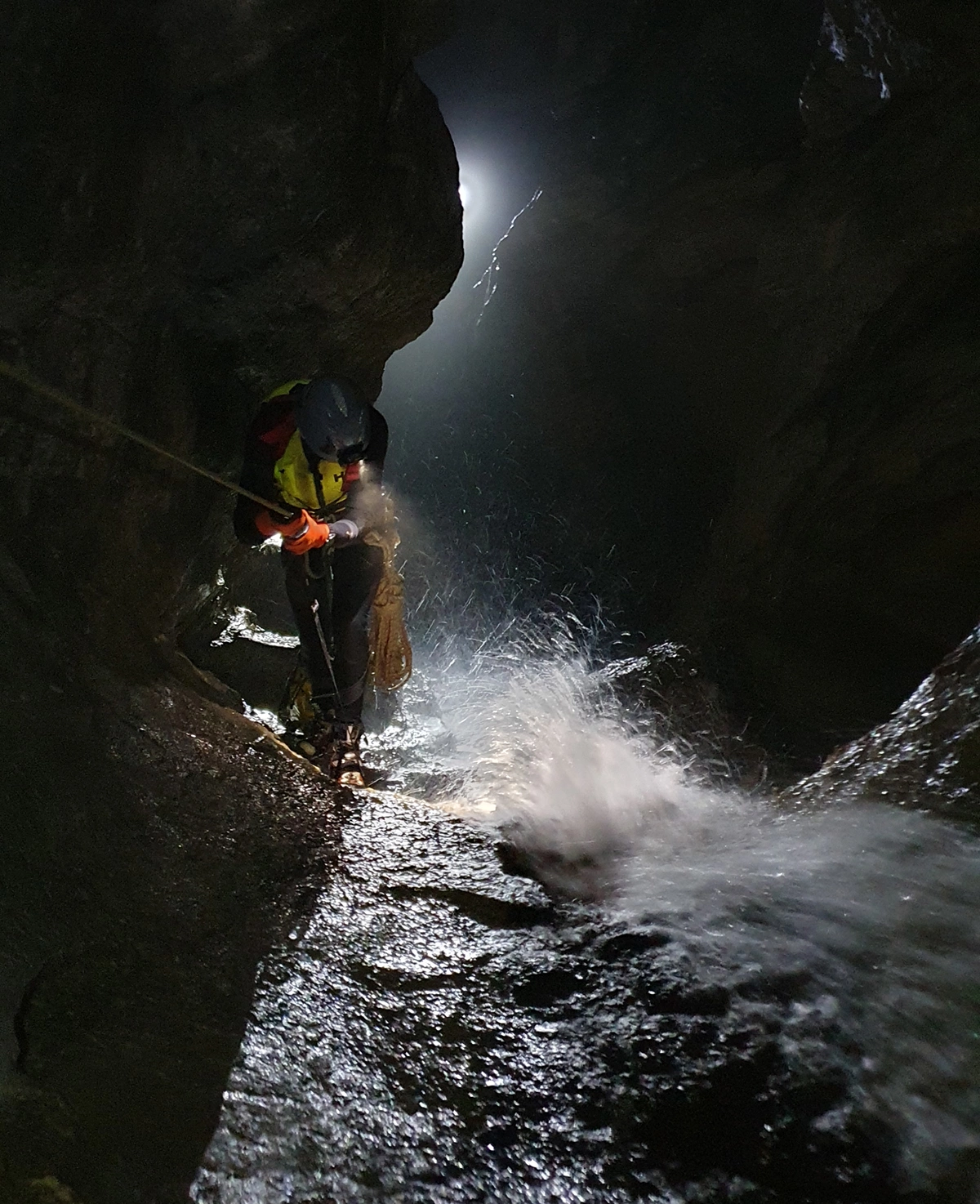 |
Cha Ngheo cave. Photo: British-Vietnamese cave expedition team. |
Nuoc Lan cave, spanning Tan Thanh and Tuyen Lam communes, is 2,721 meters long and may experience seasonal water flow. Ma Dom cave, in Kim Dien commune, extends for 1,257 meters.
In Kim Phu commune, behind Ruc Mon cave, the team explored a chain of three caves featuring underground streams; the upstream cave shows potential for adventure tourism. Mo Roo is a through-cave, approximately 500 meters long, boasting an underground stream system and scenic views, making it suitable for tourism development.
In Truong Son commune, the expedition identified the Son Boi cave cluster, comprising four smaller caves, three of which are already open for tourism. In the Road 20 area, part of Phong Nha - Ke Bang National Park's administrative and service zone, Chac Den cave is a deep vertical shaft, about 20 meters deep, leading to a large corridor. It is potentially a high branch of the Phong Nha river cave system, with prospects for significant future extension.
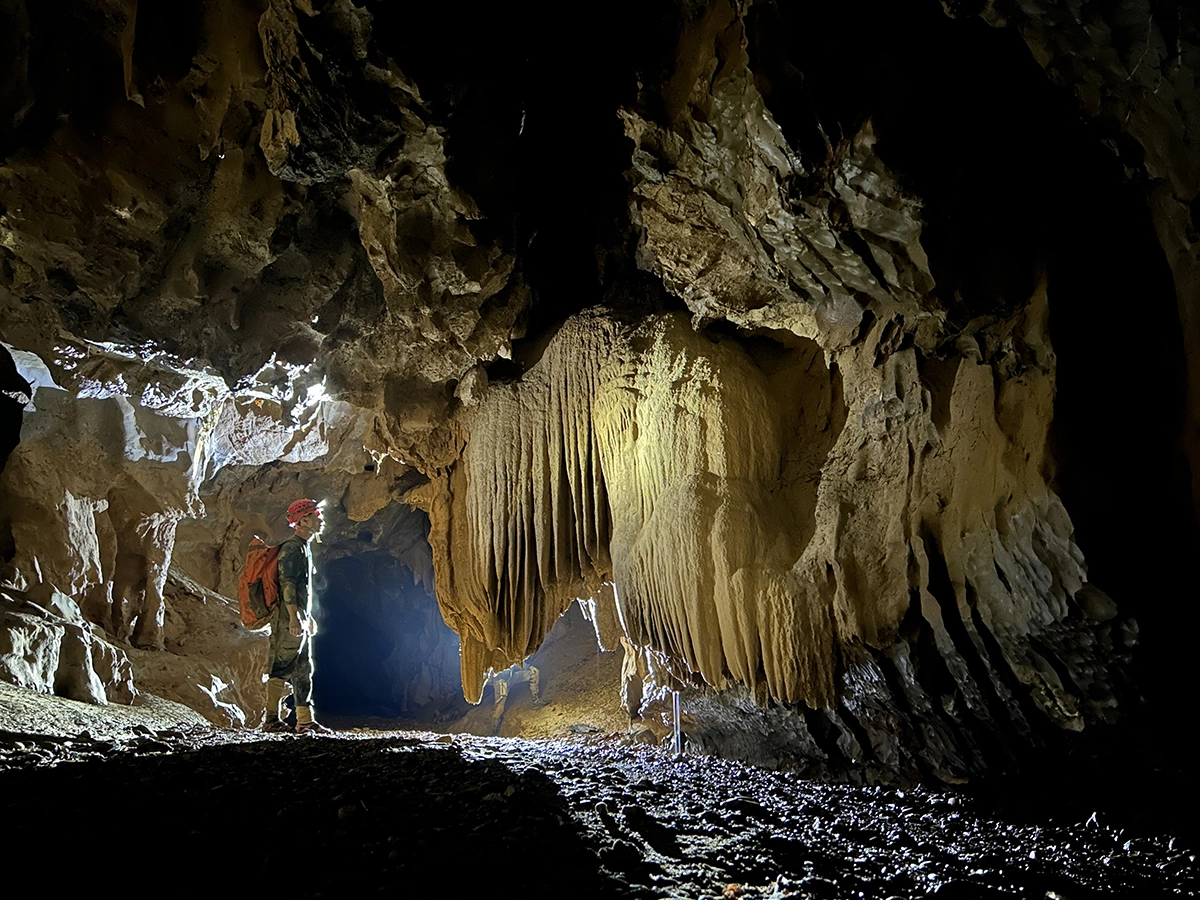 |
Nuoc Lan cave features many stalactites. Photo: British-Vietnamese cave expedition team. |
According to the expedition team, the findings highlight a robust karst development structure in the region. This is evident through the simultaneous presence of deep vertical caves, such as Ma Dom cave, which descends 102 meters, and Tru cave, 68 meters deep, alongside large-scale caves developing horizontally.
Pham Hong Thai, Director of Phong Nha - Ke Bang National Park, stated that the 2026 survey results significantly enhance the park's cave database. These discoveries further underscore the outstanding geological, geomorphological, and karst system values of the area.
"These caves not only have scientific significance but also open up many potentials for conservation, research, and sustainable tourism development, contributing to enhancing the value and position of the Phong Nha - Ke Bang National Park World Natural Heritage in the coming time," he said.
Dac Thanh