On 27/11, the Ministry of Natural Resources and Environment issued a document requesting ministries and agencies to implement urgent measures to address the air pollution episode in Hanoi and its neighboring provinces.
The request was made based on monitoring data from the national environmental quality surveillance system and meteorological forecasts. These indicate that over the next 10 days, the North, especially Hanoi, will experience unfavorable weather patterns, including temperature inversion, calm winds, and fog, reducing the dispersion of air pollutants.
There is a risk of increased PM2.5 fine dust concentrations, with the air quality index (AQI) potentially exceeding 150. This directly impacts public health and socio-economic activities.
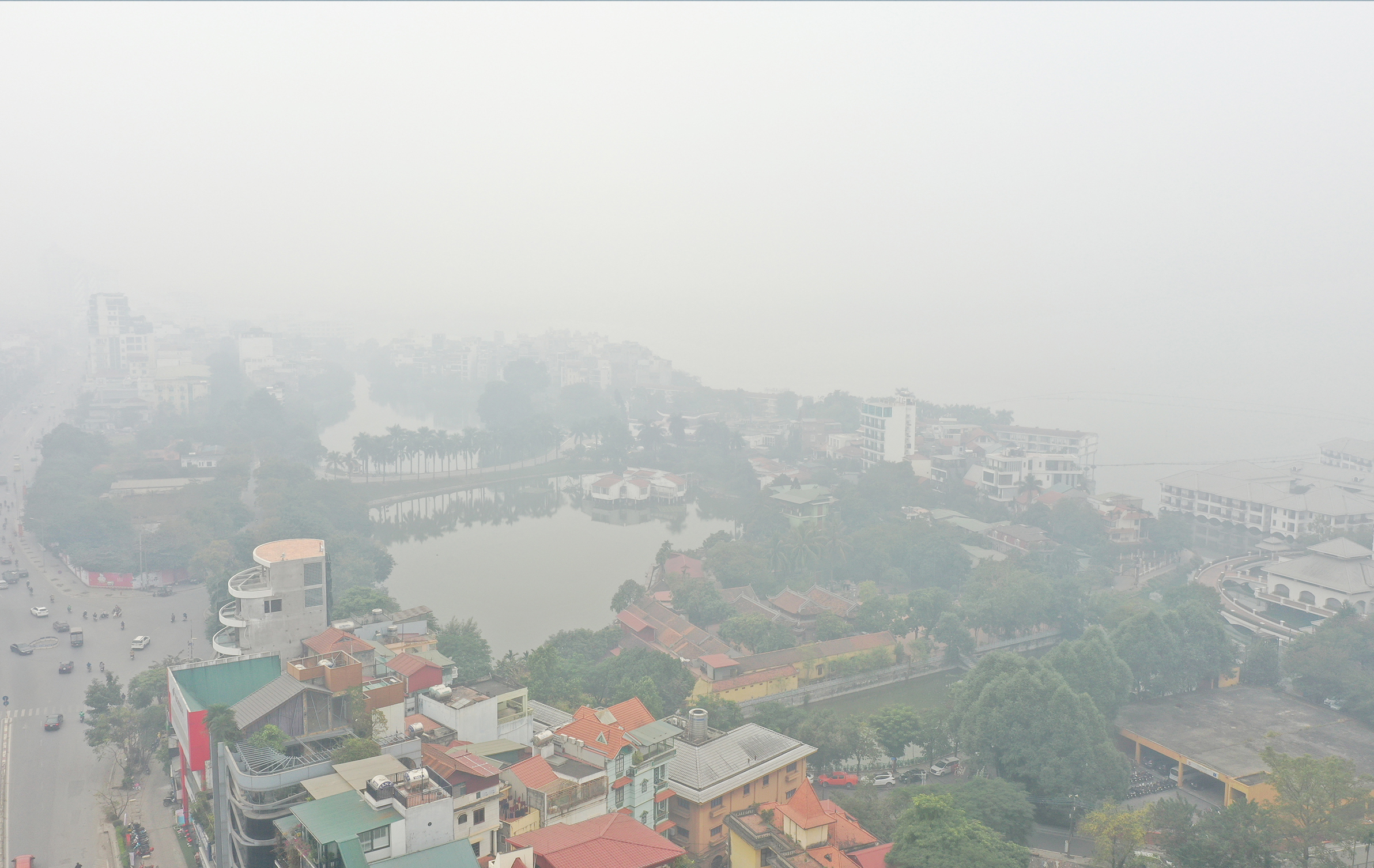 |
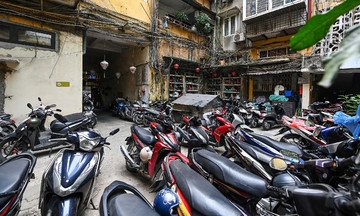
Air pollution in Hanoi in 2023. Photo: Ngoc Thanh |
The Ministry of Natural Resources and Environment urged the Ministry of Industry and Trade to direct corporations, general companies, and investors of thermal power, steel, chemical, and fertilizer plants in the North to review their operations. They must ensure that emission treatment systems operate effectively and efficiently during this period, strictly prohibiting the discharge of untreated waste into the environment under any circumstances.
Additionally, businesses should research and implement plans to adjust or reduce operational capacity, or reschedule major maintenance and repairs. This applies to days when pollution warnings are at a "very poor" level (AQI above 200) to reduce emissions.
The Ministry of Construction was requested to direct specialized project management boards, investors, and contractors of key construction and transport projects to strictly implement environmental sanitation measures during construction. These include covering, vehicle washing, and misting to suppress dust. They should also coordinate with relevant agencies to consider temporarily halting construction activities that generate significant dust, such as demolition, excavation, and leveling, on days when air quality is at a "Hazardous" level.
The Ministry of Construction was also asked to coordinate with local authorities to organize appropriate traffic diversion in inner-city areas and urban gateways. This aims to limit traffic congestion, which leads to localized pollution and accumulation. Furthermore, they should enhance control over the load capacity, technical safety conditions, and covering of transport vehicles carrying construction materials.
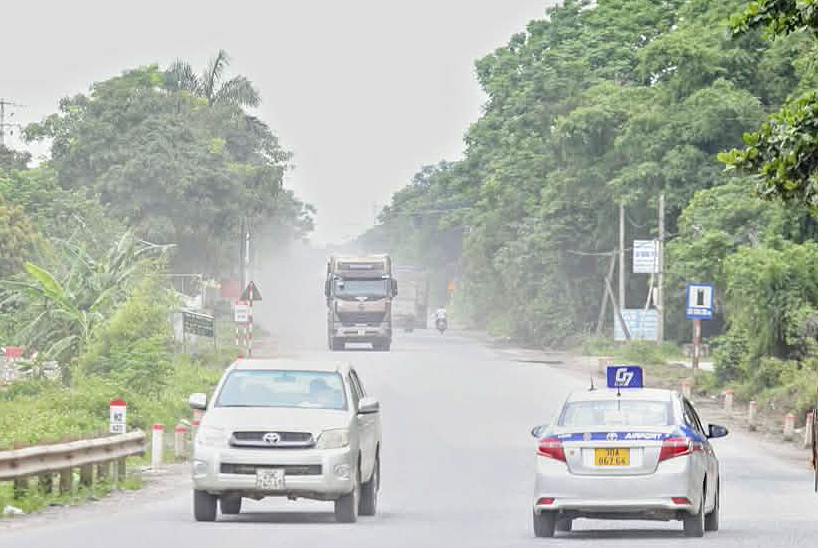 |
Hanoi's suburban roads shrouded in dust. Photo: Gia Chinh |
The Ministry of Public Security was requested to direct traffic police to increase inspections and penalize vehicles transporting construction materials without proper covering, leading to spills. They should also target vehicles past their service life or emitting black smoke while in traffic. Environmental police and communal police should intensify inspections and strictly penalize illegal burning of industrial solid waste and household waste.
The Ministry of Health was asked to direct medical facilities and health sector media agencies to enhance the dissemination of health care guidelines for the public. They should recommend health protection measures for sensitive groups, the elderly, children, and individuals with respiratory illnesses.
The Ministry of Education and Training was requested to direct provincial-level departments in Hanoi and neighboring provinces and cities to inform and guide schools. They should limit outdoor activities for students during hours and days when air quality is rated "Poor" or worse.
The Ministry of Natural Resources and Environment also urged corporations and general companies to instruct their member units, facilities, and factories in and around Hanoi to review operating procedures. They must ensure dust and emission treatment systems operate stably, effectively, and meet all standards. Units are encouraged to consider adjusting operational capacity or rescheduling production stages that generate significant dust and emissions, such as furnace blowing, furnace startup, and raw material grinding, to periods with more favorable weather and climatic conditions.
Thermal power, cement, and steelmaking plants are requested to increase the use of clean, quality-assured raw materials. They must also strictly implement covering, water spraying for dust suppression, and other dust and emission reduction measures in areas storing coal, raw materials, and slag, as well as on internal transport routes and around the plants.
The Ministry of Natural Resources and Environment stated it will continue to monitor and supervise through online data systems. This includes utilizing high-tech surveillance equipment such as remote sensing satellites and unmanned aerial vehicles (UAVs) to detect abnormal emission sources early.
Concurrently, the Ministry will coordinate with local authorities to establish inter-agency working groups to inspect and supervise implementation. They will decisively penalize violations and publicly disclose information about infringing organizations and individuals through mass media.
Gia Chinh