The politburo has issued a conclusion regarding the continued implementation of central resolution 19 on agriculture, farmers, and rural areas, setting targets for 2030 and a vision for 2045.
After more than three years of implementation, the resolution has contributed to food security, macroeconomic stability, and improved rural livelihoods. However, the agricultural sector still faces challenges. These include unsustainable growth, low productivity and competitiveness for many products, slow application of science and technology, innovation, and digital transformation in various stages. Farmers' incomes remain low, and they face risks from natural disasters, epidemics, and market fluctuations. Human resources in agriculture and rural areas are deemed "insufficient and weak."
The rapid development of science and technology, coupled with complex climate change, necessitates agriculture, farmers (including fishermen and salt farmers), and rural areas to maintain their strategic role as a foundation for macroeconomic stability and sustainable growth. The politburo emphasizes a strong shift towards commodity production, restructuring the sector towards green, organic, circular, and low-emission agriculture. This approach prioritizes ecosystem protection, high-tech application, and comprehensive digital transformation. Agriculture must ensure food security in all situations, contributing to major economic balances and inflation control.
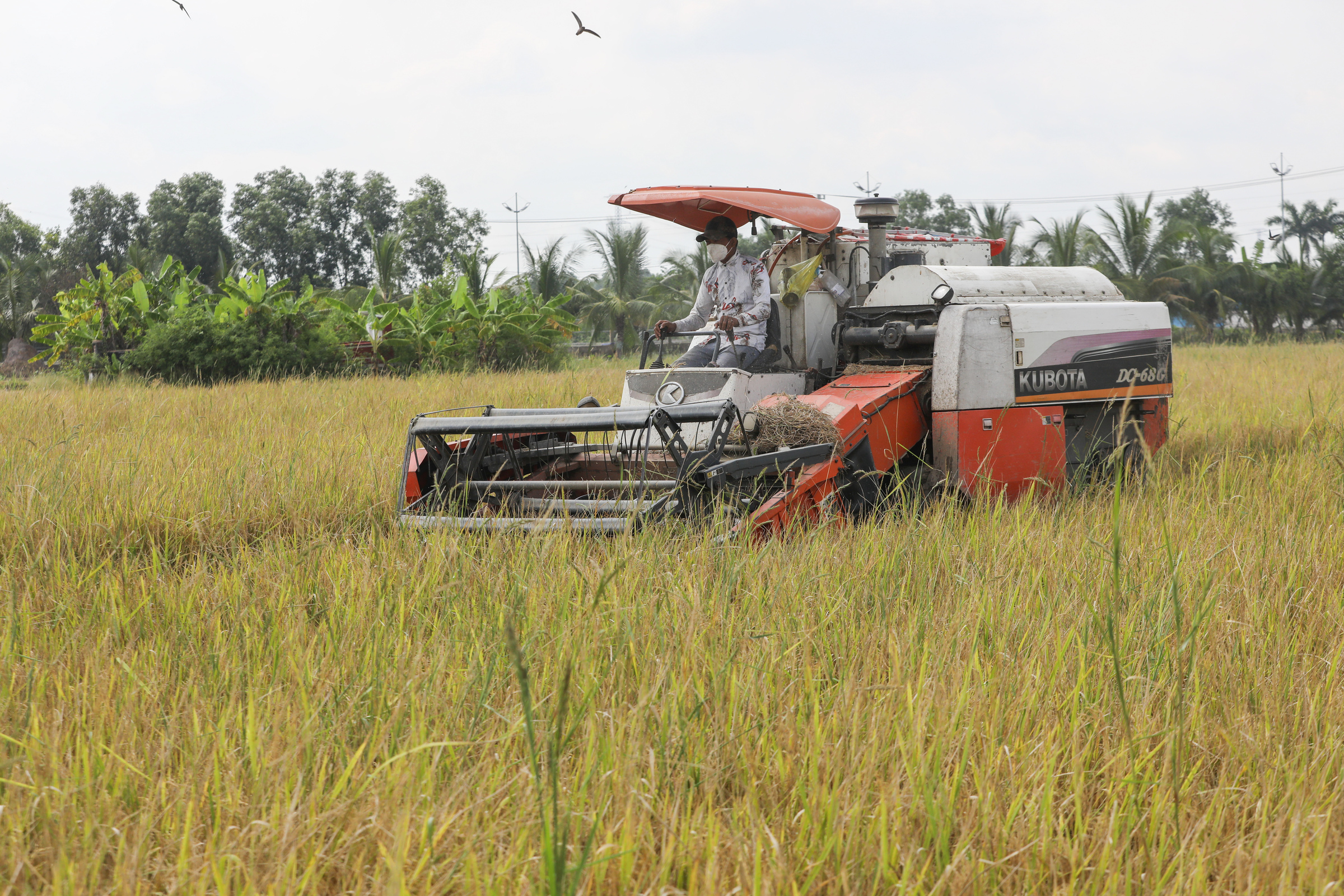 |
Residents of Tan Tuc town (formerly Binh Chanh district), Ho Chi Minh City harvest rice, 9/2021. Photo: Quynh Tran
By 2026, relevant agencies are mandated to complete the review and institutionalization of the Party's directives into laws and guiding documents. This ensures a harmonious balance of interests among the state, enterprises, and farmers. Breakthrough policies will focus on attracting resources from individuals and businesses into green, ecological, and circular agriculture. Support will be provided to economic organizations and residents in strategic, remote, and border regions of the country.
The state will prioritize investment and pilot exceptional mechanisms for agricultural production models based on high science and technology, innovation, digital transformation, and green development adapted to climate change. Crop and livestock structures will be adjusted according to market demand and local advantages. A multi-value agricultural economic ecosystem will be developed, encompassing processing, services, tourism, and a low-carbon economy. High-quality, stable-yield rice cultivation land will be protected.
Linkages among "six stakeholders" (farmers, the state, scientists, enterprises, banks, and journalists) will be promoted, fostering cooperation in research and technology transfer. The state will support the development of agricultural enterprises, aiming by 2030 to establish several capable of leading the region and building national brands for key commodities. Farmers will be empowered to participate in cooperatives, cooperative groups, and professional organizations for large-scale, chain-based commodity production.
A unified data system for land, water, forests, minerals, hydrometeorology, and biodiversity will be established. An offshore fishing fleet will be formed, and deep-sea aquaculture technology will be further expanded.
To achieve these goals, the budget allocated for agriculture and rural areas during the 2021-2030 period will increase by at least two times compared to the preceding ten years.
Vu Tuan