"After watching a series of videos about a space introduced as a library in TP HCM, I thought it was a library-themed coffee shop. I traveled over 15 km only to find out that the books on display were models," Nam Anh, TP HCM, stated on 21/9.
Since 19/9, a series of videos and images showcasing a location in Nha Be commune, featuring multi-story bookshelves and a spacious hall, appeared on social media. These posts garnered tens of thousands of interactions with captions like "giant library" and "Korean library in TP HCM", leading many to believe it was a public library or a book cafe. Initially, some debated the design's similarity to South Korea's Starfield library, before realizing its actual function.
"The issue is not the design, but the information conveyed. If the posts had clearly stated from the beginning that this was a real estate showroom, viewers would not have misunderstood or felt disappointed upon arrival," Nam Anh said.
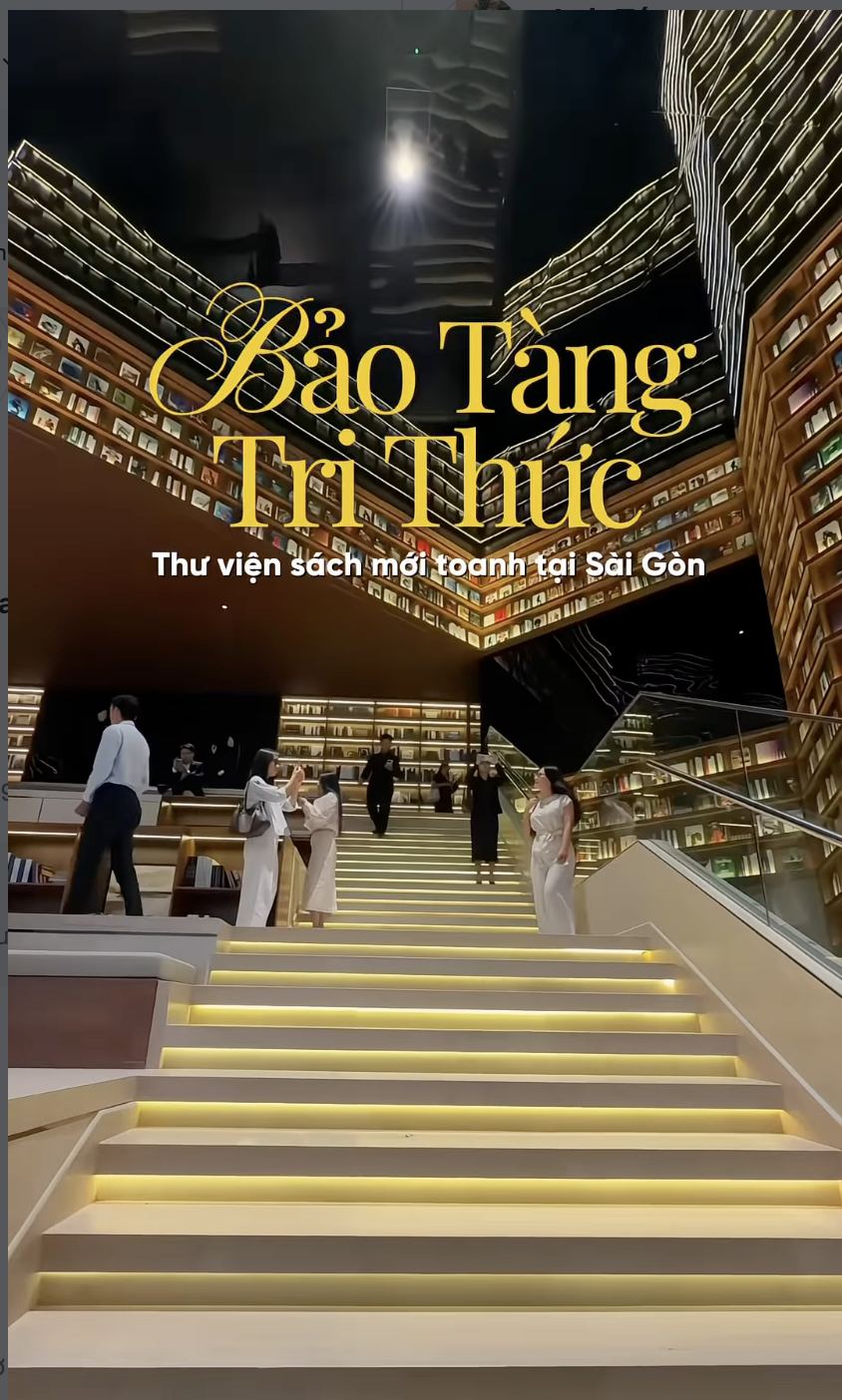 |
An image from a short video introducing the real estate project showroom as a "book library in Saigon". *Screenshot*. |
A sales staff member at the project stated that the location, which opened on 19/9, is a real estate experience space combining product display, a project model, sample apartments, and a customer consultation area.
The number of visitors exceeded expectations, with over 50% drawn by curiosity about the library-like space. However, most people who came to check in were not prospective real estate clients. This made it "difficult for the sales team to reach target customers at certain times," she said.
Thac si Pham Phu Tuan, a lecturer at the Faculty of Digital Communication, Gia Dinh University, suggested that the attraction stemmed from exploiting public curiosity and the social media "herd effect," particularly the "vague" information regarding the actual function of the space.
"One should not simply look at images or a few videos and assume a location's function; it's essential to have the skills to receive and verify information on social media," he said.
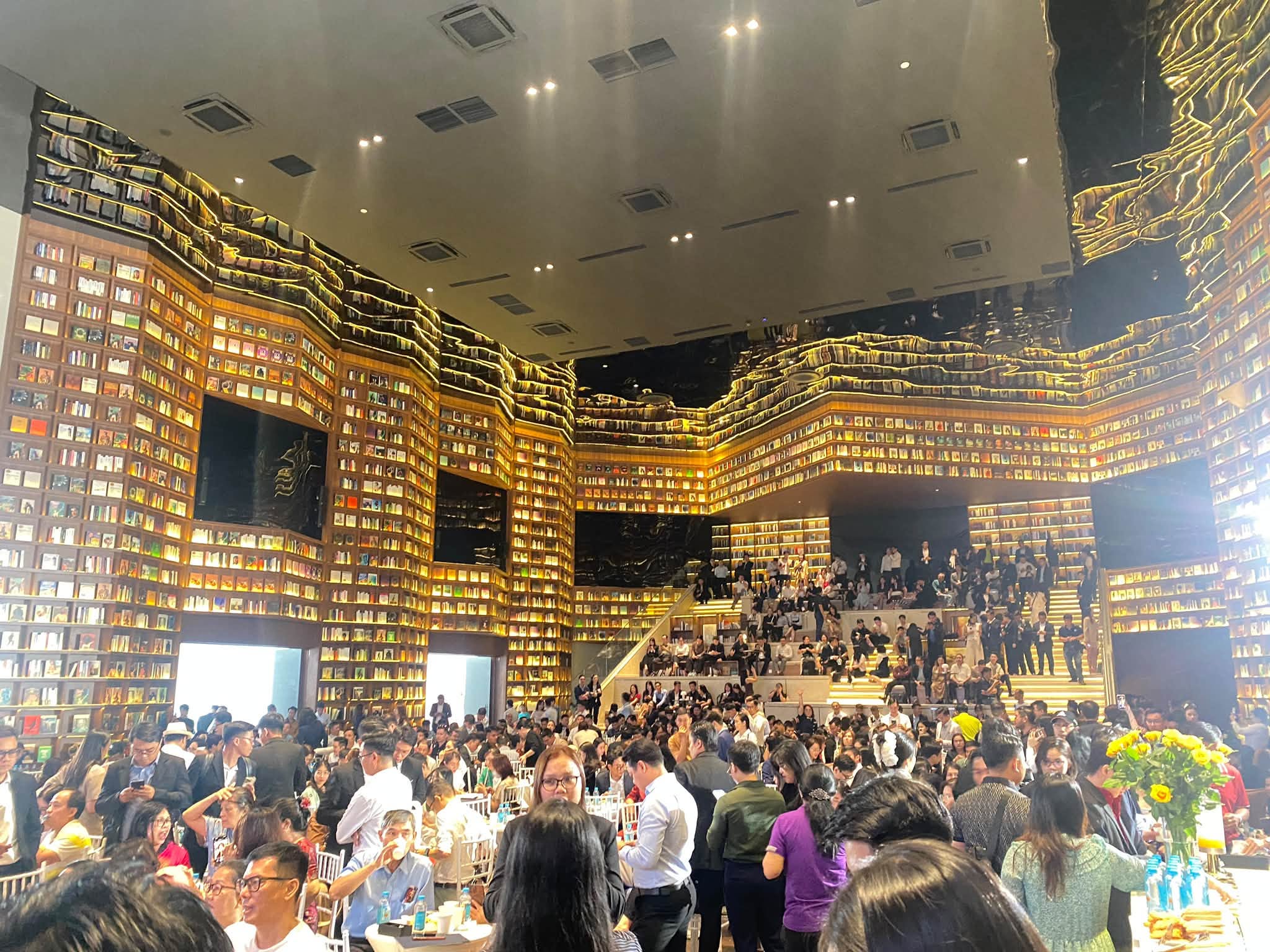 |
The product display area of a real estate project designed as a library model. *Photo: V.L*. |
From a tourism perspective, Nguyen Chau A, General Director of Oxalis Adventure, described this as an example of "superficial tourism"—a type of visitor who prioritizes collecting images and marking their presence on social media over gaining a deep understanding of a destination. This is evident in the "check in and leave" behavior, favoring "hot" spots and appealing photo angles over genuine exploration.
The Nha Be showroom incident demonstrates how social media can quickly transform a commercial space into an unexpected check-in spot. However, when images circulate without complete information, the gap between expectation and reality can easily become a source of debate.
Mai Phuong