Many guests, especially in upscale hotels, often find hotel blankets tucked too tightly into the mattress. It often requires a pull, tug, or a bit of struggle to free them. This practice of tightly tucking in hotel blankets and sheets has a historical origin.
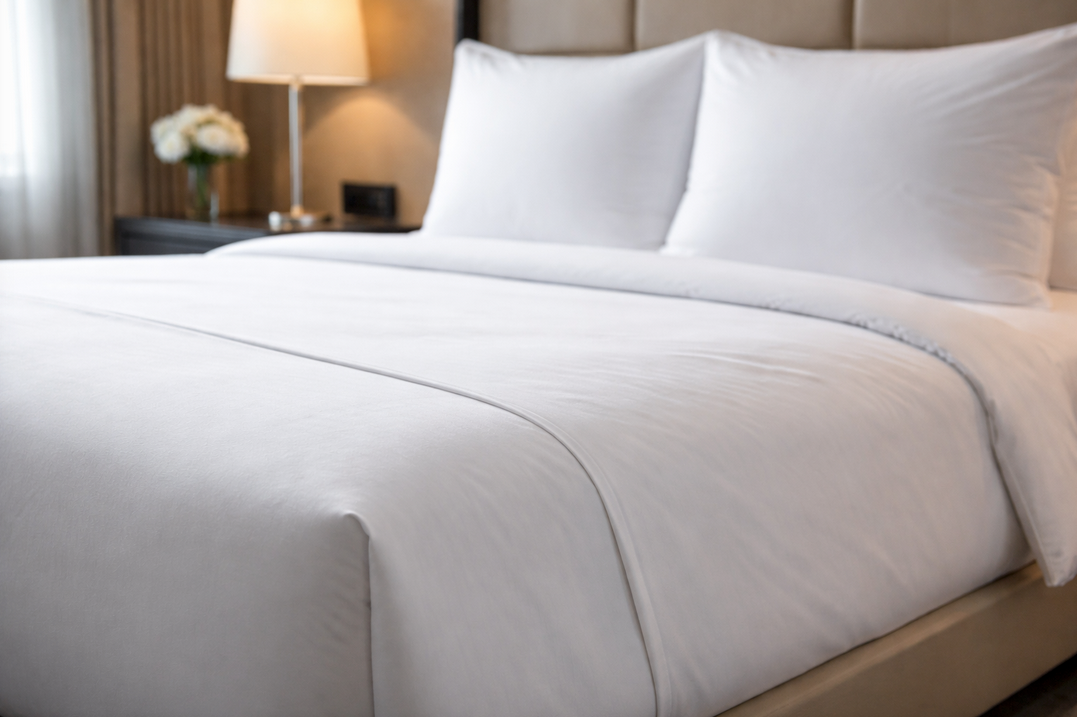 |
Blankets are often tucked tightly into mattresses in hotels. *Photo: yourmileagemayvary*
Why are blankets and sheets tucked in tightly?
Flat, taut blankets and sheets not only provide comfort but also represent a long-standing hygiene practice, linked to nurse Florence Nightingale.
Historically, most soldiers died not from battle wounds but from illness and infection. Military historian Michal Muir noted that during the Spanish-American War in 1898, for every soldier killed in battle, five died from disease. The development of nursing, large-scale vaccination campaigns, and antibiotics significantly reduced these mortality rates.
New practices in ventilation, disinfection, and hygiene emerged alongside the nursing profession. Proper bed-making became a crucial part of patient care. While the exact originator of the "hospital corner" folding technique for blankets and sheets is unknown, this method is believed to have originated from nursing practices in the mid to late 19th century.
Florence Nightingale, widely considered the first professional battlefield nurse, served during the Crimean War in the 1850s. The hospital corner bed-folding technique developed between this war and the early 20th century. Proper bed-making has always been vital in patient care, as wrinkled or improperly laid sheets could cause discomfort, pressure sores, and even lead to infections.
Hotel historian Alec Dalton notes that modern detergents and large-scale industrial laundry systems only became widespread in the 1960s. Before then, layering sheets in a way that made them easy to change, prevented wrinkles, and avoided crevices where food crumbs or bodily fluids could accumulate was crucial for maintaining hygiene.
The period from 1960 to 1980 is often called the Golden Age of hospitality. Following World War two, travel increased, and hotels began adopting modern service standards. These standards included cleanliness of rooms and bathrooms, and a customer-centric approach. Ensuring bed hygiene, including the hospital corner technique, was part of this transformation.
According to Dalton, the hotel industry experienced two major housekeeping revolutions. The first occurred in the 1960s with the introduction of synthetic sheets, large-scale industrial washing machines, and more effective detergents.
Concurrently, US President Dwight D. Eisenhower championed the construction of the interstate highway system, fostering the rapid growth of hotel chains. Industry giants such as J. Willard Marriott, Conrad Hilton, and Howard Johnson established standards for bedding and room cleaning procedures to ensure consistent hygiene.
The second revolution arrived in 1999 when Westin Hotels & Resorts introduced the "Heavenly Bed". This trend, featuring all-white bedding to create a visibly clean aesthetic, has since been adopted by many hotels.
Why don't hotels use fitted sheets?
Fitted sheets were invented in the 1950s, but most hotels do not use them. Hotel sheets require much more frequent washing than those at home. In many establishments, sheets are changed daily; in others, they are changed every three days for long-stay guests.
The elastic in fitted sheets quickly degrades with frequent exposure to hot water and detergents. Additionally, flat sheets are easier to fold, iron, and store. For hotels managing hundreds or even thousands of sets of sheets, this significantly saves time and cost.
Therefore, instead of using fitted sheets, hotels continue to employ the "hospital corner" technique to create a neat and clean-looking bed.
Tam Anh (according to Reader's Digest)