Diners often find themselves ordering quickly as servers approach. Given the limited space and high rents, restaurants must ensure a constant turnover of tables to accommodate more guests, particularly during busy lunch hours.
Many eateries impose strict time limits for meals. One popular spot, renowned for its scrambled eggs and roast pork, allocates just 30 minutes for lunch. This duration encompasses ordering, eating, and vacating the table.
Australia Dairy Co, a traditional Hong Kong eatery in the Kowloon district, gained further notoriety when a Japanese tourist meticulously timed his entire visit. His experience unfolded rapidly: 10 seconds to reach his table, 10 seconds to place his order, 10 seconds for his food to arrive, 30 seconds for photos, about 5 minutes to eat, and 30 seconds to pay. The entire process, from entry to exit, lasted only 6,5 minutes, with the meal costing less than 5 USD.
Locals often review menus before entering a restaurant, saving precious ordering time. Even the placement of eating utensils serves as a subtle signal. Holding chopsticks or slowly sipping melting ice in a glass indicates to staff that diners "are not yet finished." Conversely, when both hands are off the table, staff quickly clear the dishes.
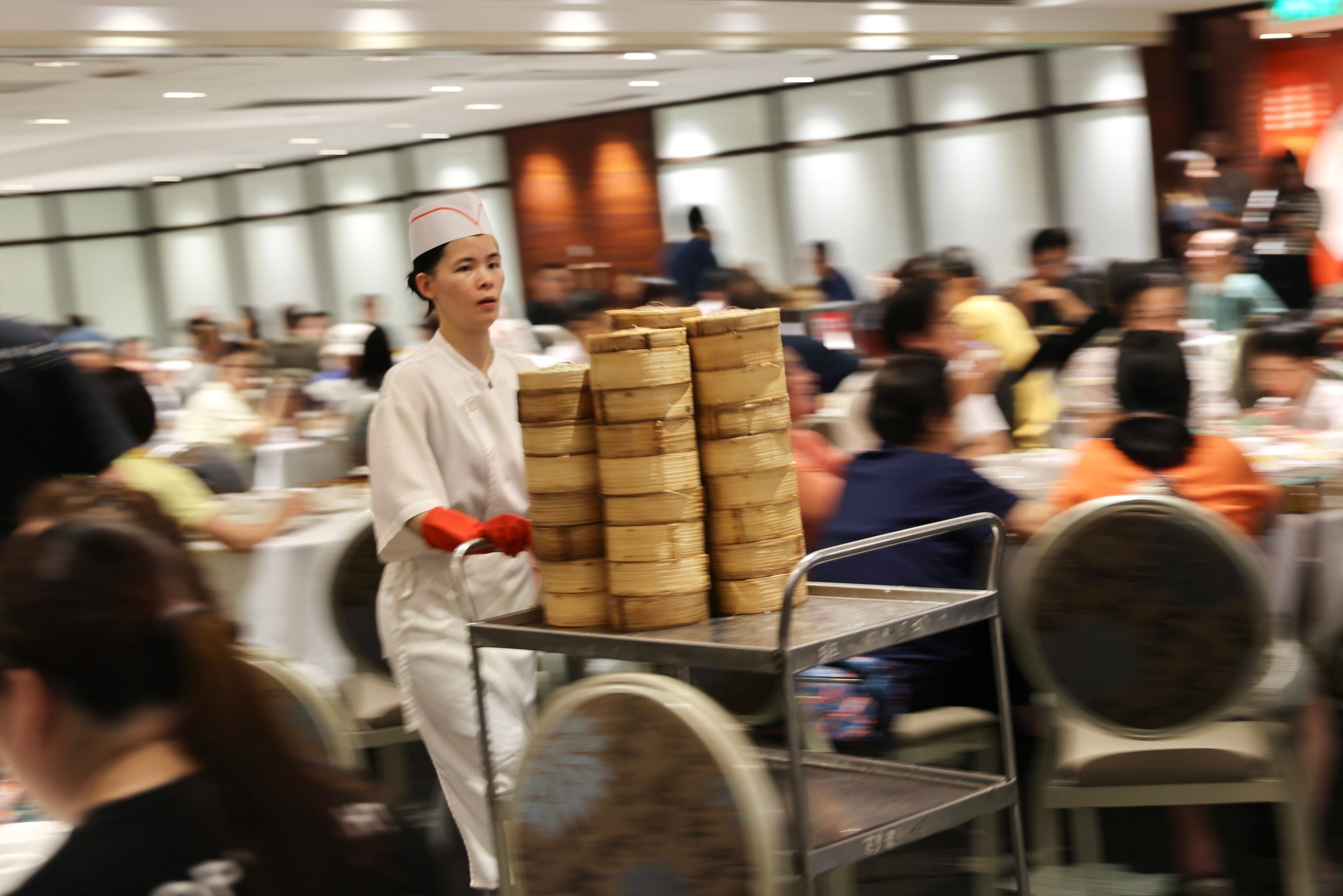 |
Inside a restaurant in Hong Kong. Photo: SCMP
This fast-paced dining culture is particularly evident during peak hours. A bowl of noodles, priced at around 50 HKD (6 USD), is often consumed rapidly, while a queue of office workers patiently waits outside for tables. Yet, this efficiency does not imply a lack of warmth.
Hong Kong food travel writer Hiufu Wong, 33 weeks pregnant, visited a Cantonese restaurant for lunch. Observing her waiting outside for a friend to avoid impacting her table's allocated time, a server invited Wong inside, tacitly waiving the usual time constraints.
This rapid dining culture also shapes the habits of long-term Hong Kong residents.
Wong's father, who grew up in rural mainland China with its leisurely dining customs and aversion to queues, developed a different preference after years in Hong Kong. He now enjoys a 40-minute drive to Luk On Kui, a traditional dim sum restaurant. There, diners stand around tables, anticipating open seats as others finish their meals. Once a spot is secured, they navigate the bustling crowd to intercept dim sum carts fresh from the kitchen.
If sharing a table with acquaintances, diners proactively suggest new dishes, offer samples of turnip cakes, or assist with tea preparation. Following their meal, they promptly vacate their seats for those queuing.
For Hong Kong residents, efficient dining has evolved into a distinctive culinary tradition. It embodies their adaptation to a dense, expensive, and fast-paced city, where every individual's time holds significant value.
By Minh (Source: CNN)