The Central Committee of the Communist Party of Cuba approved new proposals for economic and social transformation, state television reported on 17/6.
The decision followed an extraordinary plenary session where 20 reform proposals were discussed. These approved measures aim to attract more capital from Cubans living abroad and reduce the size of the state sector.
These reforms are seen as urgent measures as Cuba confronts widespread shortages of necessities. President Miguel Diaz-Canel described them as the most significant changes in years. The US oil embargo, imposed in January, has caused Cuba considerable difficulties, including power outages lasting over 30 hours and a lack of food, fuel, clean water, and medicine.
Prime Minister Manuel Marrero Cruz stated that these reform proposals will improve the management system of Cuba's economy, according to Granma, the official newspaper of the Central Committee of the Communist Party of Cuba. Former President Raul Castro, a major influence in Cuban politics, previously endorsed the government-backed transformation. In a letter to the plenary session, he called it the "most beneficial decision for the revolution at this time."
Private enterprises, permitted since 2021 and able to employ up to 100 workers, are increasingly vital to Cuba's economy. Since February, private enterprises have been allowed to import fuel, a sector previously controlled by the state. The Cuban government has also signaled new investment opportunities for Cubans both domestically and abroad across various sectors.
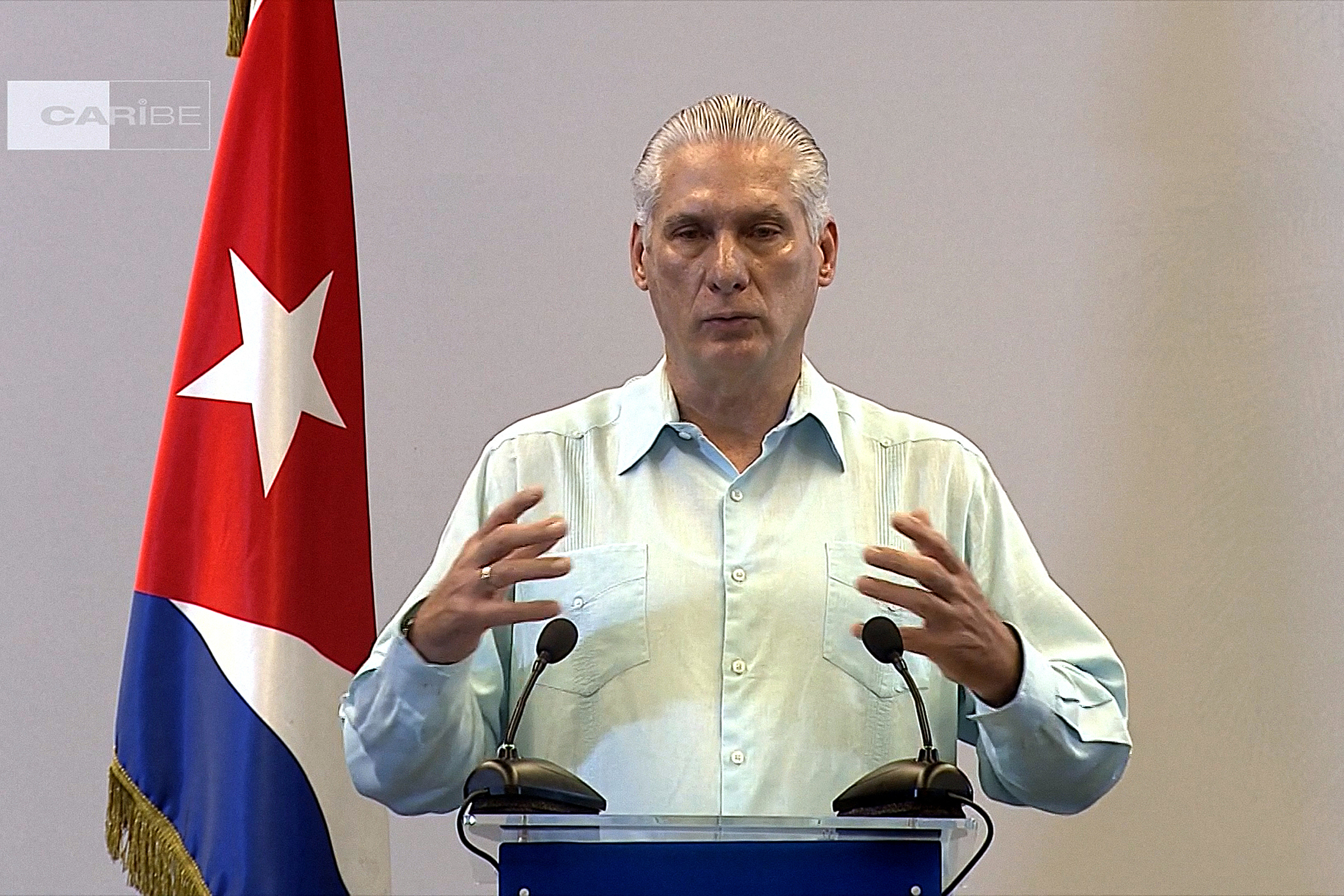 |
Cuban President Miguel Diaz-Canel speaks at a meeting in Havana in March. *AFP* |
President Diaz-Canel also announced plans to streamline the state apparatus by reducing the number of ministries and civil servants.
By Huyen Le (According to Granma, AFP)