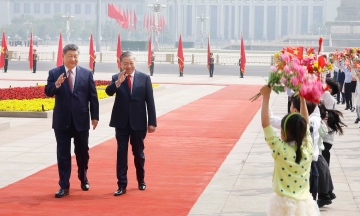
On 17/4, General Secretary and President To Lam visited the China-ASEAN Artificial Intelligence Innovation Cooperation Center in Nanning. He toured an exhibition showcasing artificial intelligence (AI) application cooperation between China and Vietnam.
He toured the exhibition area featuring prominent AI application products from Chinese enterprises and tried out technological devices at the center.
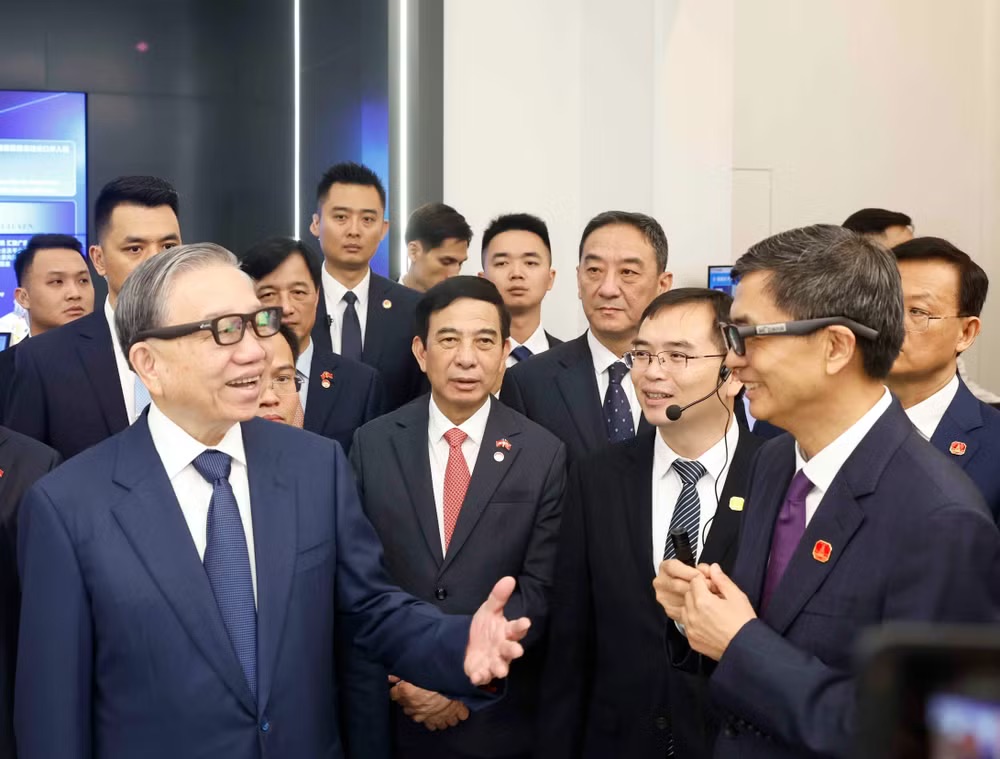 |
General Secretary and President To Lam and delegates experience technological devices at the China-ASEAN AI Application Cooperation Center. *Photo: Vietnam News Agency* |
The China-ASEAN Artificial Intelligence Innovation Cooperation Center was established by the Guangxi Zhuang Autonomous Region of China and ASEAN member states. Its purpose is to promote inclusive and mutually beneficial global AI development. The center's first phase of operations covers an area of approximately 7,78 square kilometers, with the center itself occupying about 19.000 square meters.
The center encourages capable Chinese enterprises to explore the potential and needs of ASEAN countries. It also works with relevant nations to advance AI application cooperation in specialized fields such as agriculture, healthcare, tourism, education, finance, and logistics, tailored to each country's specific requirements. Additionally, it focuses on nurturing AI talent.
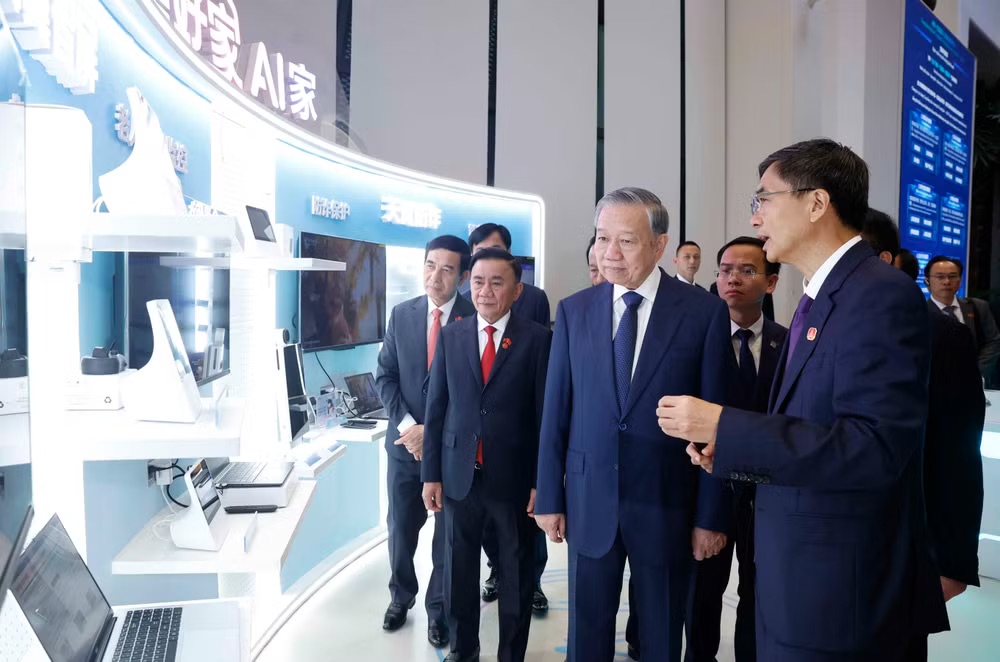 |
General Secretary and President To Lam listens to a presentation about the China-ASEAN AI Application Cooperation Center. *Photo: Vietnam News Agency* |
By the end of 2025, 51 projects in China and 16 projects in ASEAN countries had been signed under this framework. On 26/11/2025, Hanoi and Guangxi signed a Memorandum of Understanding for the joint research and establishment of the Vietnam-China Artificial Intelligence Application Cooperation Center. The center plans to establish branches in other cities across China and ASEAN member states.
On the same day, General Secretary and President To Lam also visited the Central Study Campus historical site in Nanning, Guangxi.
In the early 1950s, as the Vietnamese people's resistance against France neared victory, an urgent need arose for the Party and State to quickly train a capable cadre to serve the new tasks of the Vietnamese revolution.
President Ho Chi Minh proposed to Chinese Chairman Mao Zedong that Vietnam establish a school for training revolutionary cadres in the outskirts of Nanning. China agreed to this request, and in 1951, the Central Study Campus was established. Due to its confidential nature, it was known as the Duc Tai Nanning School.
At that time, students were cadres and youth sent from across Vietnam, directly managed and trained by Vietnam. China provided advisory and logistical support.
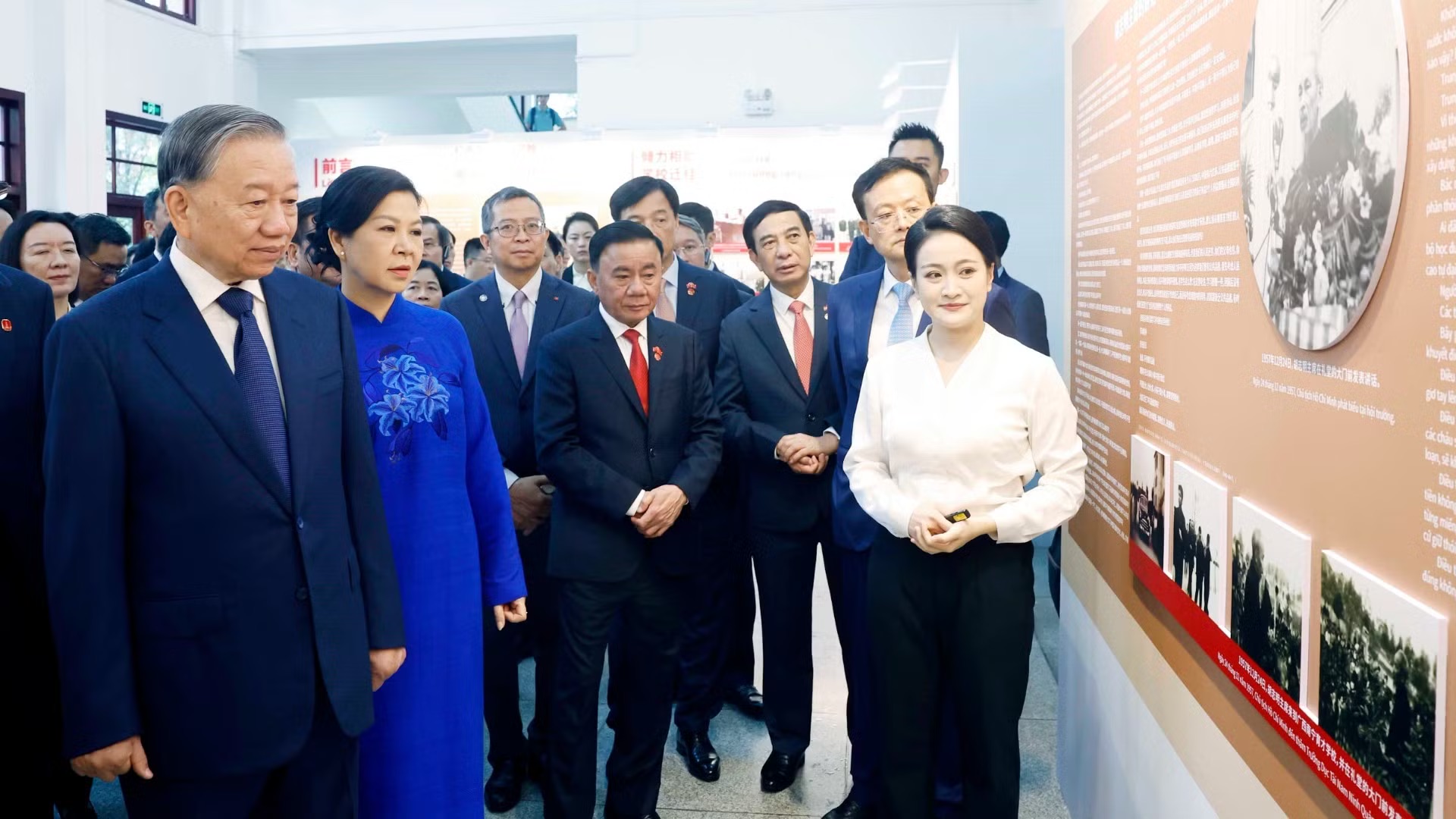 |
General Secretary and President To Lam and his spouse listen to a presentation about Duc Tai Nanning School. *Photo: Vietnam News Agency* |
The school trained approximately 7.000 cadres, teachers, and students. Many of them later became excellent national leaders, diplomats, economists, scientists, musicians, poets, and writers. In November 1963, Vietnam awarded Orders to the school's exemplary cadres and teachers.
General Secretary and President To Lam expressed sincere gratitude to the Party Committee, government, and people of the Guangxi Zhuang Autonomous Region for preserving the Duc Tai Nanning School historical site and other relics. These sites have become "red addresses" (significant historical sites) symbolizing the comradely and fraternal relations between the two Parties and countries.
These were the final activities of General Secretary and President To Lam during his state visit to China from 14-17/4. General Secretary and President To Lam, his spouse, and the high-level Vietnamese delegation departed Nanning this afternoon, successfully concluding their visit.
*By Thanh Danh (According to Vietnam News Agency, Nhan Dan Newspaper)*