Leaders from 40 nations and the International Maritime Organization (IMO) are scheduled to meet online on 17/4. The agenda includes supporting a ceasefire between Iran and the United States, and outlining a plan to ensure the Strait of Hormuz reopens for shipping once the Middle East conflict concludes.
Prime Minister Keir Starmer of the United Kingdom is expected to arrive in Paris this morning to co-chair the conference with French President Emmanuel Macron. German Chancellor Friedrich Merz will also attend the Paris gathering, according to a German government official.
The UK Prime Minister's Office announced on 16/4 that leaders will establish an international mission to reopen this vital shipping lane. This mission will be purely defensive, with nations deploying coordinated military forces as soon as conditions allow.
The conference will also discuss supporting the IMO's efforts to ensure the safety of ships and their crews.
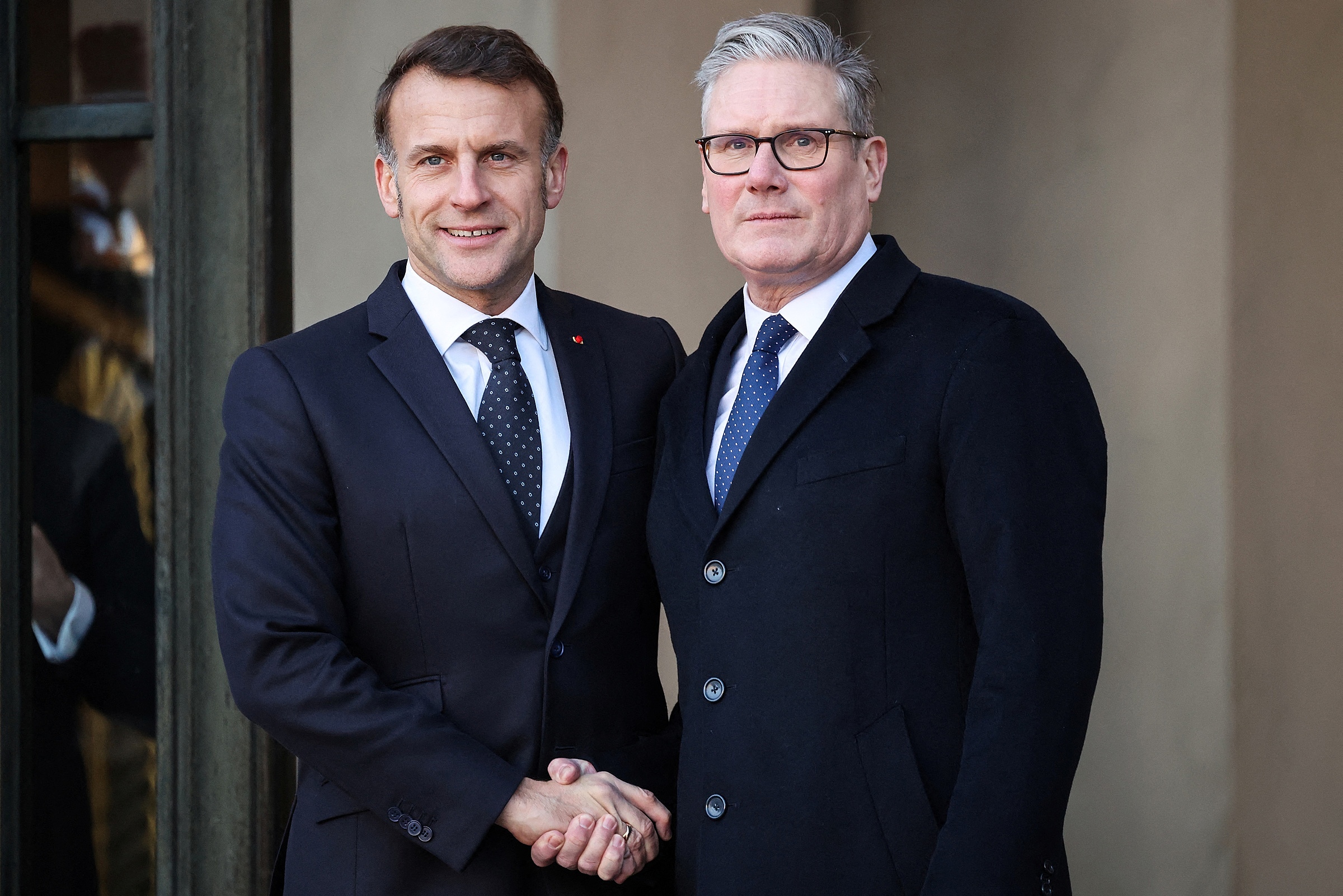 |
President Macron (left) and Prime Minister Starmer at the Elysee Palace in Paris in january. Photo: AFP
Highlighting the urgency, Prime Minister Starmer's draft speech, quoted by CNN, states: "Reopening the Strait of Hormuz unconditionally and immediately is a global responsibility. We must act to restore the free flow of energy and trade."
The UK leader will also address the need to reassure merchant vessels and support mine clearance operations "to ensure global stability and security are restored." A German official confirmed Germany's readiness to contribute to ensuring safe passage through the strait, provided there is a clear legal basis. This contribution could involve deploying mine countermeasures vessels or participating in maritime surveillance, areas where the German military has extensive experience.
Before the Middle East conflict erupted on 28/2, the Strait of Hormuz served as a vital artery for about 20% of the world's crude oil and natural gas supply, along with one-third of raw materials for global agricultural fertilizer production. Iran agreed to reopen the Strait of Hormuz under a two-week ceasefire agreement reached with the United States on 8/4, but shipping traffic remains limited.
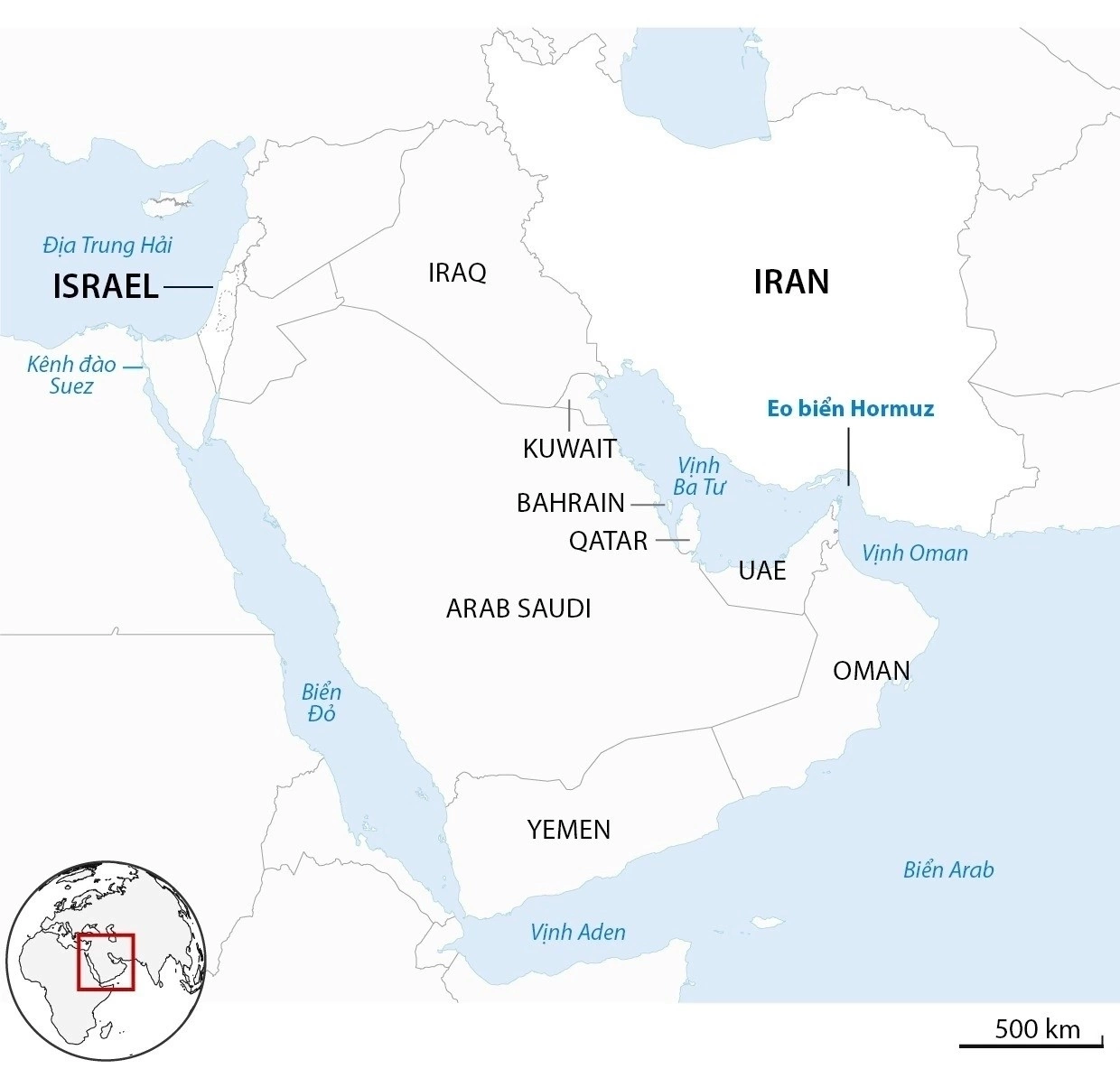 |
Location of the Strait of Hormuz. Graphic: Guardian
US forces began enforcing a blockade of Iranian ports from 13/4, one day after peace talks in Pakistan concluded without an agreement. Under this blockade, the United States will intercept any vessels traveling to or from Iranian ports in the Persian Gulf and Gulf of Oman regions, as well as ships that have paid Iran fees for passage through the Strait of Hormuz.
Tehran stated that Washington is "causing insecurity for Iranian merchant vessels and oil tankers," deeming this action a "violation of the ceasefire." Iran warned that if this situation continues, it will block trade through the Persian Gulf, Red Sea, and Gulf of Oman in retaliation.
Huyen Le (According to CNN, Independent)