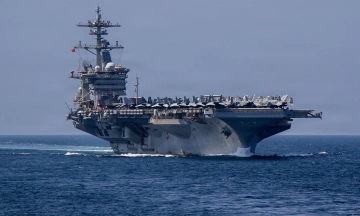
Iran's state television IRIB reported on 12/4 that "US destroyers fled the Strait of Hormuz after being warned by the Iranian navy". The report included a video showing the activities of the destroyer USS Frank E. Petersen Jr. and an audio recording of communications between the naval forces of the Islamic Revolutionary Guard Corps (IRGC) and the warship.
In the recording, an IRGC serviceman addressed the USS Frank E. Petersen Jr., referencing its hull number 121. "Naval vessel 121. This is the IRGC naval base. You must change course and return to the Indian Ocean immediately. If you do not comply, you will be targeted", the serviceman stated via radio.
A sailor on the US destroyer responded that they were passing through the strait "in accordance with international law". The IRGC serviceman then reiterated it was the "final warning" and urged vessels in the Gulf of Oman to maintain distance from the two US destroyers, as Iran was "ready to open fire on them without warning".
Conversely, US Central Command (CENTCOM), the agency responsible for US military operations in the Middle East, announced on 11/4 that the destroyers USS Frank E. Petersen Jr. and USS Michael Murphy had "transited the Strait of Hormuz and operated in the Persian Gulf as part of a mission to ensure the area was clear of mines previously laid by the IRGC".
US President Donald Trump stated on 12/4 that the two destroyers had passed through the Strait of Hormuz "without incident". However, the New York Times, citing anonymous US and Gulf officials, reported that the two destroyers had moved from the Gulf of Oman into the Strait of Hormuz and then returned. "The ships only stayed in the Persian Gulf for a short time before transiting the Strait of Hormuz back to the Gulf of Oman. Their mission was not mine clearing", the US newspaper stated.
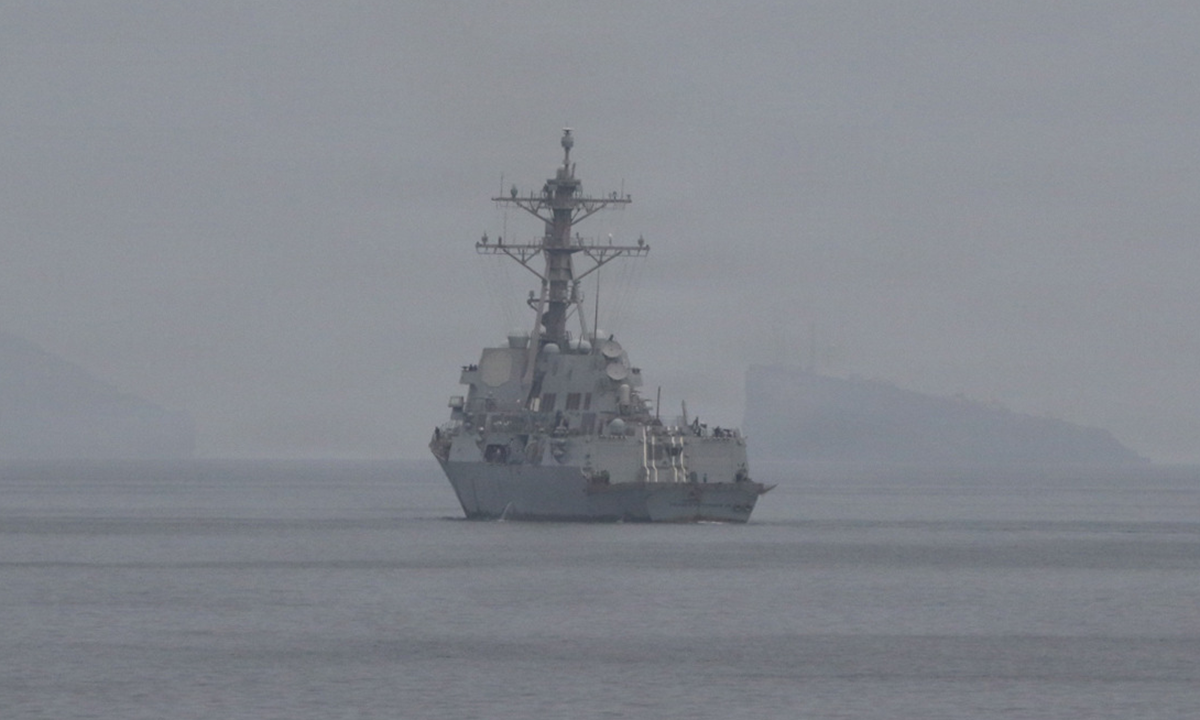 |
US warships on duty in the Middle East on 11/4. Photo: CENTCOM |
Separately, an Iranian reconnaissance unmanned aerial vehicle (UAV) was shot down while approaching a US warship. The exact time of the incident was unclear. A New York Times source suggested the UAV aimed to send a deterrent signal to the US ships. US officials did not consider the aircraft a direct threat, but the warships fired to prevent Iran from monitoring their route. The officials believed the UAV shootdown did not violate the ceasefire agreement between the two countries.
The Strait of Hormuz is a vital oil shipping lane, accounting for about 20% of global oil supply. Immediately after the US and Israel launched an attack campaign against Iran on 28/2, Tehran deployed speedboats to lay mines in the Strait of Hormuz. These mines, along with threats from UAVs and missiles, significantly reduced cargo ship traffic through this maritime route, driving up energy prices and giving Iran substantial leverage in the conflict.
Reopening this route was a significant topic in the recent ceasefire agreement between the US and Iran, though vessel traffic remained limited. President Trump on 12/4 criticized Iran for not fulfilling its promise to open the Strait of Hormuz. He subsequently ordered the US Navy to blockade the maritime route.
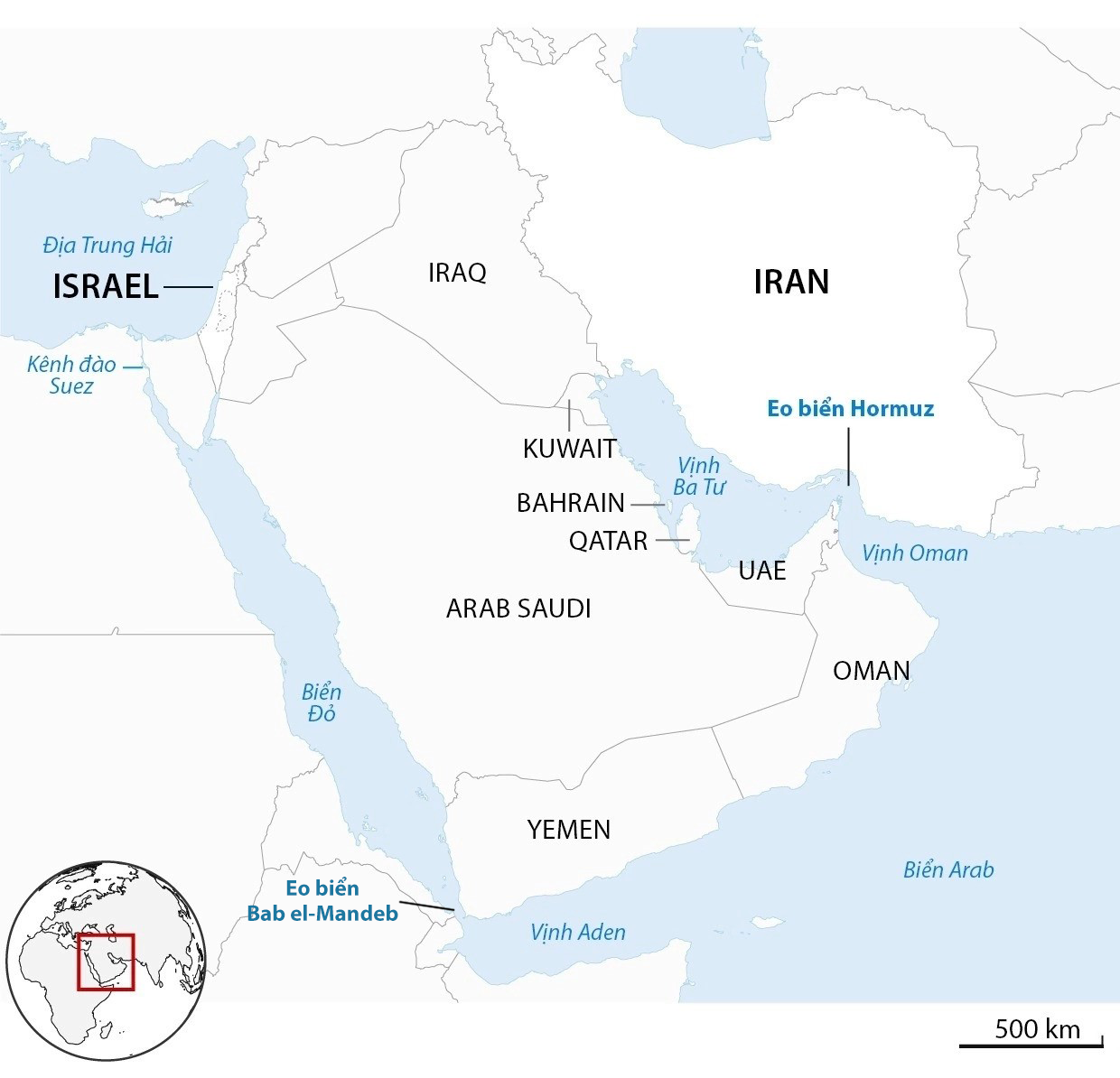 |
Location of the Strait of Hormuz, Persian Gulf, and Gulf of Oman. Graphic: Guardian |
Pham Giang (According to IRIB, Times of Israel, New York Times)