Russia's Foreign Intelligence Service (SVR) stated on 24/2 that, according to information it collected, the UK and France believe Ukraine's negotiating position could improve if it possessed nuclear weapons or "dirty bombs". The SVR added that London and Paris are actively promoting the provision of such armaments and their delivery systems to Kyiv.
A "dirty bomb" is a term for a weapon that combines conventional explosives with nuclear material in powder or pellet form, capable of dispersing radioactive substances over a wide area. Dirty bombs do not possess the same destructive power as nuclear weapons but are easier to manufacture, especially for countries that possess nuclear material.
Dmitry Medvedev, Deputy Chairman of Russia's Security Council, stated that the information released by the SVR has "completely changed the situation".
"This is a direct transfer of nuclear weapons to a country engaged in hostilities", he said. "In this case, Russia will certainly have to use all types of armaments, including non-strategic nuclear weapons, to strike targets in Ukraine that pose a threat to Russia. If necessary, this would also extend to the supplying countries, as they would then become accomplices in a nuclear conflict with Russia. This is a proportionate response that Russia has the right to carry out".
Non-strategic nuclear weapons, also known as tactical nuclear weapons, are small-yield atomic warheads used to achieve specific tactical advantages on the battlefield, rather than widespread destruction.
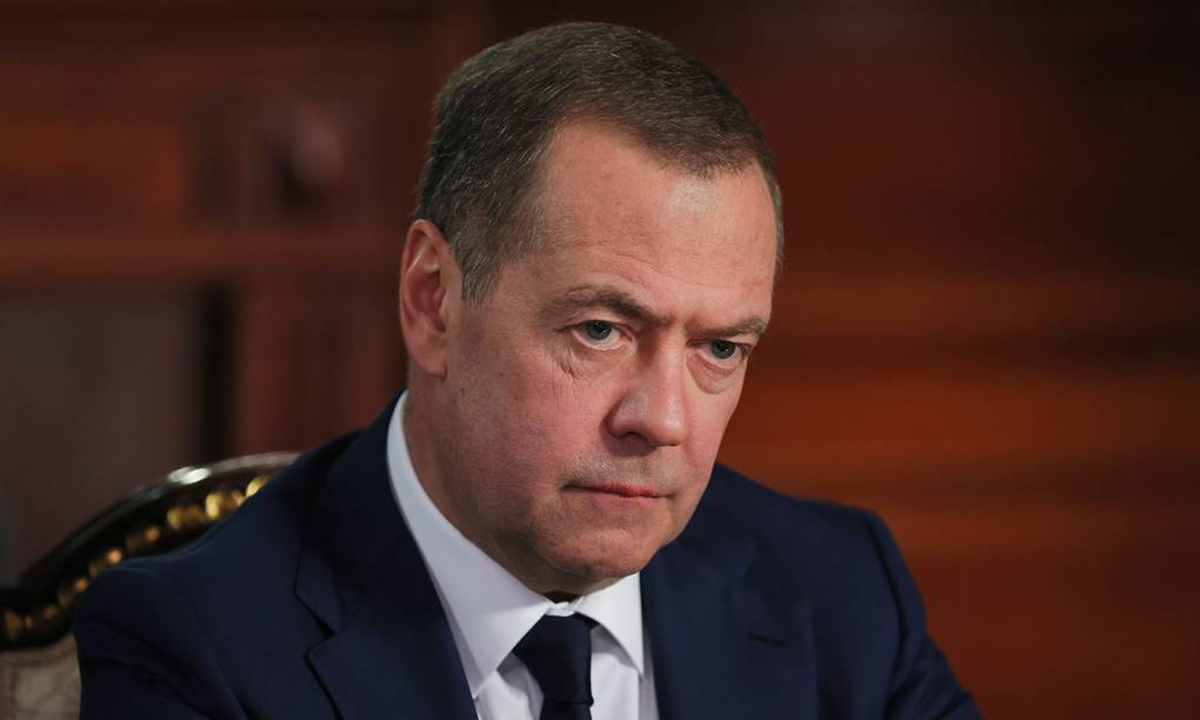 |
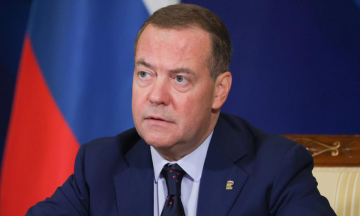
Dmitry Medvedev, Deputy Chairman of Russia's Security Council, in a photo posted on 24/2. Photo: TASS |
Dmitry Medvedev, Deputy Chairman of Russia's Security Council, in a photo posted on 24/2. Photo: TASS
Russia's Foreign Ministry on 24/2 again warned of the risk of direct conflict between nuclear powers, as well as the serious consequences this could entail.
The French Embassy in Moscow accused the information released by the SVR as a "blatant lie". Ukraine also denied the accusation that it seeks to possess nuclear weapons.
Ukraine inherited numerous nuclear weapons after the dissolution of the Soviet Union in 1991 but relinquished them under the 1994 Budapest agreement in exchange for security assurances from Russia, the US, and the UK.
Russian President Vladimir Putin signed a decree approving Russia's revised nuclear doctrine in late 2024, which states that the use of atomic weapons is an "extreme measure" to protect national sovereignty. The doctrine also expands the list of countries and military alliances subject to its nuclear deterrence policy.
Pham Giang (According to Reuters, TASS)