During a visit to the Koenigsegg factory in Sweden on 27/6, coinciding with the launch of a Lego project inspired by the Sadair's Spear model, a Motor1 reporter asked CEO Christian von Koenigsegg if the Swedish hypercar brand had plans to develop a purely electric hypercar.
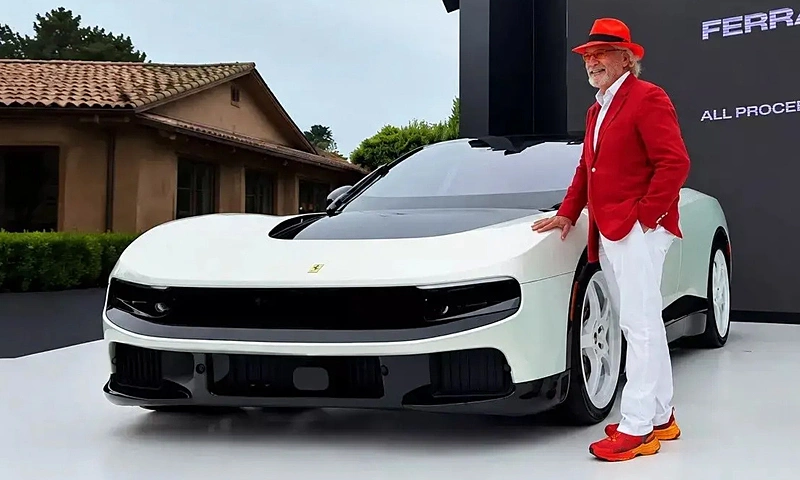
The question arose as Ferrari introduced its first electric model, and many other hypercar manufacturers began accelerating electrification. However, Koenigsegg remains committed to internal combustion engines and hybrid powertrains. Christian von Koenigsegg stated that the company possesses the full capability to develop a purely electric hypercar. Yet, he believes it is not the right direction for Koenigsegg's product philosophy at this time.
 |
Koenigsegg CEO, Christian von Koenigsegg. *Photo: Motor1* |
A decade of evolving perspectives
Christian von Koenigsegg admitted that about a decade ago, he believed Koenigsegg would have an electric car by 2026. At that time, he, like many others in the industry, viewed electric cars as the future of high-performance vehicles. However, the product development process led him to change his perspective.
According to Christian von Koenigsegg, internal combustion engines not only generate power but also deliver vibration, sound, mechanical feedback, and distinct character. These elements combine to create the unique experience of a hypercar. He likened a car with an internal combustion engine to a living organism, while an electric car, no matter how powerful or quick to accelerate, remains merely a machine. "An electric car will never become a living organism," he stated, comparing electric cars to internal combustion engine vehicles.
Additionally, the CEO noted that Koenigsegg does not create hypercars for daily commuting needs. While cars are equipped with air conditioning, comfortable seats, or modern entertainment systems, these conveniences are available in many mainstream models. He believes the value of a hypercar lies in its design, engineering, driving experience, and the connection between the driver and the car. Therefore, the internal combustion engine is not a technology that will soon be replaced; rather, it is a core part of Koenigsegg's product development philosophy.
Hypercars and electric cars should not be judged by the same criteria
Christian von Koenigsegg also offered a different environmental perspective. He argued that hypercars and mainstream electric vehicles should not be evaluated by the same metric. He believes an electric vehicle using a large battery must operate extensively to offset the emissions generated during battery production. In contrast, hypercars are typically driven very little; some even remain in collectors' garages for years. Consequently, this emissions balance point might never be achieved.
Citing studies he referenced, the Koenigsegg CEO stated that cars using small batteries or no batteries would have an environmental advantage over electric vehicles after approximately 80,000 km. If renewable or bio-fuels are used, this figure increases to about 140,000 km. He acknowledged that not everyone agrees with this viewpoint but considers it the basis for Koenigsegg's technical decisions.
Hybrid is the most suitable solution
 |
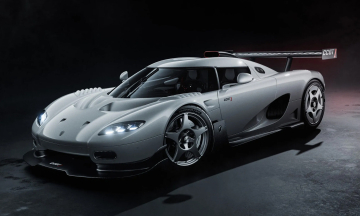
The Koenigsegg Sadair's Spear hypercar model. *Photo: Koenigsegg* |
Koenigsegg had previously researched platforms for purely electric vehicles. Following an evaluation process, the company decided that hybrid powertrains were more suitable for customer needs. A small battery allows the car to operate electrically in urban areas, enter low-emission zones, and run quietly when required. Simultaneously, the system utilizes regenerative braking capabilities without needing an overly large battery pack.
This philosophy is clearly demonstrated in the Gemera, a model that combines an internal combustion engine and electric motor to achieve high performance while ensuring flexibility. Nevertheless, Christian von Koenigsegg does not rule out the possibility of the company developing purely electric hypercars in the future. According to him, this decision depends on market regulations and the advancement of battery technology. If batteries become lighter, smaller, and less reliant on rare materials, many current barriers would be removed.
However, he believes that even then, the challenges regarding vehicle weight and driving feel would persist. Currently, Koenigsegg still maintains that internal combustion engines provide values that no other technology has yet replicated.
Hopes for synthetic fuels
Currently, Koenigsegg models utilize E85 fuel, consisting of approximately 85% ethanol and 15% gasoline. According to Christian von Koenigsegg, this gasoline component could be replaced by synthetic fuel (e-fuel) in the future. Furthermore, he hopes to produce this type of fuel from CO2 captured directly from the atmosphere, combined with renewable energy sources. A portion of the captured CO2 would be permanently stored underground, with the remainder used for fuel synthesis.
According to the Koenigsegg CEO, this process could even result in negative carbon emissions, meaning more CO2 is removed from the atmosphere than emitted during fuel usage. When asked about the cost, he humorously referred to it as a form of "tax for nature," while affirming that Koenigsegg will continue to develop internal combustion engines alongside more sustainable fuel types.
Ho Tan (according to Motor1)