Stellantis, the group owning Chrysler, Dodge, Jeep, and Ram, announced on 17/8 that the recall affects approximately 848,000 vehicles in the US and 107,000 in Canada, Mexico, and other markets.
The models included in the recall are: Chrysler Pacifica, Pacifica Plug-in Hybrid, Voyager; Dodge Charger; Jeep Cherokee, Compass, Gladiator, Grand Cherokee, Grand Wagoneer, Wrangler; Ram 1500, 2500, and ProMaster.
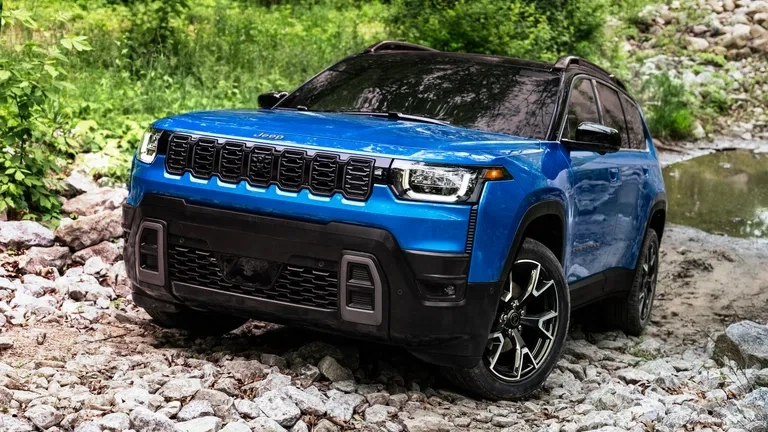 |
Jeep Cherokee 2026, a model affected by the recall. Photo: Motortrend |
The error lies in the radio software, which can prevent the signal from the rearview camera from transmitting to the central display when the vehicle is in reverse. Consequently, drivers cannot see the rear view on the screen, reducing visibility and increasing the risk of a collision.
Stellantis has reported no accidents or injuries related to this defect. The company plans to resolve it via an over-the-air (OTA) software update. Vehicle owners will receive an in-car notification when the update is ready.
While awaiting the update, if the rearview camera does not display, the company advises drivers to use their rearview mirror and two side mirrors when reversing.
Recurring rearview camera issues for Stellantis
This is not the first time Stellantis has faced such a problem. The automaker previously recalled hundreds of thousands of vehicles in the US due to a radio software error that could prevent rearview camera images from appearing. A 2024 recall, for instance, involved approximately 627,758 Chrysler, Dodge, Jeep, and Ram vehicles, which was also fixed through an over-the-air radio software update.
Rearview cameras became mandatory equipment on new light vehicles in the US from 2018. The US National Highway Traffic Safety Administration (NHTSA) established this rule, citing that reversing accidents cause an average of 210 fatalities and 15,000 injuries annually in the US. Children aged 5 and under account for approximately 30% of these fatalities.
By Pham Hai (Reuters)