Volkswagen Group is facing a potential recall of nearly 4 million vehicles worldwide, an action that could mark its largest since the "dieselgate" emissions scandal. This massive recall stems from a critical safety concern: a risk of steering rack bolt fracture that could lead to a complete loss of steering control. In early September, the National Highway Traffic Safety Administration (NHTSA) in the United States initiated a recall for 208,274 vehicles, including certain Volkswagen Atlas (2018-2019 models), Tiguan (2018), and Audi Q3 (2019-2021) models. However, this US-specific action represents only a fraction of the broader global issue, with recent reports highlighting the full extent of the problem.
German newspaper Handelsblatt reports that the actual number of vehicles to be recalled worldwide could reach nearly 4 million units. This total includes approximately 2 million Volkswagen-branded vehicles, over 1 million Skoda cars, around 700,000 Audi vehicles, and 200,000 Seat models.
Data from Germany's Federal Motor Transport Authority (KBA) shows that Golf, Golf Variant, Tiguan, Touran, and Caddy models are all affected. For Audi, the Q3 appears to be the only model experiencing the issue. Meanwhile, Seat models under scrutiny include the Ateca and Tarraco, produced from April 2016 to September 2024.
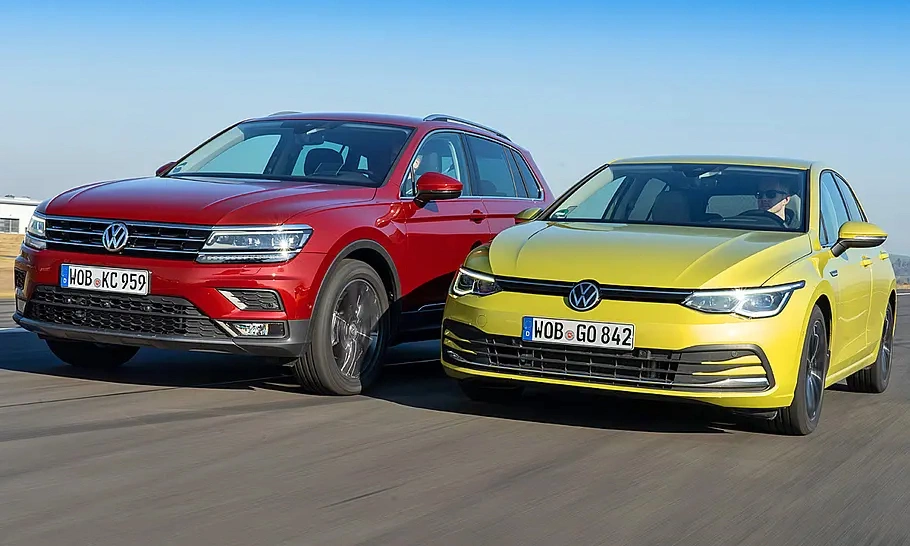 |
Two Volkswagen Tiguan (left) and Golf models in Germany. *Photo: Auto Zeitung* |
The recall originates from the right-side steering rack bolt, which is at risk of fracture. This bolt is particularly susceptible to moisture and corrosion, especially in countries that frequently use road salt during winter.
Despite recalling millions of vehicles globally, Volkswagen is fortunate that the remedy does not involve complex repairs or vehicle buybacks, unlike the dieselgate era. The simple solution involves replacing the affected bolts with new ones featuring an improved anti-corrosion coating.
This recall comes at a challenging time for Volkswagen, as the company, like much of German industry, faces a significant financial and operational crisis with sharply declining profit margins. Affected by US tariffs and erratic fluctuations in electric vehicle demand, Europe's largest carmaker struggles on multiple fronts.
At home, the crisis is exacerbated by soaring energy costs. This follows Berlin's decision to abandon cheap Russian pipeline gas after the escalation of conflict in Ukraine in 2022, leading to increasing reliance on more expensive imported liquefied natural gas (LNG).
Previously, Volkswagen CEO Oliver Blume cited the loss of Russian energy supplies and increased competition from China as key factors contributing to the company's difficulties. Earlier this month, the automaker announced plans to cut approximately 100,000 jobs worldwide, representing 14,29% of its total global workforce.
By My Anh (Reuters, RT)