On the afternoon of 19/8, the National Assembly held a group discussion on proposed amendments to three laws related to the real estate market: the Land Law, the Real Estate Business Law, and the Housing Law.
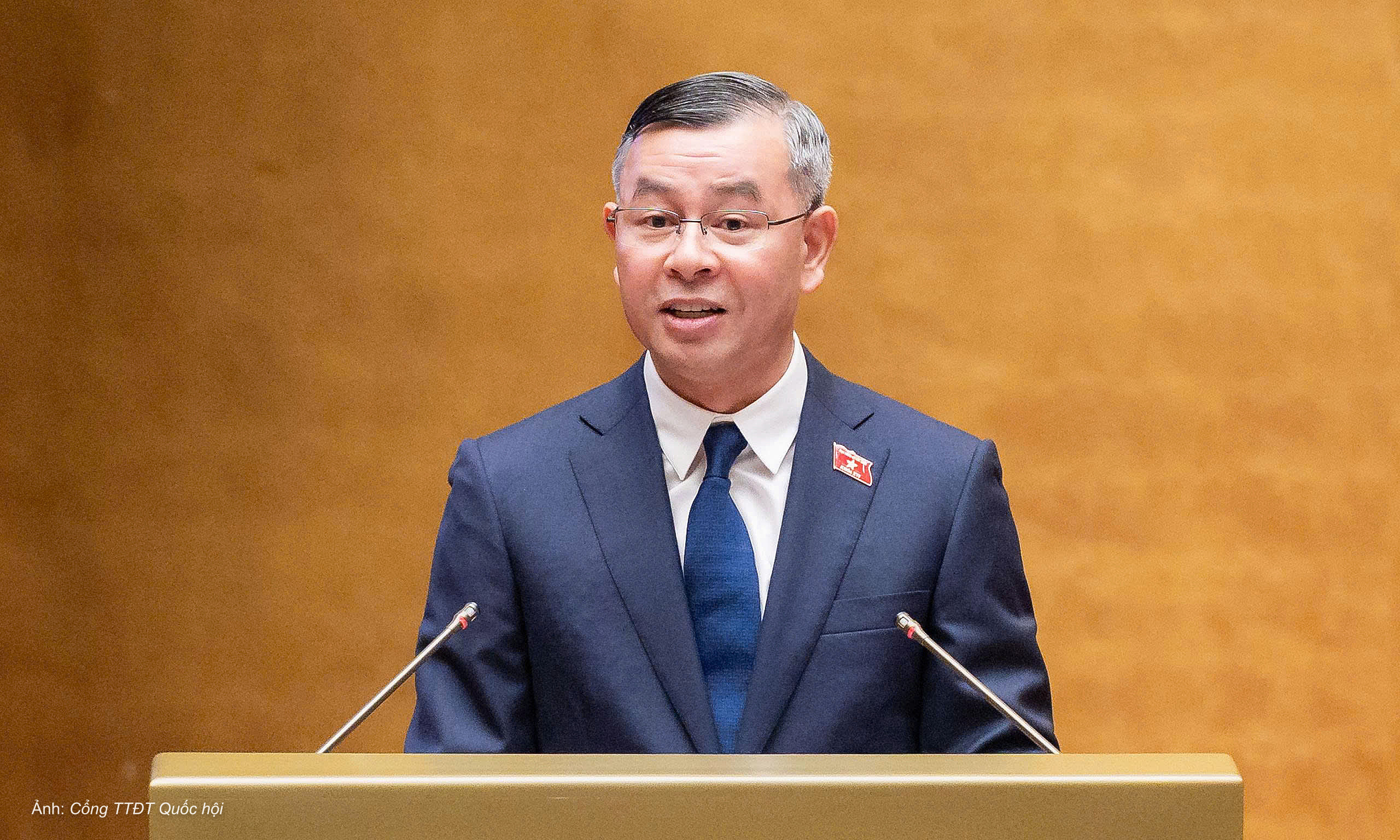
Contributing to the amended Housing Law, Hoang Van Nghia, a full-time member of the Committee for Delegate Affairs, stressed the need for a consistent and firm view that "housing is a basic human need and right."
According to Nghia, this principle is also recognized in Article 11 of the International Covenant on Economic, Social and Cultural Rights of 1966. From this perspective, the delegate proposed institutionalizing and ensuring the right to safe, affordable housing for citizens as a responsibility of the state and society.
He also advocated for a mechanism to tax real estate and housing that has not been put into use or circulated in the market, remaining "dormant" for decades. According to the delegate from Quang Ngai province, this situation has been prevalent in many localities recently.
In the draft Land Law amendment guidelines, the government proposes that the state determine land prices and utilize tax policies along with financial instruments to curb speculation, hoarding, and abandonment of land. Projects that are slow to be put into use are proposed to incur progressive fees.
Delegate Le Hoang Anh, a full-time member of the Economic and Finance Committee, also called for combating land speculation and hoarding through economic tools, rather than solely relying on administrative measures.
According to Hoang Anh, the draft law needs a mechanism to increase costs for abandoning, delaying use, or holding large land areas without effective exploitation. However, he also noted the importance of clearly distinguishing between speculation and wasteful land use versus the legitimate needs of citizens.
"The draft law must clearly define what constitutes abandoned or unused land. This will be the basis for identifying taxpayers and applying appropriate sanctions," he stated.
The delegate added that the Land Law alone cannot fully resolve current issues, necessitating its synchronization with regulations on taxation, planning, and investment.
 |
Delegate Hoang Van Nghia speaking on the afternoon of 19/8. *Photo: Anh Tu* |
Nguyen Ngoc Son, a full-time member of the Committee for Science, Technology and Environment, also shared his views, stating that while the draft Land Law amendment outlines principles for regulating added value from land and preventing abandonment, it lacks specific conditions and implementation mechanisms.
He proposed assigning the Government to periodically publish a set of early warning indicators for the real estate market. This set of indicators includes: house price-to-income ratio, average holding time before resale, vacancy rate of apartments, proportion of real estate outstanding debt for each bank, ratio of land use fees collected to total local budget revenue, and inventory trends alongside prices.
Responding to the delegates' comments, Prime Minister Le Minh Hung stated that land finance issues cannot be specifically regulated in the Land Law, Housing Law, or Real Estate Business Law. Instead, the Government will supplement this content in tax laws to regulate land rent surplus and combat land waste, ensuring land is put into use and production.
The amended Land Law, Housing Law, and Real Estate Business Law are expected to be submitted to the National Assembly for consideration and approval at the second session later this year.
Anh Tu - Son Ha