English majors and those in social science fields are proving to be the most adaptable in the US job market, allowing for easier transitions between professions compared to graduates in engineering or healthcare, according to a recent Forbes ranking.
Last week, Forbes published a ranking of university majors offering the most flexible job prospects in the US, drawing on data from the LinkedIn job platform.
LinkedIn analyzed popular majors, assessing recruitment conditions and the ability of workers to transition into other fields. The data was gathered from university graduates from 2022 to 2024 who secured full-time employment approximately one year after graduation.
The findings indicate that social sciences and humanities graduates adapt better to the job market. They possess skills applicable across many professions.
English majors lead in flexibility with a 69% rating. Visual and performing arts graduates, followed by communication and journalism graduates, ranked second and third respectively in job application flexibility.
Conversely, graduates in engineering, education, or healthcare fields typically possess more specialized skills, which makes it harder to switch professions.
Here is the flexibility ranking of the 15 most popular university degrees on LinkedIn:
| No. | Major | Flexibility |
| 1 | English | 69% |
| 2 | Visual and Performing Arts | 68% |
| 3 | Communication and Journalism | 67% |
| 4 | Business and Marketing | 64% |
| 5 | Computer and Information Sciences | 63% |
| 6 | Social Sciences | 62% |
| 7 | Interdisciplinary Studies | 60% |
| 8 | Homeland Security and Law Enforcement | 58% |
| 9 | Parks, Recreation, and Fitness | 56% |
| 10 | Psychology | 55% |
| 11 | Physical Sciences | 55% |
| 12 | Biological Sciences | 43% |
| 13 | Engineering/Technology | 41% |
| 14 | Education | 34% |
| 15 | Health Professions | 21% |
Overall, the number of new graduates hired via LinkedIn decreased by 20% compared to pre-pandemic levels.
Experts suggest that the rise of artificial intelligence leads companies to prioritize senior, experienced personnel, creating an oversupply of entry-level workers. Additionally, many individuals are choosing to remain in their current roles rather than seeking new opportunities, further challenging recent graduates in their job search.
According to a report from the Economic Policy Institute (EPI) in May, the unemployment rate for young college graduates (aged 22-27) in the US rose from 4% in mid-2023 to 5,3% in March this year.
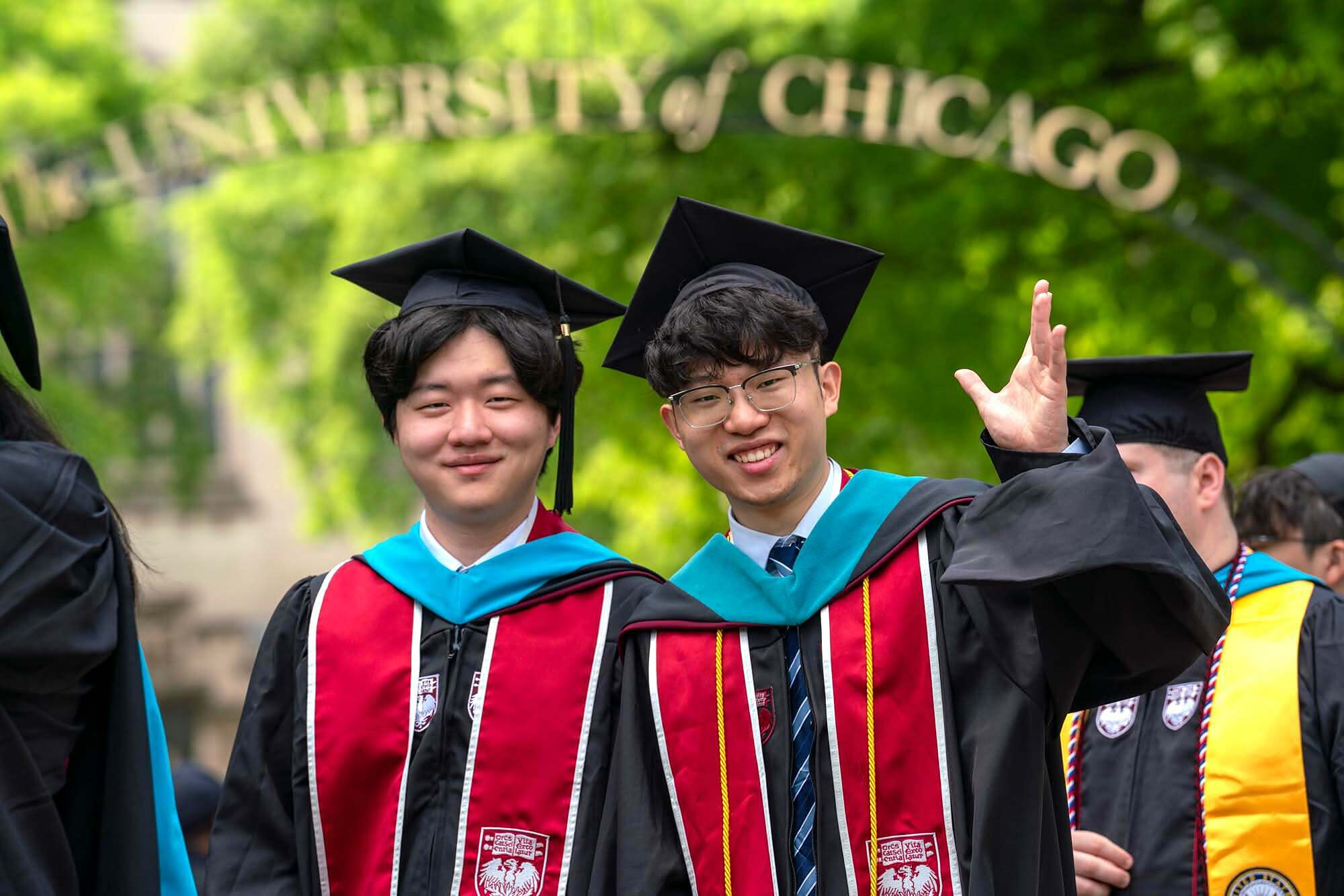 |
Graduates of the University of Chicago, US, in June. *Photo: University Fanpage* |
By Khanh Linh (Compiled)