Mr. Minh frequently experienced unexplained fatigue and dizziness, culminating in a sudden fainting spell. Blood tests revealed severe anemia, with hemoglobin levels at a critically low 7.0 g/dL.
Doctor Tran Thanh Binh, from the Center for Endoscopy and Gastrointestinal Endoscopic Surgery at Tam Anh General Hospital Ho Chi Minh City, stated that medical staff administered over one liter of blood to Mr. Minh. However, the source of the bleeding remained elusive, prompting a comprehensive abdominal CT scan. This scan identified an abnormal structure, nearly 10 cm in size, protruding into the D3-D4 segment of his duodenum.
During endoscopy, doctors found a 10 cm polyp, approximately half a handspan, with multiple ulcers on its surface and head, actively bleeding. According to Doctor Binh, intervening on a polyp of this size in the D3 segment of the duodenum is challenging due to the narrow intestinal lumen and its deep location. Surgical resection would be necessary if endoscopic removal proved impossible.
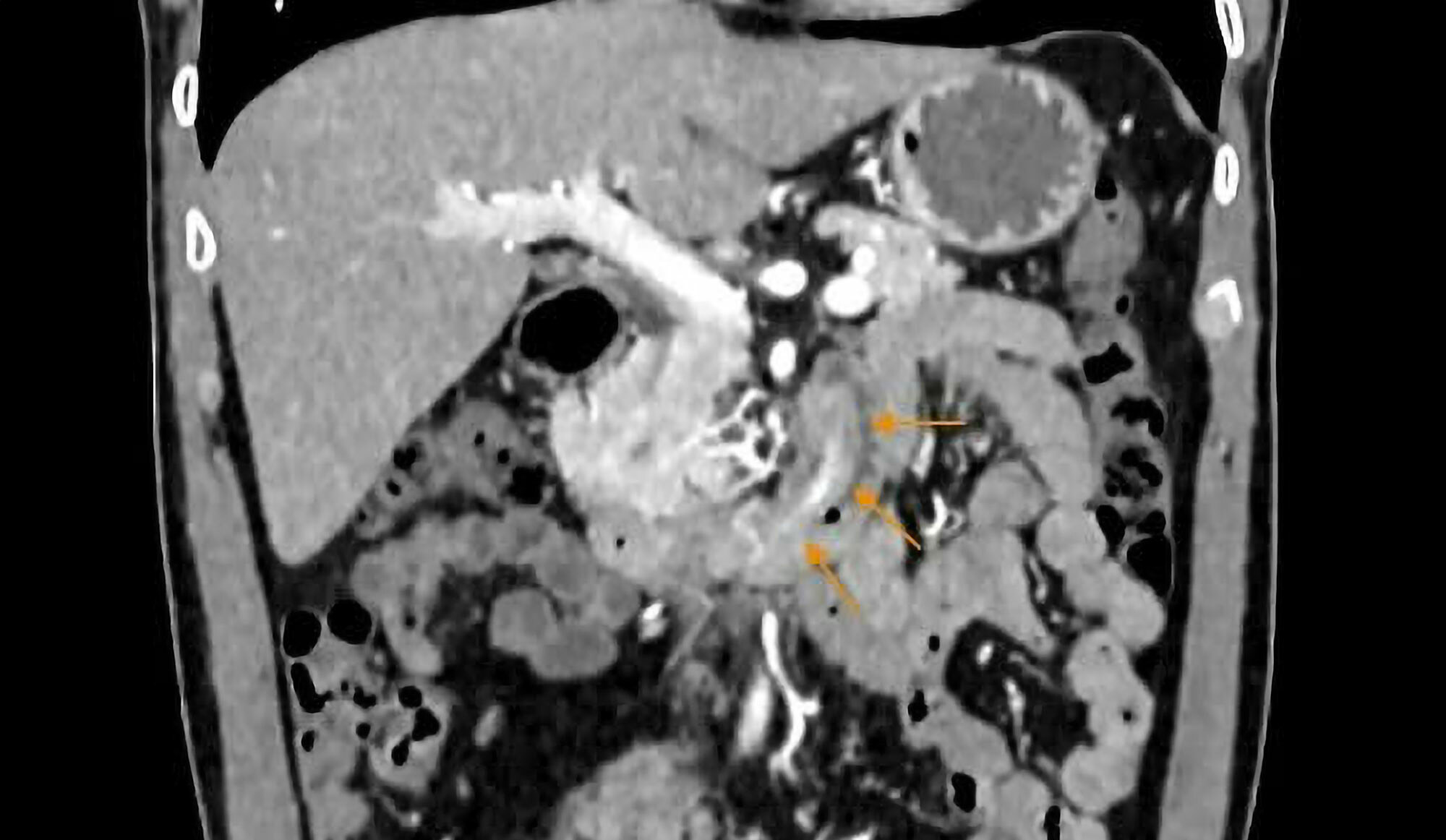 |
Abdominal CT scan showing an abnormal structure nearly 10 cm protruding into the lumen of the D3-D4 segment of the duodenum (yellow arrow). *Photo: Tam Anh General Hospital*
Following a multidisciplinary consultation, doctors opted for an endoscopic polypectomy. The procedure began with the use of a specialized nylon ligature to tightly constrict the polyp's stalk, effectively controlling its blood supply. Subsequently, an electric snare was employed to resect the polyp and remove it. This method also helped manage the risk of bleeding during the intervention.
 |
Doctor Binh performing a gastroscopy and polypectomy on Mr. Minh. *Photo: Hospital provided*
Post-procedure, Mr. Minh reported no pain, his black stools ceased, and his overall health significantly improved. Subsequent blood tests showed a rise in hematological indices, leading to his discharge after two days.
Pathological analysis identified the lesion as a Brunner's gland hamartoma – a benign proliferative lesion. Brunner's glands are situated in the submucosal layer of the duodenum, where they secrete mucus to protect the mucosa from gastric acid. A Brunneroma polyp is a benign proliferation of these glands.
Most Brunneroma polyps are small, asymptomatic, and discovered incidentally during endoscopy. However, large polyps, like Mr. Minh's, can lead to abdominal pain, intestinal obstruction, and gastrointestinal bleeding due to surface ulceration. Gastrointestinal bleeding can occur silently, making patients unaware of blood loss. As anemia progresses, symptoms such as fatigue, dizziness, rapid heartbeat, or fainting may appear. Doctors advise patients to seek medical attention if they experience these signs, pass black stools, vomit blood, or have unusual abdominal pain.
Quyen Phan
*Patient's name has been changed*
| Readers can submit questions about digestive diseases here for doctors to answer. |