Upon arrival at Tam Anh General Hospital TP HCM, Mr. Ly's muscle strength was 4/5, and he had difficulty speaking and blurred vision. A day before admission, the patient experienced dizziness, blurred vision, palpitations, and chest tightness. Doctor of First-Degree Specialization Vu Dinh Chanh, from the Emergency Department, noted Mr. Ly had ischemic heart disease, hypertension, hyperlipidemia, and a history of cerebral infarction — factors that increase the risk of recurrent cerebrovascular events.
A Doppler ultrasound of the carotid and vertebral-basilar arteries revealed atherosclerotic plaques causing narrowing in both of the patient's carotid arteries. The base of the right internal carotid artery was about 50% narrowed, while the left side showed a 90% narrowing. The atherosclerosis was widespread across multiple large arterial segments.
Doctors diagnosed Mr. Ly with a transient ischemic attack (TIA) stemming from left internal carotid artery stenosis due to atherosclerosis. TIA occurs when a region of the brain or retina experiences temporary blood deprivation, leading to sudden neurological symptoms that later resolve. This serves as a warning sign for a potential future ischemic stroke.
 |
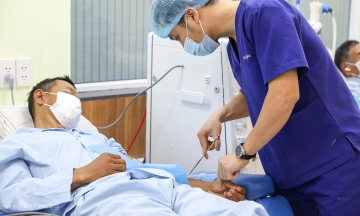
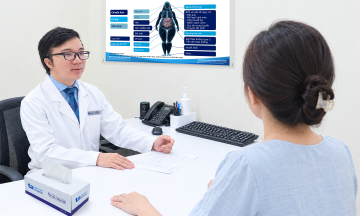
Doctor Chanh consulting Mr. Ly about his condition. Photo: Tam Anh General Hospital
The carotid arteries deliver oxygen-rich blood from the heart to the brain, running along both sides of the neck and dividing into external and internal carotid arteries. Atherosclerotic plaque buildup can narrow the vessel lumen, obstructing blood flow to the brain. Furthermore, blood clots can form on the surface of these plaques, or fragments from the plaques can break off, travel with the bloodstream to the brain, and cause arterial blockage. Over time, this damages nerve cells, leading to an ischemic stroke.
According to doctor Chanh, not all individuals with carotid artery stenosis will experience a stroke. However, severe narrowing accompanied by corresponding neurological symptoms such as one-sided weakness or difficulty speaking requires early assessment to determine risk and implement appropriate stroke prevention measures.
After a consultation, the medical team decided to perform angioplasty and stenting of the left internal carotid artery to improve blood flow through the narrowed area.
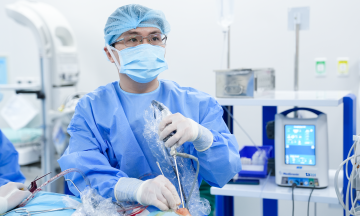
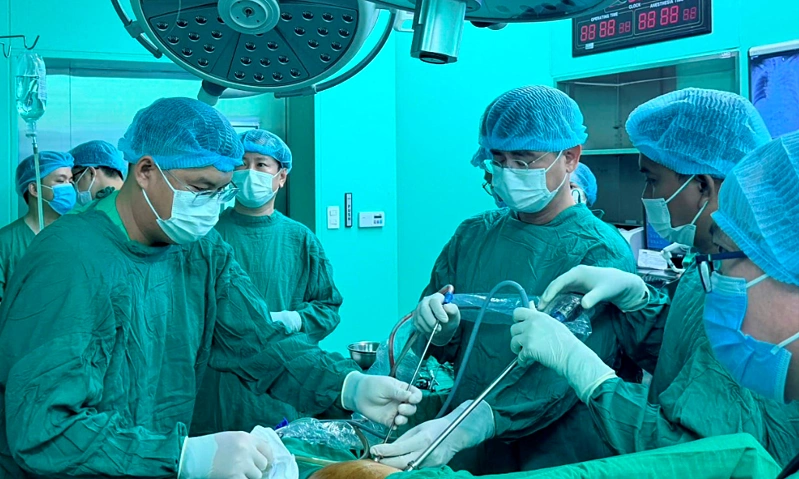
Doctor of First-Degree Specialization Nguyen Trung Duc, from the Endovascular Intervention Unit, Center for Diagnostic Imaging and Interventional Radiology, inserted a catheter into the left common carotid artery to examine the lesion. The doctor placed a cerebral protection device past the narrowed site, then used a balloon to dilate the vessel lumen and deployed a stent to maintain its openness, thereby improving blood flow through the stenosed segment.
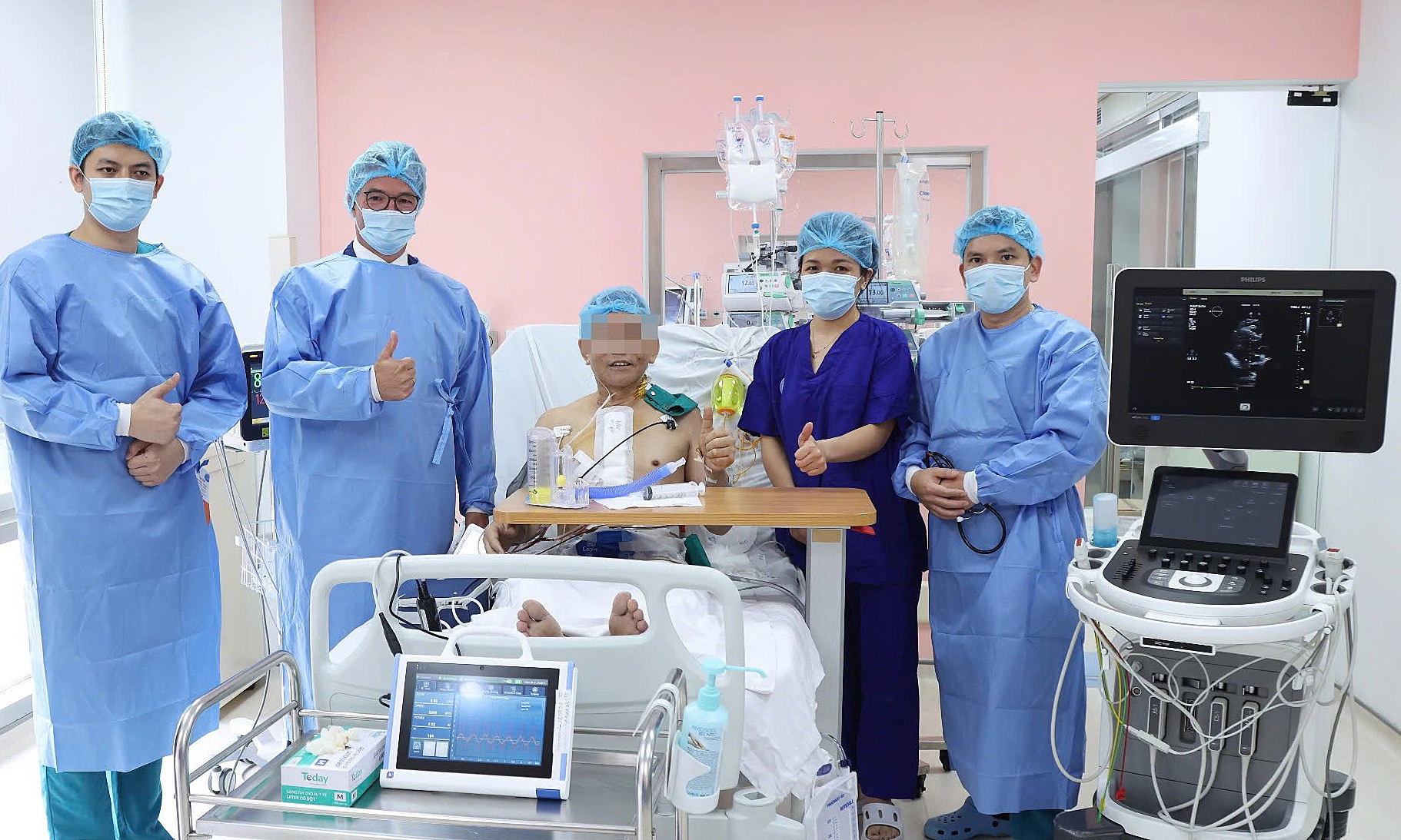
A digital subtraction angiography (DSA) check after the intervention showed good stent deployment, a widened vessel lumen, and significantly improved blood flow through the carotid artery segment. Following the intervention, Mr. Ly was able to walk, communicate, and eat normally, and was discharged on the thu ba day.
Doctors advise that when experiencing sudden weakness or numbness on one side of the body, facial drooping, difficulty speaking, blurred vision, or balance disturbances, patients should not self-monitor at home or wait for symptoms to resolve. Instead, they should call for emergency assistance or go to a medical facility equipped to diagnose and manage stroke, ensuring timely examination, assessment, and treatment. This increases the chance of preserving brain tissue and limiting sequelae.
Nhu Ngoc
*Patient's name has been changed
| Readers can ask neurological questions here for doctors to answer |