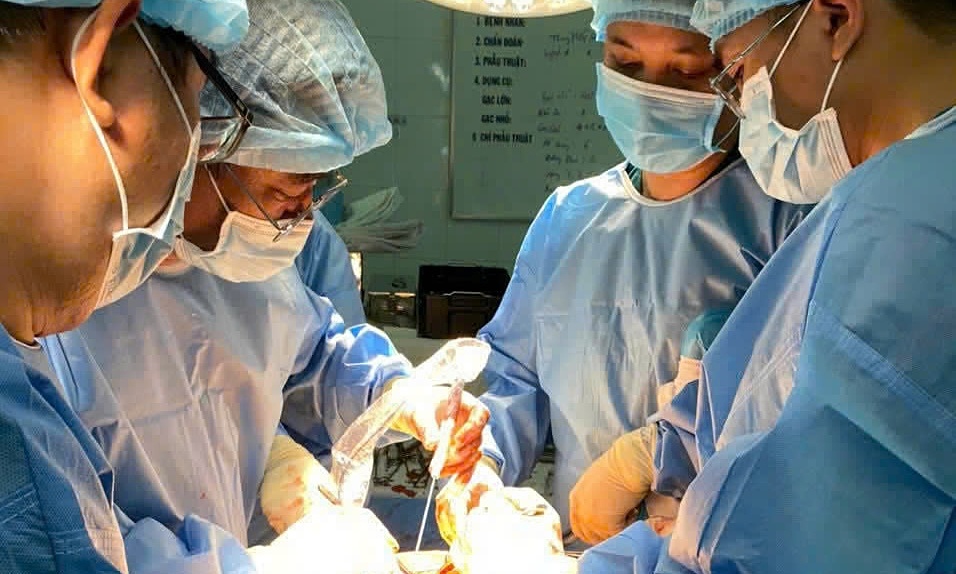
Minh underwent two surgical procedures to extract sperm directly from testicular tissue (TESE technique). However, doctors found only a few poorly motile sperm, insufficient for cryopreservation and subsequent in vitro fertilization (IVF). The couple sought help at the Assisted Reproductive Technology Center, Tam Anh General Hospital, TP HCM. Dr. Nguyen Cong Danh, from the Andrology Unit, noted that Minh's spermatogenesis process was not entirely lost, as sperm had still been found in both his semen and testicular tissue.
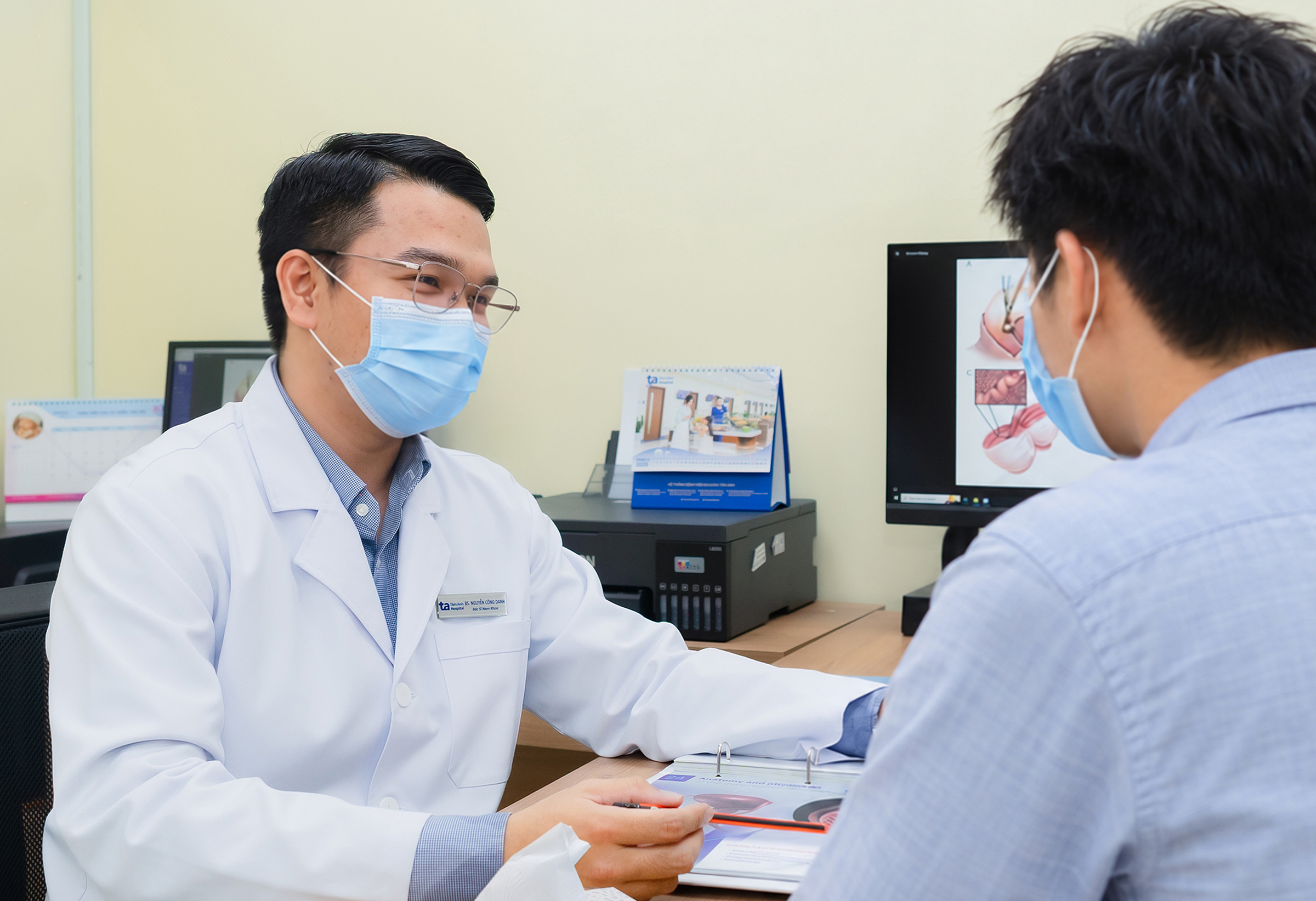 |
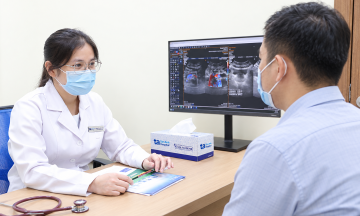
Dr. Danh consults with Minh. Photo: Tam Anh General Hospital |
Dr. Danh advised Minh on an alternative approach: finding fresh sperm from an ejaculated sample during treatment. The medical team processed the semen sample using a centrifugation technique and examined it under a microscope magnified up to 400 times. This process successfully identified a few motile sperm, which were suitable for cryopreservation for future IVF. While the quantity was very small, it offered Minh a crucial opportunity to have his own biological child without further surgery or needing donor sperm.
Genetic testing, conducted to determine the cause of Minh's oligospermia (low sperm count), revealed an AZFc deletion on his Y-chromosome. Dr. Danh explained that the AZF region on the Y-chromosome contains genes essential for spermatogenesis. An AZFc deletion can severely reduce the number of sperm cells or, in some cases, lead to azoospermia, where no sperm are found in the semen.
While some men with this specific genetic anomaly can still have sperm found in their semen or testicular tissue for assisted reproduction, it is important to note that an AZFc deletion on the Y-chromosome can be transmitted from father to son if the patient's sperm is used for fertilization. Daughters do not receive the Y-chromosome from their father, so they do not inherit the AZFc anomaly through this mechanism.
Additionally, advanced genetic testing also detected that Minh carries the gene causing beta-thalassemia hemolytic anemia. His wife's maternal family history indicated her younger sister had experienced anemia and required blood transfusions. Consequently, doctors advised the wife to undergo further testing to assess her beta-thalassemia carrier status before selecting embryos for uterine transfer.
According to Dr. Danh, approximately 40-50% of infertility cases originate from the male partner, with severe oligospermia or azoospermia being common causes. At IVF Tam Anh, these cases undergo a comprehensive evaluation. This includes reviewing treatment history, semen analysis, hormone levels, spermatogenesis potential, and genetic testing. This thorough assessment helps select the most suitable treatment method, thereby limiting the risk of needing donor sperm to conceive.
Ha Thanh
*Patient's name has been changed
| Readers can submit questions about infertility here for doctors to answer. |